
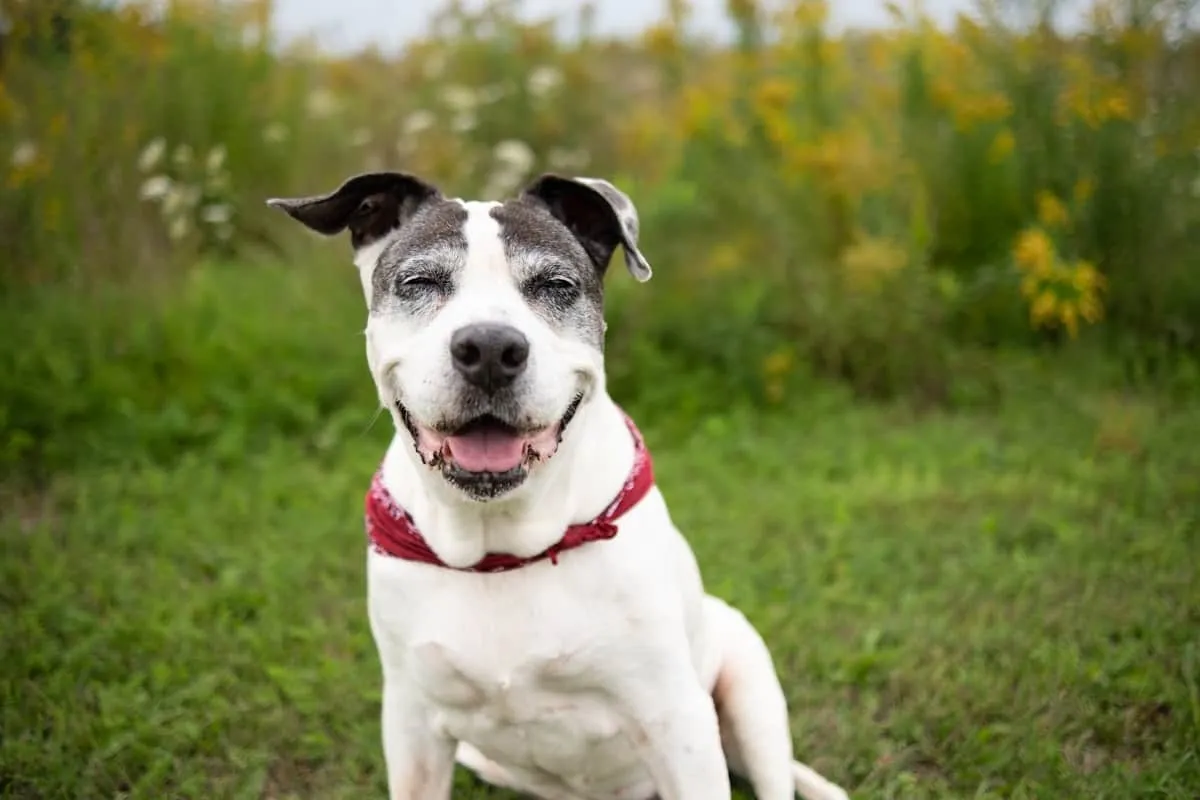
Dog Dementia: 12 Symptoms Every Senior Dog Owner Should Know
By Sarah Bennett · Last updated May 20, 2026 · 11 min read
Dog dementia, known clinically as canine cognitive dysfunction (CCD), affects a significant portion of senior dogs. An age-stratified cohort study by Neilson and colleagues found impairment in at least one CCD-related behavior category in 28% of dogs aged 11 to 12, rising to 68% by ages 15 to 16. A later survey of 497 older dogs put overall prevalence at 14.2%, with only 1.9% of those dogs diagnosed by a veterinarian. It is a real, neurological condition, not "just getting old", and recognizing the early symptoms matters.
The 12 dog dementia symptoms below are organized using the DISHA framework, the standard model veterinary behaviorists use to identify CCD. We're not veterinarians. We've built this guide from peer-reviewed sources and from talking to our own vet about Lucy, our 7-year-old Border Collie.
If your dog is showing two or more of these signs and is over the age of 9, it's worth raising CCD specifically at your next vet visit.
What Is Canine Cognitive Dysfunction?
Canine cognitive dysfunction (CCD) is a progressive, age-related neurological condition in dogs that produces changes in awareness, sleep, social behavior, and basic functions. Pathologically, CCD shares features with human Alzheimer's disease, including beta-amyloid plaque deposition and brain atrophy, though the diseases are not identical, as documented in the veterinary review by Landsberg, Nichol & Araujo (2012) in Veterinary Clinics of North America: Small Animal Practice.
Canine cognitive dysfunction symptoms arrive so gradually that most owners only recognize them looking back. Owners often call it dog Alzheimer's, and the early signs do rhyme with the human version, though the two are not the same disease. CCD symptoms in dogs are behavioral rather than physical, which is exactly why they get filed under normal aging for months before anyone raises them with a vet.
CCD is not curable, but its progression can be slowed with diet, supplements, environmental adjustments, and prescription medication. The earlier you catch the symptoms, the more options you have.
Sources for the framework below include:
- The Merck Veterinary Manual's section on Cognitive Dysfunction Syndrome
- The 2023 AAHA Senior Care Guidelines for Dogs and Cats
- Landsberg, Nichol & Araujo (2012), published in Veterinary Clinics of North America: Small Animal Practice
The DISHA Framework
The DISHA framework, developed and popularized in the veterinary behavior literature, organizes CCD symptoms into five categories:
- Disorientation
- Interactions (social behavior changes)
- Sleep-wake cycle disturbances
- House soiling (loss of learned behaviors)
- Activity level changes
The 12 dog dementia symptoms below are grouped within these five categories. A dog showing two or more symptoms across two or more categories is a clinical candidate for CCD evaluation.
Category D: Disorientation (3 Symptoms)
Symptom 1: Getting "Lost" in Familiar Places
What it looks like: Your senior dog stops in the middle of a hallway they've walked thousands of times. They go to a corner of the kitchen and stand facing the wall. They try to walk through the wrong side of a doorway.
How it differs from normal: A healthy senior dog hesitates because of joint pain or vision changes; a dog with CCD hesitates because they don't know where they are.
When to raise it with your vet: If this happens more than 2 to 3 times per week and your dog is over age 9.
Symptom 2: Staring Blankly at Walls or Floors
What it looks like: Your dog stares at a blank wall, the floor, or into the corner of a room for several minutes at a time. They don't appear to be tracking anything visual.
How it differs from normal: Healthy senior dogs may pause and "zone out," but they snap back to attention when called. A dog with cognitive decline may not respond, or may respond delayed.
Veterinary literature notes that staring is one of the most common early CCD indicators reported by owners, and it is included in the disorientation and activity-change categories that veterinary behaviorists use to screen for CCD (Landsberg et al. 2012; Madari et al. 2015 CADES scale).
Symptom 3: Difficulty Recognizing Family Members
What it looks like: Your senior dog backs away from a family member they've known for years. They hesitate before approaching. They look confused when their name is called.
How it differs from normal: This must be distinguished from hearing loss (which produces similar symptoms but resolves when the dog sees the person up close) and vision loss (which resolves when the dog gets close enough to smell).
A note on Lucy: Lucy is 7, healthy, and very social. We watch for this symptom because Border Collies live long, and 7 is closer to the early CCD window than most people realize.
Category I: Interactions Changed (2 Symptoms)
Symptom 4: Decreased Interest in Petting or Affection
What it looks like: A previously affectionate dog moves away when petted, no longer greets family, or stops asking for attention.
How it differs from normal: Healthy senior dogs may sleep more but still respond to affection when offered. CCD-affected dogs may seem to "not register" affection in the way they used to.
Symptom 5: Increased Anxiety, Especially Around Routine Changes
What it looks like: Your dog seems newly unsettled by changes that used to be easy, a visitor, a different walking route, or a family member leaving, which can show up as new separation anxiety in a dog who used to be fine alone.
How it differs from normal: Most senior dogs become slightly more set in their ways, but a CCD-affected dog may show genuine distress (pacing, panting, vocalizing) over minor changes.
Category S: Sleep-Wake Cycle Disturbances (2 Symptoms)
Symptom 6: Sleeping More During the Day, Awake at Night
What it looks like: Your dog sleeps through much of the day, then is restless or vocal in the small hours. In a 2026 survey of 205 guardians of dogs aged eight and over, over half reported their dog was most unsettled between 2 and 5 in the morning. The pattern reverses healthy circadian rhythm.
Why this symptom is significant: This is the most disruptive CCD symptom for families and one of the most reliable indicators of cognitive change. It's also the symptom that most often drives families to seek help.
What can help: Establishing strict daytime activity, using daytime light exposure, and, with vet guidance, sleep-supporting interventions such as melatonin or prescription options. If the night restlessness shows up mainly as pacing, our guide on why an old dog paces at night covers the specific causes and fixes.
Symptom 7: Sundowning: Restlessness in Evening Hours
What it looks like: Your senior dog becomes notably more anxious, vocal, or restless in the late afternoon and early evening, a pattern known as sundowning in dogs, which mirrors the same phenomenon in human Alzheimer's patients.
What can help: Predictable evening routines, calming chews (vet-approved), dim but warm lighting, and reducing background stimulation in the late afternoon.
Category H: House Soiling (2 Symptoms)
Symptom 8: Urinating or Defecating Inside Despite House Training
What it looks like: A dog that has been house-trained for years begins having accidents inside, often in unusual places like the middle of a room.
Important distinction: This must be evaluated alongside non-CCD causes:
- Urinary tract infection
- Diabetes or kidney disease
- Arthritis preventing the dog from getting outside in time
- Sphincter weakness (especially in spayed females)
If medical causes are ruled out and the dog also shows other DISHA symptoms, CCD is likely the cause. For a deeper look at incontinence specifically, see our old dog peeing guide.
Symptom 9: Loss of Signals or Cues for Bathroom Needs
What it looks like: Your senior dog used to scratch at the door or come find you when they needed to go out. They've stopped doing that, they just go.
How it differs from Symptom 8: Symptom 8 is the accident itself. Symptom 9 is the loss of the learned behavior of signaling, a clearer cognitive marker.
Category A: Activity Level Changes (3 Symptoms)
Symptom 10: Repetitive Behaviors (Pacing, Circling, Wandering)
What it looks like: Your dog walks in repetitive patterns, circling a room, pacing back and forth along a wall, or wandering aimlessly.
How it differs from normal restlessness: Anxious dogs pace when triggered; CCD-affected dogs may pace for no identifiable reason and may not be able to stop on their own.
Symptom 11: Reduced Response to Commands or Cues
What it looks like: Your senior dog doesn't respond to their name, "come," or other long-known cues, even when you know they can hear you.
Critical distinction: Test hearing first. A dog with CCD will often respond inconsistently, sometimes alert, sometimes blank, while a dog with hearing loss responds consistently to physical cues (clapping, foot tapping) but not vocal ones.
Symptom 12: Vocalizing for No Apparent Reason
What it looks like: Your dog barks, whines, or howls in situations where there's nothing visible to trigger it, often at night or when alone in a room.
This symptom often appears late and is particularly distressing for owners. It also tends to be one of the symptoms most responsive to environmental and medication-based interventions.
When to See the Vet About Dog Dementia Symptoms
If your senior dog is showing two or more symptoms across two or more DISHA categories, schedule a vet visit specifically to discuss CCD. General wellness exams often miss CCD unless the owner raises it.
Ask your vet about:
- Bloodwork to rule out non-cognitive causes, thyroid disease, kidney disease, diabetes, and brain tumors can produce CCD-like symptoms.
- The CADES rating scale (Canine Dementia Scale) developed by Madari et al. (2015), published in Applied Animal Behaviour Science (vol. 171, pp. 138-145), for clinical severity scoring. CADES contains 17 items across four behavior categories: spatial orientation, social interactions, sleep-wake cycles, and house soiling.
- Selegiline (Anipryl), an FDA-approved medication for CCD in dogs. Whether it's appropriate depends on your dog's overall health.
- Senior cognitive support diets, Hill's Prescription Diet b/d Brain Aging Care (antioxidant-supplemented; the manufacturer cites clinical research backing its formulation) and Purina Pro Plan Bright Mind (formulated with a brain protection blend including B vitamins, antioxidants, DHA, and 5.5% medium-chain triglycerides; supporting research published in the British Journal of Nutrition).
What You Can Do About Dog Dementia at Home
Most CCD management lives in four categories. Each category has multiple product options worth comparing before you buy.
1. Diet: Senior Cognitive Support Food
A senior cognitive support food or the addition of antioxidants. Cotman et al. (2002), in Neurobiology of Aging (vol. 23, issue 5, pp. 809-818), found that an antioxidant-enriched diet (vitamin E, vitamin C, lipoic acid, L-carnitine, fruit and vegetable extracts) combined with environmental enrichment significantly improved cognitive performance in aged beagles over a two-year period. The two most-cited commercial diets in this category are Hill's Prescription Diet b/d (Brain Aging Care) and Purina Pro Plan Bright Mind.
→ For a side-by-side comparison of senior dog foods (ingredients, kcal, price, and which one matched our research best), see our Best Food for Senior Dogs guide.
2. Supplements: Phosphatidylserine, Antioxidants, and Omega-3
Nutramax Senilife (containing phosphatidylserine, ginkgo biloba, and antioxidants) is widely vet-recommended. Omega-3 fatty acids from fish oil also have research support for brain health, IFOS-certified brands such as Nordic Naturals Pet and Welactin are the most commonly recommended. Confirm any supplement and dose with your vet, since evidence varies by ingredient.
3. Environment: Night Lights and Pet Gates
Predictable routines, night lights in hallways, baby gates to prevent wandering into unsafe areas, and avoiding furniture rearrangement all help reduce disorientation. The right pet gate also lets you safely contain a wandering dog while you sleep.
→ For specific product picks, see our Best Nightlight for a Blind Senior Dog review, and our home-safety guide for senior dogs for gating and layout.
4. Enrichment: Puzzle Feeders and Snuffle Mats
Short, easy puzzle feeders and snuffle mats. Outward Hound and PAW5 both make ranges of senior-friendly options. The goal is mental stimulation, not challenge, senior dogs do better with low-difficulty, high-reward enrichment.
→ For senior-friendly puzzle feeders, snuffle mats, and other low-difficulty brain games, see our Mental Stimulation for Senior Dogs guide.
Living With a Dog Who Has Dementia
A CCD diagnosis is not the end of a good life. Many dogs with mild-to-moderate CCD live for several more years with adapted routines, prescription support, and consistent home management, published progression data from the CADES scale work (Madari et al. 2015) and the Landsberg 2012 review support an extended manageable course rather than a sudden decline.
What we've read from families further along this road, and from veterinary hospice literature, is that the dogs we love don't forget us in the way humans understand forgetting. They get confused. They lose track of time and place. But they lean toward the same people, the same chairs, the same routines, just more slowly, with more help.
For families approaching late-stage CCD, the Quality of Life Scale for dogs becomes the most important tool you can use.
Conclusion
If two or more of these dog dementia symptoms feel familiar, your next step is a vet visit, not panic. Many of these signs overlap with other senior conditions, and a proper diagnosis matters.
For the natural next step in understanding what CCD looks like as it progresses, read our breakdown of the 4 stages of dog dementia. If you're still trying to tell ordinary aging from cognitive decline, our guide on dog dementia vs normal aging walks through the difference. If you're earlier in the senior journey and want to understand general aging signs, our 8 senior dog aging signs guide is the place to start.
You can also download our free Senior Dog Care Checklist, which includes a CCD symptom self-assessment page used by veterinary behaviorists.
Sources are below.
Rule Out Deafness Before You Settle on Dementia
A deaf dog and a dog with cognitive decline present with several of the same things: not responding to her name, seeming disoriented, startling when touched, barking at nothing anyone else can hear. The reason this matters is that they are not alternatives. In a 2022 North Carolina State cohort, every dog in the worst-hearing group also scored as cognitively abnormal, so an older dog can easily have both. Before you conclude the confusion is cognitive, read senior dog hearing loss and check the simpler explanation first.
Dog Dementia Symptoms Frequently Asked Questions
What are the first signs of dog dementia? The most common early dog dementia symptoms are subtle behavioral changes, confusion in familiar rooms, increased nighttime restlessness, unusual vocalization, and brief moments of "blank" staring. These often appear gradually over weeks or months.
At what age do dogs get dementia? Most CCD cases first appear after age 9, with prevalence rising sharply each year. About 28% of dogs aged 11 to 12 show signs of CCD, rising to 68% by ages 15 to 16 in the cohort study those figures come from.
Can dog dementia be cured? No, canine cognitive dysfunction is not curable. However, progression can often be slowed with a combination of dietary changes, supplements, environmental adjustments, and FDA-approved medications such as selegiline (Anipryl).
How long do dogs live with dementia? Many dogs with CCD live 1 to 3 years after diagnosis, depending on the severity at diagnosis and how aggressively the condition is managed. Other senior health conditions often influence prognosis more than CCD itself.
What is sundowning in dogs? Sundowning in dogs refers to increased confusion, restlessness, or anxiety in the late afternoon and evening hours. It's a hallmark symptom of CCD and mirrors the same pattern in human Alzheimer's.
Is dog dementia painful? CCD itself isn't physically painful, but the disorientation, anxiety, and disrupted sleep can cause significant distress. Supportive care substantially reduces this.
How is dog dementia diagnosed? There's no single diagnostic test. Diagnosis involves a behavioral history, ruling out other conditions (thyroid, diabetes, vision and hearing loss, brain disease), and matching symptoms to the DISHA framework or the CADES severity scale.
What are the signs my old dog has dementia? Watch for the DISHA cluster rather than any single behavior: disorientation in familiar rooms, changed interactions with you, a flipped sleep schedule, house soiling in a previously reliable dog, and reduced activity or aimless pacing. One of these alone is common in aging. Two or more appearing together is the pattern worth a vet visit.
What does dementia in dogs look like? Most often it looks like a dog standing in a corner she has stood in a thousand times, unsure how to turn around. It looks like waiting at the hinge side of the door, sleeping through the afternoon and pacing at 2am, or greeting you with a beat of hesitation before recognition arrives. It rarely looks dramatic, which is the difficulty.
Does my dog have dementia or is it just old age? Normal aging doesn't include disorientation in familiar places, reversed sleep cycles, or losing house training. Those are dog dementia symptoms rather than age, and if you see two or more of them across two or more DISHA categories, raise CCD specifically with your vet.
One thing that is not dementia. Restlessness and pacing appear on the sign list for bloat as well, and bloat is measured in hours. A dog whose restlessness started abruptly tonight, with a tight belly, retching that brings nothing up, or sudden heavy drooling, needs this page and an emergency clinic rather than a cognitive workup.
Sources
- Merck Veterinary Manual. Cognitive Dysfunction Syndrome.
- AAHA. 2023 AAHA Senior Care Guidelines for Dogs and Cats. American Animal Hospital Association.
- Landsberg, G. M., Nichol, J., & Araujo, J. A. (2012). Cognitive dysfunction syndrome: a disease of canine and feline brain aging. Veterinary Clinics of North America: Small Animal Practice, 42(4), 749-768.
- Salvin, H. E., McGreevy, P. D., Sachdev, P. S., & Valenzuela, M. J. (2010). Under diagnosis of canine cognitive dysfunction: A cross-sectional survey of older companion dogs. The Veterinary Journal, 184(3), 277-281. (CCD prevalence 14.2% in a sample of 497 dogs; only 1.9% had been diagnosed by a veterinarian.)
- Neilson, J. C., Hart, B. L., Cliff, K. D., & Ruehl, W. W. (2001). Prevalence of behavioral changes associated with age-related cognitive impairment in dogs. Journal of the American Veterinary Medical Association, 218(11), 1787-1791. (Impairment in at least one behavior category: 28% of dogs aged 11 to 12, 22 of 80; 68% of dogs aged 15 to 16, 23 of 34.)
- Madari, A., Farbakova, J., Katina, S., Smolek, T., et al. (2015). Assessment of severity and progression of canine cognitive dysfunction syndrome using the CAnine DEmentia Scale (CADES). Applied Animal Behaviour Science, 171, 138-145. doi:10.1016/j.applanim.2015.08.034
- Cotman, C. W., Head, E., Muggenburg, B. A., Zicker, S., & Milgram, N. W. (2002). Brain aging in the canine: a diet enriched in antioxidants reduces cognitive dysfunction. Neurobiology of Aging, 23(5), 809-818.
- Cornell University College of Veterinary Medicine. Canine Cognitive Dysfunction.
- AVMA, Senior Pet Care resources (avma.org/resources-tools/pet-owners/petcare/senior-pets), which include guidance on cognitive changes in older dogs
Keep Reading
- The 4 Stages of Dog Dementia (And What to Expect)
- 8 Senior Dog Aging Signs (And What to Do)
- Quality of Life Scale for Dogs (HHHHHMM)
- Old Dog Peeing in the House: Causes and Solutions
About the authors
Sarah Bennett writes about senior dog care from a household centered on her Border Collie Lucy. She is not a veterinarian; her work is reported, sourced from veterinary literature, peer-reviewed research, and manufacturer documentation, and reviewed against published guidelines. She structured this guide's dog dementia symptoms around the DISHA framework because that is how veterinary behaviorists group them, and because a cluster is easier to recognize at home than a list.
Leo Bennett is the co-author of Senior Dog Daily and Sarah's husband. The pair share research and writing duties on the site.