
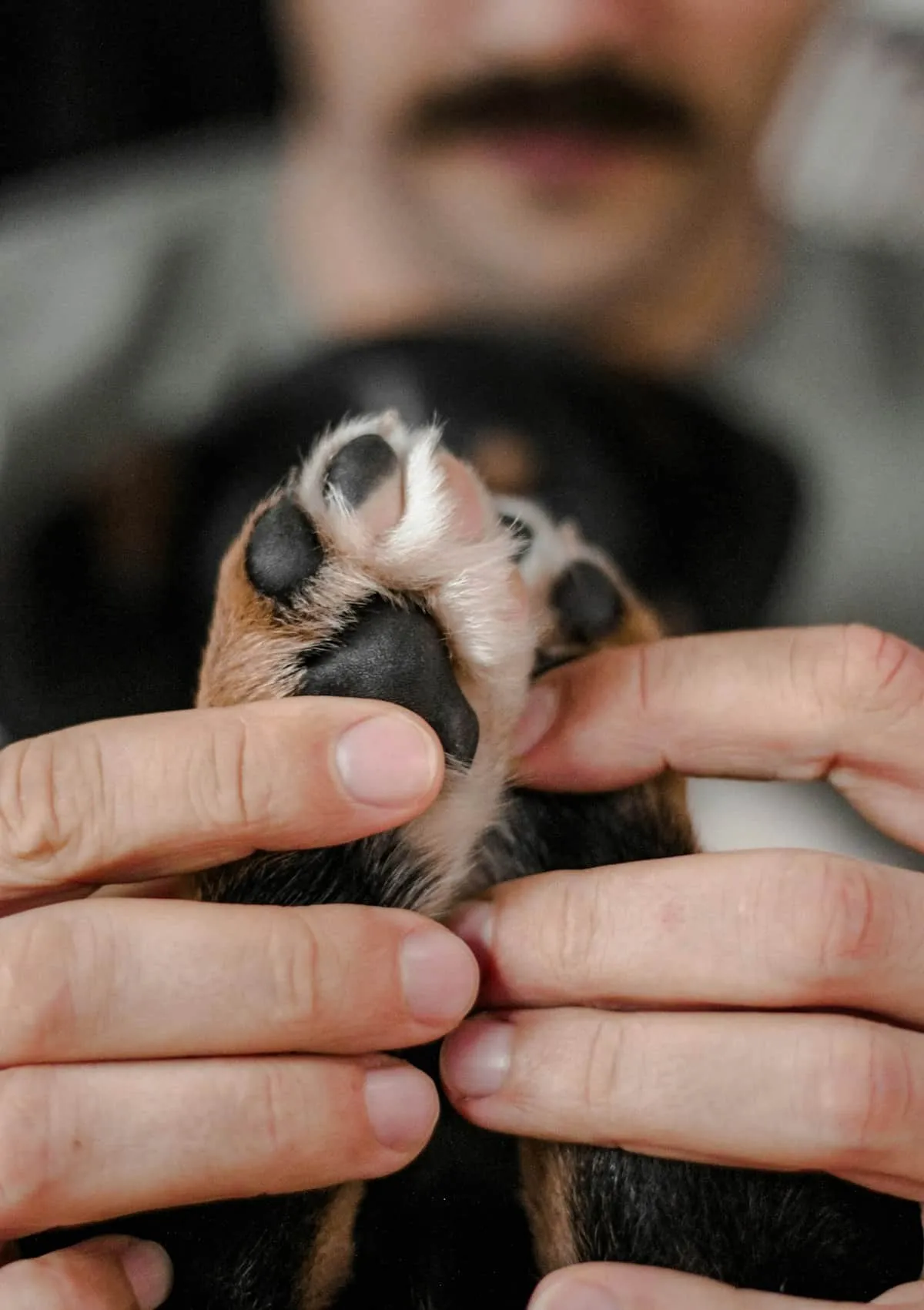
Signs Your Dog Is Dying
By Sarah Bennett · Last updated September 8, 2026 · 12 min read
If you found your way to this page, you are already carrying something heavy. We are sorry you are here. You don't need a clever opening, and we don't intend to give you one. You came looking for clarity about what your dog is experiencing, and we'll try to give you that, gently, carefully, and from veterinary sources rather than guesswork.
The body does specific, recognizable things as a dog approaches the end of life. Recognizing these signs won't change what is happening, but it can change how you are present for it: with less fear, fewer surprises, and a clearer sense of what is care versus what is no longer reachable. You will also find guidance on what to do in the final hours, what comes after, and where to turn for grief support that takes pet loss as seriously as you do.
If you are still in the earlier stage of asking whether it is time, the more useful starting points are our guides on how to know when it's time to put your dog down and the Quality of Life Scale. This article is for the days when that decision has already arrived, or when your dog is dying naturally at home.
Dying Is Different From Declining
Senior dog decline can stretch over months. Dying, meaning the body actively shutting down, is usually measured in hours or days. The signs below are not the slow downhill of arthritis or cognitive change; they are the body's last work.
The distinction matters because some of what frightens owners is the slow version. Slower walks, less appetite at dinner, a few extra naps: those can run for months and they are decline. The acute physical changes, the ones below, cluster in the final days and hours. Telling them apart is most of what this page is for.
10 Signs Your Dog Is Dying
These ten signs come up consistently across veterinary hospice literature, including VCA's palliative care and hospice guidance and the published end-of-life materials from Lap of Love, the largest US veterinary hospice and in-home euthanasia network. Any one of them, taken alone, may have other explanations. Several together, in a dog you already know is at the end of a long illness or at the end of a long life, point one direction.
1. Withdrawal: wanting to be alone, or wanting you closer
Many dying dogs become more distant. They choose a quiet corner. They turn away from the family rooms. They want less attention, less petting, less stimulation. Lap of Love's hospice team describes this as one of the most common late-stage behaviors, the dog seeking a place where the world is small and predictable.
A smaller number of dogs do the opposite. They stay close, lean into people, want to be in arm's reach at every moment.
Either pattern is consistent with the end of life. The wrong response to both is to insist on the opposite. Let the dog choose.
2. Loss of appetite, then loss of thirst
Refusing meals is common across long illness. Refusing water is a more specific late-stage signal.
What VCA and hospice teams describe is a progression: first the regular kibble goes untouched, then favorite treats stop working, then warmed soft foods stop working, and finally water itself. Lap of Love notes that some dogs will continue to take small treats long after they have stopped eating from a bowl, then even the treats stop.
You can offer. Don't force. By the time the body is shutting down, the gut is too. Insisting on food and water at this stage can cause vomiting and discomfort, not nourishment.
3. Changes in breathing
Breathing pattern changes are among the most observable late-stage signs.
What you may see, in roughly the order it tends to develop:
- Slower or irregular breathing, pauses between breaths that get longer
- Open-mouth breathing at rest, not after exertion
- Cheyne-Stokes respiration, cycles of rapid breathing followed by long pauses, then rapid breathing again. The same pattern occurs in dying humans and is documented across veterinary hospice settings.
- A wet, gurgling sound, sometimes called a "death rattle," caused by secretions pooling at the back of the throat when the dog can no longer swallow. The salivary glands continue working as the digestive system shuts down.
- Agonal breathing in the very final moments, sudden, convulsive, gasping breaths that look like the dog is gasping for air. Lap of Love's hospice veterinarians emphasize that these are not signs of pain or distress and they do not mean your dog is still alive. Agonal breaths are the nervous system continuing to send signals to muscles after consciousness is gone.
Knowing the names for these patterns ahead of time helps. Watching them happen without knowing what they are is harder than it needs to be.
4. Loss of bladder and bowel control
In the final days, many dying dogs lose control of urination and defecation, sometimes from weakness, sometimes from organ failure, sometimes because the muscles holding the bladder closed have stopped working.
This is not a failure of training or of dignity. The dog is not "embarrassed." If you are doing the laundry at midnight because of it, that is the work of love at this stage, and a waterproof blanket under your dog is one of the smaller mercies you can offer them and yourself.
5. Cooling body: cold paws, cold ears
As circulation slows, the body's extremities cool first. Paws and ear tips often feel noticeably cold to the touch hours before death. The chest and belly stay warm longer.
This is a quiet sign and an important one. It often arrives after the dog has stopped eating, drinking, and moving, confirming, without sound or visible struggle, that the body is winding down.
6. Restlessness, vocalization, or apparent anxiety
Some dogs are still and quiet at the end. Others become restless, pace if they can still move, or vocalize in a way that is unlike their usual barks or whines.
The reasons can be physical (pain, low oxygen, declining brain function) or the disorientation of a body in transition. A vet on call, whether a regular vet, an emergency line, or a hospice service like Lap of Love, can help assess whether pain is undermanaged, and whether the merciful next step is intervention or more comfort. Restlessness is one of the clearest signs that home care alone may no longer be enough.
7. Loss of mobility
Most dying dogs eventually cannot stand. The legs no longer hold them. The transition from "wobbly" to "unable" can happen over a day or two, or in a matter of hours.
When this is happening, what your dog needs is:
- A soft, padded place to lie (an orthopedic bed if you have one, folded blankets if not)
- Frequent gentle repositioning every few hours to relieve pressure
- Water within reach if they will still drink, with a shallow dish they can reach without lifting their head
- Your hand within range
If you have been wondering whether to call a hospice or mobile vet service, this stage is when that decision typically becomes urgent.
8. Vacant eyes, loss of visual focus
Dogs who are dying often lose visual engagement. They look past you instead of at you. Their gaze settles somewhere in the middle distance and stays there.
Glazed or sunken eyes are commonly described in veterinary hospice settings as a sign that the body has moved past awareness of immediate surroundings. Their hearing often persists longer than vision, talking softly to them, saying the name they have always answered to, still reaches them when the eyes have stopped.
9. Pale or bluish gums
Healthy dog gums are pink. As circulation slows in the final hours, gums often become pale, white, gray, or in some cases bluish. This is a sign that oxygen-carrying blood is no longer reaching tissues effectively.
This is a strong "call your vet or hospice now" signal if other late-stage signs are also present.
10. Lower overall body temperature
A dog's normal body temperature is in the range of 101 to 102.5°F. As death approaches, that drops, often noticeably to the touch through the chest and abdomen. By the final hours, the body has lost the ability to maintain its own warmth.
You can offer a soft blanket. You cannot reverse this with heating, and pet-safe heating sources should be used only in the early phases of decline, not in the active dying phase, when they can cause discomfort the dog can no longer move away from.
How Long After These Signs?
We can't give you a clean answer here, and any source that does is overpromising. Veterinary hospice teams describe a general pattern:
- Last days (1 to 3 days before death): increasing withdrawal, decreased eating and drinking, more sleeping, occasional restlessness
- Last hours (less than 24 hours): refusal of all food and water, loss of mobility, changes in breathing, cooling body, gums becoming pale
- Last minutes: irregular or agonal breathing, eyes losing focus, body completely relaxed
Some dogs move through this timeline quickly, in a single quiet night. Others linger for several days. There is no formula. What helps is recognizing where you are in the curve, so you are not blindsided.
Natural Death Versus Euthanasia: A Compassionate Conversation
This is the question that haunts every senior dog family at this stage, and there is no universally right answer. There is only an honest one.
VCA describes the goal of veterinary hospice as giving a pet "the opportunity to live until he or she dies, maximizing comfort and quality of life until the time when euthanasia becomes the best and most humane option, or the pet dies peacefully before that time arrives." Both endings are in that sentence, and which one arrives is not always something a family gets to choose.
Our own reading, and we want to be clear it is ours rather than a quotation from anyone: an unassisted death is not reliably a gentle one. A dog with terminal illness can carry pain, nausea, and anxiety for days while the body shuts down, and hospice exists partly because that is true. If you are choosing natural death, choose it with palliative support in place and with the option of euthanasia still open, rather than as a decision made once and then endured.
Veterinary hospice services like Lap of Love exist precisely because this conversation is so difficult. Their teams provide:
- Pain assessment and management at home
- Guidance on whether the dog's symptoms can still be managed comfortably
- Support for families choosing natural death with strong palliative care
- In-home euthanasia when that is the family's choice
The 2016 AAHA/IAAHPC End-of-Life Care Guidelines and Dr. Alice Villalobos's "Pawspice" framework both treat euthanasia not as a failure of hospice but as the final stage of compassionate care, available the moment it is needed.
For the decision-making framework specifically, what to look for, what to ask your vet, what questions to ask yourself, see our companion guide: How to Know When It's Time to Put Your Dog Down. The honest takeaway from veterinary hospice literature is that families more often regret waiting too long than acting "too soon."
What to Do in the Final Hours
If your dog is dying at home, the work is small and quiet:
- Keep the room calm. Lower the lights. Reduce traffic and noise. Send other pets to another room if their presence is agitating.
- Stay close, but don't smother. Your hand on them is enough. They have always known your scent.
- Talk softly. Hearing seems to persist longest. Saying their name, telling them they are good, telling them it is okay to go, none of this is sentimental, and all of it reaches them.
- Don't force food or water. Past a certain point, this is uncomfortable for them.
- Keep them dry and warm-but-not-overheated. A light blanket is enough.
- Have your vet's after-hours number or a hospice service contact within reach. If you see signs of clear pain, severe distress, or extended struggling, that is the moment to call.
You don't need to "do" anything else. Being present is the work.
After Your Dog Has Passed
How to know it has happened:
- No breathing at all for several minutes (not pauses, true cessation)
- No response to gentle touch, name, or movement
- Eyes do not blink; pupils are fixed and often dilated
- Body becomes still and gradually cools further
The next practical steps:
- Take your time. There is no rush. You can sit with your dog for an hour, for the afternoon, for as long as you need. Mobile veterinary and aftercare services will accommodate this.
- Call your vet, your hospice service, or a pet aftercare provider to arrange transport and the form of aftercare you've chosen, most commonly communal cremation (lower cost, ashes not returned) or private cremation (ashes returned in an urn).
- A paw print, lock of fur, or photo taken at this point can be deeply meaningful later. Lap of Love and most aftercare providers offer paw prints as part of their service.
- Decide about ashes in your own time. There is no need to decide today.
If you've made the decision in advance, burial in a backyard or pet cemetery, scattering at a meaningful place, a memorial planting, those plans can be enacted when you are ready, not on a clock.
Grief Is Allowed
You loved a dog. The grief of losing them is real grief, and there is no shame in feeling it as fully as you do. Anyone who tells you "it was just a dog" has not paid attention.
If the grief is heavy and you need to talk to someone:
- Cornell University pet loss support, 607-218-7457, Thursday and Sunday evenings, 6 to 9 Eastern, staffed by trained veterinary students. Their page also lists other university helplines and, if the grief has gone somewhere darker, human crisis lines.
- Tufts Cummings School pet loss helpline, 508-839-7966, evenings with 24-hour voicemail.
- Chicago Veterinary Medical Association helpline, 630-325-1600, leave a voicemail and a volunteer calls back on a weekday evening; a weekend message gets a Monday call.
- The Association for Pet Loss and Bereavement, aplb.org, peer support groups and chat rooms.
Grief over a dog often surprises people with its size. It is allowed to take its time. It is allowed to come back in waves months later. None of that means anything is wrong with you.
When These Signs Are an Emergency
Not every late-stage symptom requires a same-day vet visit, but some do. Call your vet, an emergency vet, or a veterinary hospice service immediately if you see:
- Visible or audible signs of severe pain that aren't managed by current medications
- Seizures
- Heavy continuous bleeding
- Severe difficulty breathing with gum color change
- Collapse with continued distress
In these situations, intervention may be either emergency medical care or compassionate euthanasia, but staying with the dog through it alone is not the right answer.
Signs Your Dog Is Dying: Frequently Asked Questions
What are the first signs that a dog is dying? Early signs typically include withdrawal from family activity, gradual loss of appetite, decreased interest in favorite things, and more time sleeping. These can appear weeks to months before the final active dying phase. The more acute physical signs, refusal of water, loss of mobility, changes in breathing, cooling body, pale gums, usually cluster in the final days and hours.
How long does the dying process take in dogs? Veterinary hospice teams describe a typical range from a few days to a few weeks for the broader end-of-life decline, with the final active dying phase often lasting hours to a few days. Some dogs move through it in a single quiet night; others linger longer. There is no precise formula.
Is it cruel to let my dog die naturally at home? It is not automatically cruel, and it is also not reliably gentle. A dog can carry pain, nausea, or anxiety for days while the body shuts down, which is our reading of what hospice teams are set up to manage rather than a quotation from any one of them. Veterinary hospice care can make natural death more comfortable, and palliative euthanasia is available the moment a family decides natural death has stopped being kind. This is a conversation to have with your vet or a hospice service, not a decision to make alone or under pressure.
What does agonal breathing look like in dogs? Agonal breathing appears as sudden, convulsive gasping breaths in the very final moments. Lap of Love's veterinary team emphasizes that these are not signs of pain or distress, they are the nervous system continuing to fire after consciousness has gone, and they do not mean your dog is still alive.
Why do dying dogs get cold? As death approaches, circulation slows, and the body's extremities cool first. Cold paws and cold ear tips often appear hours before death, with the chest and belly staying warm longer. This reflects the cardiovascular system winding down, it is not a temperature issue you can fix by warming the dog with a heating pad.
Do dogs know they are dying? Dogs do not appear to have a conceptual awareness of death the way humans do. They do adapt to physical change, moving more slowly, seeking quiet places, accepting being held. This is observable, but interpreting it as "knowing" goes beyond what veterinary literature supports.
Should I let my dog die at home or take them to the vet? For many families, in-home death, whether natural or via mobile-vet euthanasia, is the kinder choice. The dog avoids the stress of a car ride and a clinical environment in their last hours. Services like Lap of Love and independent mobile veterinarians provide this in most US regions. For dogs with severe acute distress, an emergency vet visit may be the more compassionate immediate step.
How can I help my dog feel comfortable in their final hours? Soft bedding, a quiet room, dim lights, familiar scents, frequent gentle repositioning, and your physical presence are the practical steps. Don't force food or water. Talk softly, hearing persists longest. If you see signs of clear pain or severe distress, call your vet or a hospice service.
Sources
- VCA Animal Hospitals. Palliative Care and Hospice for Pets: Overview. The description of what hospice is for, quoted above. vcahospitals.com
- Cornell University College of Veterinary Medicine. Pet Loss Resources and Support. Helpline number and the wider list of university helplines. vet.cornell.edu
- Cummings School of Veterinary Medicine at Tufts University. Pet Loss Support Helpline. vet.tufts.edu
- ASPCA. End of Life Care. aspca.org
- Lap of Love Veterinary Hospice, Signs Your Dog or Cat Is Dying and Agonal Breathing in Pets. The largest US in-home veterinary hospice and euthanasia network.
- AAHA / IAAHPC. 2016 End-of-Life Care Guidelines. American Animal Hospital Association and International Association for Animal Hospice and Palliative Care.
- Villalobos, A. & Kaplan, L. Canine and Feline Geriatric Oncology: Honoring the Human-Animal Bond. Wiley-Blackwell. ("Pawspice" framework for end-of-life care.)
- ASPCA, End of Life Care. (Listed for its written guidance only. The pet loss hotline and grief email this site once cited here are not on the ASPCA's own end-of-life page, which offers no phone line; the working lines are in the body above, each confirmed on 2026-09-14.)
- Association for Pet Loss and Bereavement (APLB), peer-led grief support, aplb.org
Keep Reading
- How to Know When It's Time to Put Your Dog Down (5 Signs & a Vet-Used Framework)
- Quality of Life Scale for Dogs (HHHHHMM, Vet-Used Tool)
- Dog Dementia: 4 Stages and What to Expect at Each
- 5 At-Home Ways to Ease Your Senior Dog's Arthritis
About the authors
Sarah Bennett writes about senior dog care from a household centered on her Border Collie Lucy. Distinguishing 'dying' from 'declining' was the editorial line Sarah worked hardest on, owners need a clear signal, not vague language. She is not a veterinarian; her work is reported, sourced from veterinary literature, peer-reviewed research, and manufacturer documentation, and reviewed against published guidelines.
Leo Bennett is the co-author of Senior Dog Daily and Sarah's husband. The pair share research and writing duties on the site.