Cushing's Disease in Senior Dogs: When It Isn't Just Old Age
By Sarah Bennett · Last updated June 8, 2026 · 12 min read
Information, not diagnosis. We are not veterinarians. New increased thirst and urination in an older dog always deserves a vet visit, since it can signal Cushing's, diabetes, or kidney disease. If your dog is already on trilostane and becomes weak, stops eating, vomits, or has diarrhea, treat it as an emergency and call your vet now.
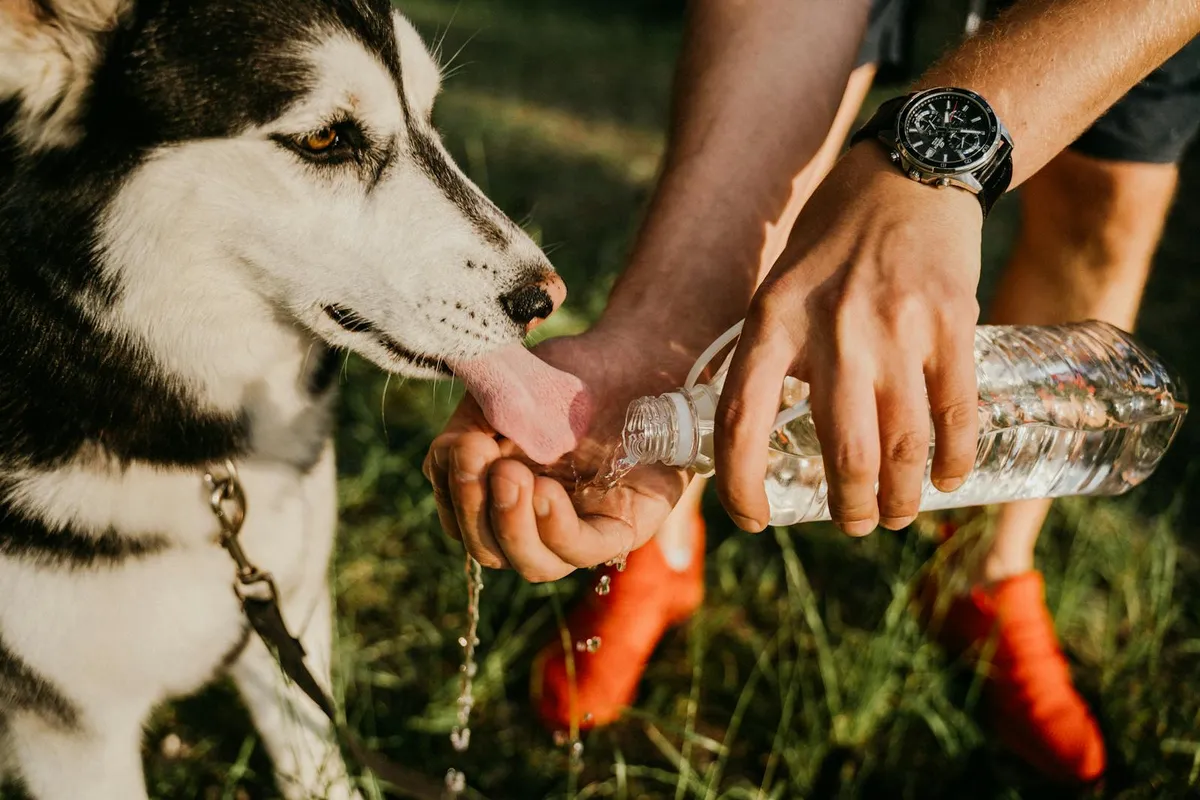
Your old dog is drinking bowl after bowl and asking to go out at night. Her belly has rounded into a pot shape, her coat is thinning along her sides, and she pants when nothing is hot. It is the kind of slow, scattered change that is easy to file under "she's just getting old." But put those signs together and they spell something specific, common, and important: Cushing's disease, an excess of the stress hormone cortisol. It is treatable, and dogs usually feel markedly better once it is managed. The catch is that because it creeps in so gradually, Cushing's disease in senior dogs is one of the most under-recognized conditions there is.
There is one more reason this page matters: Cushing's is easy to confuse with diabetes, because both make a dog drink and urinate far more than usual. Telling them apart changes everything about what comes next, so we will walk through that, then how Cushing's is diagnosed and how it is managed.
Is It Cushing's Disease, or Just Old Age?
Cushing's disease (the medical name is hyperadrenocorticism) is what happens when a dog's body is flooded with too much cortisol, the hormone that normally helps manage stress, metabolism, and inflammation. Too much of it, day after day, produces a cluster of signs that show up slowly over months:
- Drinking and urinating much more than usual, the most common early sign, often the first thing owners notice
- A bigger appetite, sometimes ravenous, with weight gain or a hard time losing weight
- A pot-bellied, sagging abdomen, from fat redistribution and weakened belly muscles
- Hair loss, often symmetric down both flanks, with a thin coat and skin that heals slowly
- Panting more than the weather or activity explains
- Muscle weakness and lethargy, less stamina, trouble with stairs
- Recurrent skin or urinary infections that keep coming back
No single one of these proves Cushing's, and any can have other causes. But the pattern, especially the drinking, the pot belly, and the coat changes together, is the picture that should prompt a vet visit rather than a shrug. The whole trap of this disease is that each piece looks like ordinary aging.
Cushing's Disease vs Diabetes in Senior Dogs
This is the distinction worth understanding, because the overlap sends a lot of owners down the wrong path. Both Cushing's and diabetes make a dog drink and pee dramatically more, so that shared sign cannot tell them apart. The differences are elsewhere:
| Sign | Cushing's disease | Diabetes |
|---|---|---|
| Thirst & urination | Markedly increased | Markedly increased (shared sign, cannot tell them apart) |
| Body weight & shape | Weight gain, or a stubborn pot belly | Weight loss despite a good appetite |
| Coat & skin | Symmetric hair loss, thin skin, recurrent infections | Usually normal |
| Appetite | Often increased | Often increased |
| Can occur together? | Yes: high cortisol works against insulin, triggering or worsening diabetes | Yes, and blood sugar is harder to control alongside Cushing's |
- Body weight and shape. Diabetes classically causes weight loss despite a good appetite, as the body cannot use its fuel. Cushing's more often brings weight gain or a stubborn pot belly.
- The coat and skin. Symmetric hair loss, thin skin, and recurrent infections point toward Cushing's. Diabetes does not usually do this.
- They can occur together. This matters more than anything else here. The high cortisol of Cushing's works against insulin, so it can trigger or worsen diabetes, and it can make an existing diabetic's blood sugar very hard to control. An older dog can genuinely have both.
Because the two are tangled, and because the same thirst can also signal kidney disease or diabetes, the only way to sort it out is testing, not guesswork. A dog who suddenly drinks far more is telling you something measurable is wrong, and it is worth listening to.
What Causes Cushing's Disease
The excess cortisol comes from one of three places, and which one matters for treatment:
- A pituitary tumor (the large majority, roughly 85% of cases). A usually small, benign tumor in the pituitary gland at the base of the brain overproduces the signal that tells the adrenal glands to make cortisol. This is by far the most common form.
- An adrenal tumor (most of the rest, roughly 15%). A tumor on an adrenal gland itself churns out cortisol. These may be benign or malignant, and surgery can sometimes be curative.
- Steroid medication (iatrogenic Cushing's). Long-term steroids given for another condition can produce the same picture. Here the fix is to carefully taper the steroid under veterinary guidance, never to stop it suddenly.
How Cushing's Disease in Senior Dogs Is Diagnosed
There is no single, perfect test for Cushing's, which is why diagnosis is a stepwise process and why your vet will not test for it without the signs to justify it.
It usually starts with routine bloodwork and a urinalysis, where certain clues, a raised alkaline phosphatase, high cholesterol, dilute urine, point toward the disease and help rule out others. From there, your vet moves to hormone testing. The two main screening tests are the low-dose dexamethasone suppression test, which is very sensitive and the one many internists favor, and the ACTH stimulation test. A urine cortisol-to-creatinine ratio is sometimes used first to help rule the disease out. Finally, an abdominal ultrasound helps tell the pituitary form from an adrenal tumor by looking at the adrenal glands themselves.
If this sounds like more than one visit, it often is. The diagnostic guidance vets follow, the ACVIM consensus statement, is candid that none of the tests is flawless, which is exactly why the picture is built from several pieces rather than one number. It is worth the care, because the treatment depends on getting it right.
How Cushing's Disease in Senior Dogs Is Treated
For most dogs, Cushing's is managed rather than cured, and managed well it gives back a comfortable life. The mainstay is a medication called trilostane (brand name Vetoryl), which reduces how much cortisol the adrenal glands produce. It is the only drug the FDA has approved for both the pituitary and the adrenal form. One other, selegiline (Anipryl), is approved too, but only for certain pituitary cases, so it is worth asking which your dog has before assuming there is a single option. Most dogs start to improve within two to four weeks, the excess thirst and panting easing first. Those are exactly the trends a home monitor can watch: the collar sensor in our Maven Pet review tracks drinking and resting breathing over time, which can help you see the treatment working, or slipping.
Two things to know about treatment. It is lifelong, and the dose often needs adjusting over time, guided by follow-up cortisol testing, so this is a partnership with your vet rather than a one-time fix. And it must be monitored, because the goal is to bring cortisol down without pushing it too low. An adrenal tumor may instead be treated with surgery in the right candidate, and iatrogenic Cushing's is handled by tapering the steroid that caused it.
The encouraging reality is that a dog whose Cushing's is controlled usually feels like herself again, drinks normally, regrows her coat, and gets her energy back, often for years. Many dogs with treated Cushing's have a normal life expectancy and ultimately pass from unrelated age-related causes.
When Cushing's Disease Becomes Urgent
Cushing's itself is a slow disease, not a sudden emergency, so the urgent situations are specific:
- A dog on trilostane who becomes weak, stops eating, vomits, or has diarrhea. This can mean cortisol has dropped too low, which is dangerous, and it needs a vet the same day. Do not give the next dose until you have spoken to your vet.
- An older dog with sudden, severe, unexplained illness alongside these signs.
Short of that, the right pace is steady: get the workup done, start treatment, and keep the monitoring appointments.
Frequently Asked Questions
What are the first signs of Cushing's disease in dogs? The earliest and most common sign is a noticeable increase in drinking and urinating. Soon after, owners often see a bigger appetite, a pot-bellied shape, thinning or symmetric hair loss, more panting, and less stamina. Because these come on slowly and look like aging, the pattern as a whole, rather than any single sign, is the cue to see a vet.
How can I tell Cushing's disease from diabetes in my dog? Both cause heavy drinking and urination, so that sign alone cannot separate them. Diabetes usually causes weight loss despite a good appetite, while Cushing's more often brings weight gain, a pot belly, and symmetric hair loss with skin changes. The two can also occur together, since Cushing's can trigger diabetes, so testing by your vet is the only reliable way to know.
How is Cushing's disease diagnosed in dogs? There is no single test. Diagnosis starts with bloodwork and urinalysis for supporting clues, then uses hormone tests such as the low-dose dexamethasone suppression test or the ACTH stimulation test, and often an abdominal ultrasound to distinguish a pituitary cause from an adrenal tumor. Vets test for it only when a dog shows the clinical signs.
Is Cushing's disease in dogs a death sentence? No. For most dogs it is a manageable chronic condition, not a terminal one, and the improvement is usually quick: on trilostane the drinking, the accidents and the panting tend to settle within weeks. It is worth knowing the numbers rather than a vague "years" before you start. Cornell puts average survival on medical therapy at 2 to 2.5 years for the pituitary form, which covers roughly 85% of dogs, and about 1 year for the adrenal form. Many of those dogs are already ten or older and go on to die of something else entirely. It does require lifelong medication and regular monitoring.
Is it worth treating Cushing's in an old dog? Often yes, because untreated Cushing's steadily erodes quality of life and raises the risk of other problems, while treatment usually restores normal drinking, a fuller coat, and energy. The decision depends on your individual dog, the type of Cushing's, and other health issues, and it is one to weigh with your vet, but age alone is not a reason to leave it untreated.
Is Cushing's disease painful for dogs? Cushing's itself is not usually painful the way an injury is, but it does make a dog feel unwell and slowly erodes her comfort. The high cortisol brings muscle weakness, a heavy panting-prone body, fragile skin, and infections that keep returning, all of which lower quality of life. Treating it is as much about giving back comfort and energy as it is about the lab numbers, which is part of why it is worth addressing rather than accepting as aging.
Is there a natural treatment for Cushing's disease in dogs? There is no proven natural cure. Some owners ask about melatonin and flaxseed lignans, which are occasionally tried for a mild or atypical form under veterinary guidance, but the evidence is limited and they are not a substitute for proper diagnosis and treatment. The real risk of leaning on an unproven natural remedy is that actual Cushing's keeps progressing while it goes untreated, so discuss anything you want to try with your vet rather than using it to put off a workup.
Sources
- Behrend, E. N., Kooistra, H. S., Nelson, R., Reusch, C. E., & Scott-Moncrieff, J. C. (2013). Diagnosis of spontaneous canine hyperadrenocorticism: 2012 ACVIM consensus statement (small animal). Journal of Veterinary Internal Medicine, 27(6), 1292-1304. (Screening and differentiating tests. Not open access; the abstract is on the linked page.)
- U.S. Food and Drug Administration. Treating Cushing's Disease in Dogs. (Trilostane/Vetoryl is the only drug approved for both the pituitary and adrenal forms; selegiline/Anipryl is approved for certain pituitary cases.)
- Cornell University College of Veterinary Medicine, Riney Canine Health Center. Cushing's syndrome. (Average survival on medical therapy: 2 to 2.5 years for pituitary-dependent disease, about 1 year for adrenal-dependent.)
- Merck Veterinary Manual. Cushing disease (pituitary-dependent hyperadrenocorticism) in animals. (Approximately 85% pituitary-dependent, 15% cortisol-producing adrenal tumor.)
Keep Reading
- Senior Dog Diabetes: Symptoms and What to Watch For
- Kidney Disease in Senior Dogs
- How to Prepare for a Senior Dog Vet Visit
About the authors
Senior Dog Daily is written by Sarah Bennett and Leo Bennett, a husband-and-wife team in the American Midwest, with their Border Collie Lucy as the reason it started. Neither of us is a veterinarian. We read the primary sources, including the ACVIM consensus statement and FDA treatment guidance, and turn them into plain guides, with the claims traceable to the sources above. With Cushing's disease in senior dogs, the most useful thing you can do is notice the pattern early, the drinking, the pot belly, the thinning coat, and ask your vet to look, because this is a problem that aging hides and treatment can genuinely turn around.