
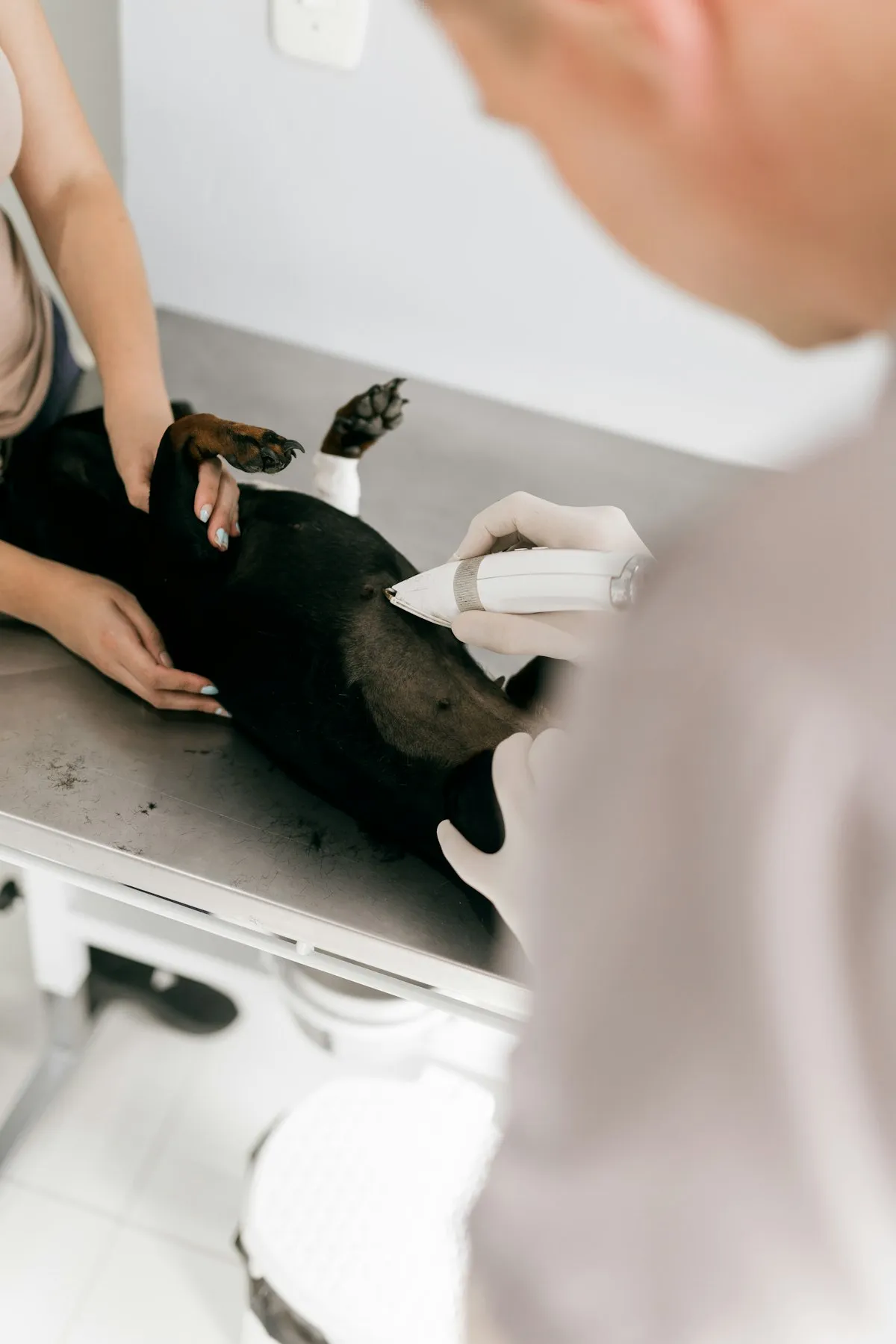
Senior Dog Vet Visit Prep
By Sarah Bennett · Last updated May 25, 2026 · 15 min read
This article is informational and is not a substitute for veterinary care. The checklist below is designed to make your senior dog's wellness visits more productive, not to replace the clinical judgment your vet brings. We are not veterinarians.
Senior dog vet visit prep is the difference between a visit that surfaces a problem early, when there's still room to act on it, and a visit that becomes a hurried catch-up. Older dogs' health shifts faster than younger dogs', the diagnostic scope of a senior wellness exam is broader, and the 20 minutes you have with the vet need to do more work than they did when she was three. The good news is that most of what makes a visit productive is preparation that happens before you walk in the door.
Below is a complete prep checklist for senior dog wellness visits, built around the 2023 AAHA Senior Care Guidelines: what to do in the two weeks before, what to bring, the 10 questions to actually ask, what the vet will check, when to push for extra tests, what to capture during the visit, and how to follow up afterward. The framework works for both routine semi-annual checkups and for visits you're booking because something has changed.
If you're tracking health values over time, our free senior dog health record template is built to slot directly into this workflow, bring it to the visit, update it from the vet's notes, repeat. If she's on multiple medications, our senior dog medication schedule template is the parallel tool for the prescription side.
Why Senior Dog Vet Visits Need More Prep Than Younger Ones
A puppy's wellness visit is largely about confirming things are on track. A senior dog's wellness visit is about catching shifts in the things that are changing, and over a senior's six-month interval, a lot can change.
AAHA's position: the 2023 AAHA Senior Care Guidelines recommend twice-yearly wellness exams for senior dogs (age 7 and older, or 5-6 for large and giant breeds). Organ function can shift meaningfully within six months in an older dog. Kidney values, liver enzymes, thyroid hormone levels, and blood pressure can all change between a January and a July visit, and catching those changes early changes outcomes.
The diagnostic scope is broader than the standard physical exam most owners associate with vet visits. A senior wellness exam typically adds bloodwork (chemistry panel + CBC), urinalysis with specific gravity, blood pressure measurement, and a structured pain assessment to the standard physical. Some practices also include a fasting glucose check, SDMA (the kidney marker that rises earlier than creatinine), and thyroid testing depending on breed and history. Our guide to senior dog bloodwork breaks down what each of these tests catches and how to read the results.
You're the historian. The vet sees your dog for 20-40 minutes; you live with her. Subtle changes in appetite, thirst, urination frequency, gait, sleep patterns, and behavior are usually the data points that drive the visit's most important findings, and those data points only exist if you've been paying attention and writing things down. Senior dogs reward observant owners disproportionately. The owner who notices the slightly increased water bowl refill rate three weeks before the visit hands the vet a meaningful diagnostic clue. The owner who walks in unprepared makes the same visit much less productive.
The prep that follows is structured around that reality: capture what's changed, bring what's needed, ask what matters, document the visit, follow up cleanly.
The Senior Dog Vet Visit Prep Checklist: Two Weeks Before
The two weeks before the visit are when most of the useful prep happens. Use the timeline below as a guide; adapt to your dog's specific situation.
14 days before:
- Start a daily observation log if you don't already have one. Date, weight (if you have a scale), appetite (full / partial / refused), water intake (normal / increased / decreased), urination frequency, stool quality, energy level, any unusual events.
- Note any specific changes you've already observed, even ones that seem minor. "She seems slightly slower on the stairs" is exactly the kind of input that gets lost without notes.
- Schedule the appointment for first or last slot of the day if possible. These tend to have less wait time and the vet is often less rushed.
7 days before:
- Photograph both sides of her food bag (or take the canned food label). The vet may ask about specific brand and formulation.
- Write down the names and doses of all medications, prescription, supplements, joint support, CBD, anything she takes. Quantities and timing.
- Take photos of any visible changes: skin lumps, eye cloudiness, swelling, gait issues. Photos with date stamps help track progression.
3 days before:
- Review the log and circle anything that's clearly different from her baseline.
- Write your questions list. The "10 Questions to Ask Your Vet" section below is a starting framework.
- If a fasting blood draw is planned, confirm fasting instructions (typically 12 hours).
Day of:
- Light morning if fasting is required. Water is usually OK to leave available.
- Bring the log, the food bag photos, the medication list, the questions list, and our health record template if you're using it.
- A favorite treat (vet-approved post-exam) helps her associate the visit with a positive ending.
What to Bring to the Senior Dog Vet Visit
Pack the checklist. Anything you forget is friction you don't need:
- Observation log, two weeks of daily notes if you have them.
- Medication list, names, doses, frequency, prescribing vet (if different).
- Supplement list, joint, CBD, probiotic, omega-3, anything else. Include brand and dose.
- Food bag photos or label, both sides if photographing dry food; the can or pouch label for wet.
- Recent fresh fecal sample if the vet asked for one (most senior visits don't require it routinely, but some do annually for parasite screening).
- Recent fresh urine sample if the vet asked for one (less common to bring; more often collected at the clinic).
- Photos of visible changes, lumps, eye changes, skin issues.
- List of questions, written down, in order of priority.
- Health record template or notebook for capturing the vet's recommendations during the visit.
- Carrier or leash appropriate to her size and mobility.
- Treats and a familiar toy to help her settle.
- Recent records if it's a new vet or you've seen a specialist between visits, bloodwork, imaging reports, surgical notes.
- Payment method, knowing the typical cost in advance prevents surprises (see Cost Expectations below).
For long-running multi-medication situations, our medication schedule template captures this all in one place, bring the template itself.
10 Questions to Ask Your Vet About a Senior Dog
Pick the ones that match your dog's specific situation. Most senior dogs benefit from working through 5-7 of these per visit; trying to cover all 10 in one appointment doesn't leave time for the answers.
- What changes should I expect in her over the next 6-12 months? Sets the baseline for what's "normal aging" vs what's a concern.
- Are her bloodwork values trending in any direction I should know about? Asks the vet to look at the curve, not just the snapshot.
- Is her current diet still right for her age, weight, and any conditions? Senior nutritional needs shift; the food that was right at 5 may not be at 10.
- What's her current pain level, and what would change my answer? Senior dogs hide pain well. The structured pain assessment is part of the AAHA-recommended senior exam.
- Are there any vaccines that should be adjusted or paused for her age and lifestyle? Some core vaccines remain important; some optional ones may not justify the immune burden in a senior with weaker resilience. Our guide to whether senior dogs still need vaccines covers what changes with age, including why core boosters are every three years, not annual.
- Are there any preventive screenings I should be considering, dental X-rays, cardiac panel, abdominal ultrasound, eye exam? Asks the vet to volunteer the lower-frequency screenings that don't always come up.
- Should her dental care plan change? Dental disease is common in seniors, contributes to systemic issues including kidney damage, and is often under-treated. See our senior dog dental care guide. If a cleaning under anesthesia comes up and it worries you, our guide to whether anesthesia is safe for a senior dog can help you weigh it.
- What signs would warrant calling you before the next scheduled visit? Specific concrete signs that change the situation from "log it" to "call today."
- How are her joints, and is there anything I should be doing differently for mobility? Joint health is often where the most actionable senior care decisions live. See our home arthritis care guide.
- What questions would you have if you saw this profile and didn't know us? A specific senior-care prompt that surfaces the vet's clinical instinct beyond the formal exam, sometimes the most useful question of the visit.
A working copy of these questions printed and brought to the visit is more reliable than memory in a 20-minute appointment.
What the Vet Will Actually Check at a Senior Wellness Exam
The senior wellness exam expands meaningfully past the standard adult physical. Knowing what's coming helps you anticipate the vet's questions and watch for what they're examining:
Standard physical:
- Weight + body condition score (BCS)
- Temperature, pulse, respiration
- Eyes, ears, mouth (dental disease check)
- Skin and coat
- Lymph nodes
- Abdominal palpation
- Joint range of motion + pain response
- Heart and lung auscultation
Senior-specific additions:
- Bloodwork: chemistry panel + CBC. Tracks organ function, anemia, electrolytes.
- SDMA: the kidney marker that rises earlier than creatinine. Worth specifically asking for if it's not included by default.
- Urinalysis with specific gravity (USG): assesses kidney concentrating ability before bloodwork changes show up.
- Blood pressure measurement: hypertension is common in older dogs and damages kidneys when uncontrolled.
- Structured pain assessment: AAHA-recommended; uses standardized scales to capture pain the dog can't report.
- Dental disease grading: visual stages 1-4 with notes for follow-up dental cleaning timing.
- Thyroid testing (T4 or full panel): symptoms of hypothyroidism are subtle and easily missed.
- Fasting glucose if diabetes is a possibility based on breed, history, or symptoms.
The first senior wellness exam typically takes longer than subsequent ones (45-60 minutes vs 30-45) because the vet is establishing baselines. Subsequent visits compare to those baselines and become more efficient.
When to Push for Extra Tests
Sometimes the standard senior exam panel isn't enough for the specific dog. Cases where it's worth asking about additional testing:
- Concurrent disease: a dog with diabetes, kidney disease, or Cushing's needs more frequent bloodwork, typically every 3-4 months rather than every 6.
- Breed-specific risks: large and giant breeds for cardiac disease (echocardiogram), Cocker Spaniels for autoimmune disease (Coombs test if anemia is found), Golden Retrievers and Boxers for cancer (lymph node aspirates if any node feels unusual). Our senior Labrador, senior Golden Retriever, and senior German Shepherd guides cover breed-specific considerations.
- Unexplained changes: weight loss, appetite shifts, increased thirst or urination, or behavioral changes that don't match the standard panel results may warrant abdominal ultrasound, cardiac panel, or referral to a specialist.
- Mobility issues: an orthopedic-focused exam, X-rays of affected joints, or referral to a veterinary rehabilitation specialist may be appropriate.
- Bad breath that doesn't match periodontal disease: can signal kidney or liver issues; the dental exam alone won't catch this.
The phrasing that works at the visit: "Given her age and what you're seeing today, is there anything beyond the standard senior panel you think we should consider?"
During the Visit: What to Observe and Document
The vet documents the medical record. You should be documenting your own version, what was said in plain language, what was recommended, what was deferred, what to watch for. This is where most owners lose information they thought they'd remember.
Capture during the appointment:
- Specific bloodwork values mentioned (or get the printout / digital copy)
- Diagnoses made or ruled out
- Medications prescribed: name, dose, frequency, duration, what it's treating
- Supplements suggested
- Diet changes recommended
- Follow-up tests planned and timing
- "Watch for X" instructions
- Next visit timing
Useful to ask explicitly:
- "What's the most important thing you've told me today?" The vet has just delivered 15 minutes of information; this question forces a triage that helps you remember.
- "What can wait, and what can't?" Distinguishes the urgent from the optimization.
- "Can you write down the recommendations in priority order?" Especially useful if multiple things were discussed.
Photos of the vet's printout (or the chart) on your phone are not redundant, print copies get lost between visits, and the digital records sometimes lag.
After the Senior Dog Vet Visit: Follow-up Checklist
The 48 hours after the visit are when the value of the visit either compounds or evaporates:
Within 24 hours:
- Transcribe the vet's recommendations into your health record template or other long-term record.
- Update the medication schedule template with any new prescriptions, dose changes, or discontinuations.
- Schedule any follow-up appointments mentioned (don't trust yourself to remember in two weeks).
- Fill new prescriptions and confirm the first dose is given on the correct schedule.
Within 7 days:
- Watch for any side effects from new medications or diet changes; call the vet's office promptly if anything concerns you.
- Implement any home care recommendations (new feeding schedule, weight tracking cadence, joint exercises, dental routine).
- Read the bloodwork report carefully, even values inside the "normal" range tell a story when tracked over time.
Ongoing:
- Continue the observation log; the prep window starts again immediately for the next visit.
- Note any changes in response to the new plan (improvement, no change, deterioration).
The visit is one data point. The work that compounds is the consistent capture and follow-through between visits.
Senior Dog Vet Exam Frequency: Annual vs Semi-Annual
The annual vet checkup senior dog rhythm that worked when she was younger isn't enough anymore. The AAHA 2023 Senior Care Guidelines are clear on this: twice-yearly wellness exams for senior dogs. The practical framework:
- Age 7+ (most breeds) or 5-6+ (large and giant breeds): semi-annual (every 6 months) wellness exams. Standard senior wellness panel each visit.
- Concurrent chronic disease (CKD, diabetes, Cushing's, heart disease): often quarterly (every 3-4 months) with adjusted scope per the specific condition.
- Stable dogs without major issues past age 10-11: semi-annual still preferred but some owners and vets settle on annual with closer at-home monitoring; this is a household decision with documented trade-offs.
- Active acute issue: as frequent as the issue requires; the schedule resumes its baseline cadence once stable.
The cost of one extra wellness exam per year is meaningful but not enormous, typically $150-$300 depending on whether bloodwork is repeated. The cost of missing an early kidney change because the visit was deferred can be substantial. For most senior dogs, the semi-annual cadence is the right default.
Cost Expectations
US averages for a senior dog wellness exam in 2026:
- Basic senior wellness exam (physical + standard bloodwork + urinalysis): $200-$400
- Full panel (adding SDMA, blood pressure, thyroid, fecal): $350-$600
- Dental X-rays (if added): +$200-$400
- Echocardiogram (cardiac-focused): +$400-$700 at referral specialty practice
- Abdominal ultrasound: +$400-$600
Pet insurance enrolled before any specific condition develops often covers wellness components in addition to illness; check the specific policy. Routine senior wellness costs without insurance run $400-$1,200 per year for the semi-annual cadence, more for dogs with chronic conditions requiring quarterly visits.
Frequently Asked Questions
How often should a senior dog see the vet?
The AAHA 2023 Senior Care Guidelines recommend semi-annual (every 6 months) wellness exams for senior dogs (age 7+, or 5-6+ for large and giant breeds). Dogs with chronic conditions (kidney disease, diabetes, Cushing's, heart disease) typically need quarterly visits. The semi-annual cadence catches organ function changes that can shift meaningfully within six months, which is why the schedule isn't over-cautious.
What does a senior dog wellness exam include?
Beyond the standard physical (weight, temperature, eyes/ears/mouth, abdominal palpation, joint range of motion), a senior wellness exam typically adds bloodwork (chemistry panel + CBC), urinalysis with specific gravity, blood pressure measurement, and a structured pain assessment. Many vets also include SDMA (kidney marker), fasting glucose, and thyroid testing depending on the dog's breed and history. Dental disease grading is part of the visual exam. The first senior wellness visit typically takes 45-60 minutes; subsequent visits 30-45.
What should I bring to a senior dog vet visit?
What to bring to a senior dog vet visit: observation log of the past 2 weeks, complete medication list with doses, supplement list, food bag photos (both sides) or the actual can/pouch label, photos of any visible changes (lumps, eye cloudiness, gait), list of questions, your health record template if using one, and a treat plus familiar toy. If a fasting blood draw is planned, no food for 12 hours beforehand. The observation log is the single highest-value item, it's the data that drives the visit's most important findings.
What questions should I ask the vet about my senior dog?
The 10 most useful questions for a senior dog wellness visit cover: expected age-related changes, bloodwork trends, current diet appropriateness, pain level, vaccine adjustments, preventive screenings (dental X-rays, cardiac, abdominal), dental care plan, signs warranting an unscheduled call, joint health, and the open-ended question "what would you be concerned about if you didn't know us?" Pick 5-7 per visit; trying to cover all 10 doesn't leave time for the answers.
How do I prepare a senior dog for a vet visit?
Preparing a senior dog for a vet visit is more about preparing yourself, the dog mostly needs the standard treat-and-leash routine. Start a daily observation log two weeks before. Photograph the food bag. Write down all medications and supplements with doses. Take photos of any visible changes. Write your questions list. Confirm fasting instructions if blood draw is planned. On the day, bring everything in a folder or on your phone so it's accessible during the appointment.
When should I take my senior dog to the vet between scheduled visits?
Sooner rather than later for: persistent appetite changes (more than 48 hours), increased thirst or urination lasting more than 2-3 days, vomiting more than once or with blood, lethargy that doesn't match her baseline, sudden behavior changes, visible eye changes, mouth ulcers, weakness or collapse, new lumps that grow noticeably, or any acute distress. The general rule: if you're wondering whether to call, call. Senior dogs respond better to early intervention than to wait-and-see.
What's the difference between a senior wellness exam and a sick visit?
A wellness exam is scheduled, longer (30-60 minutes), focused on screening for changes before they become problems, and usually includes preventive bloodwork and other diagnostics. A sick visit is booked because something has changed, focused on diagnosing and treating the specific concern, and typically shorter unless the workup becomes extensive. Senior dogs often need both, the semi-annual wellness exams plus unscheduled sick visits when something comes up between them.
How long do senior dog vet visits take?
The first senior wellness exam typically takes 45-60 minutes because the vet is establishing baselines. Subsequent semi-annual visits take 30-45 minutes. Sick visits are usually shorter (20-30 minutes) unless workup becomes extensive. Plan for the appointment to take longer than scheduled, booking the first or last slot of the day reduces the cascading-delay risk.
Sources
- American Animal Hospital Association, 2023 AAHA Senior Care Guidelines for Dogs and Cats. aaha.org/resources/2023-aaha-senior-care-guidelines-for-dogs-and-cats
- American Animal Hospital Association, Diagnostic Tests and Recommended Frequencies for Senior Dogs and Cats. aaha.org/resources/2023-aaha-senior-care-guidelines-for-dogs-and-cats/diagnostic-tests-and-recommended-frequencies-for-senior-dogs-and-cats
- American Animal Hospital Association, Life Stage Checklists. aaha.org/resources/life-stage-canine-2019/life-stage-checklist
- American Animal Hospital Association, Senior Care Guidelines Toolkit. aaha.org/resources/2023-aaha-senior-care-guidelines-for-dogs-and-cats/toolkit
- 2023 AAHA Senior Care Guidelines (PubMed reference). pubmed.ncbi.nlm.nih.gov/36584321
Keep Reading
- Free Senior Dog Health Record Template, the long-term tracking companion to this visit prep workflow
- Senior Dog Medication Schedule Template, for the prescription side of senior care
- 8 Senior Dog Aging Signs, what to be watching for between visits
- Senior Dog Dental Care, the dental angle of the wellness exam
- Pet Insurance for Senior Dogs, how wellness exam costs interact with pet insurance enrollment
- Senior Dog Kidney Disease, the chronic condition the senior panel is most often catching
- Senior Dog Diabetes Symptoms, the other chronic condition senior wellness panels surface
About the authors
Sarah Bennett writes about senior dog care from a household centered on her Border Collie Lucy. The AAHA 2023 semi-annual recommendation and the structured pain assessment standard were the framework anchors. She is not a veterinarian; her work is reported, sourced from veterinary literature, peer-reviewed research, and manufacturer documentation, and reviewed against published guidelines.
Leo Bennett is the co-author of Senior Dog Daily and Sarah's husband. The pair share research and writing duties on the site.
Senior dog vet visit prep is a small investment that compounds. Two hours of preparation over two weeks turns a 30-minute appointment into the most useful 30 minutes of her medical year.