
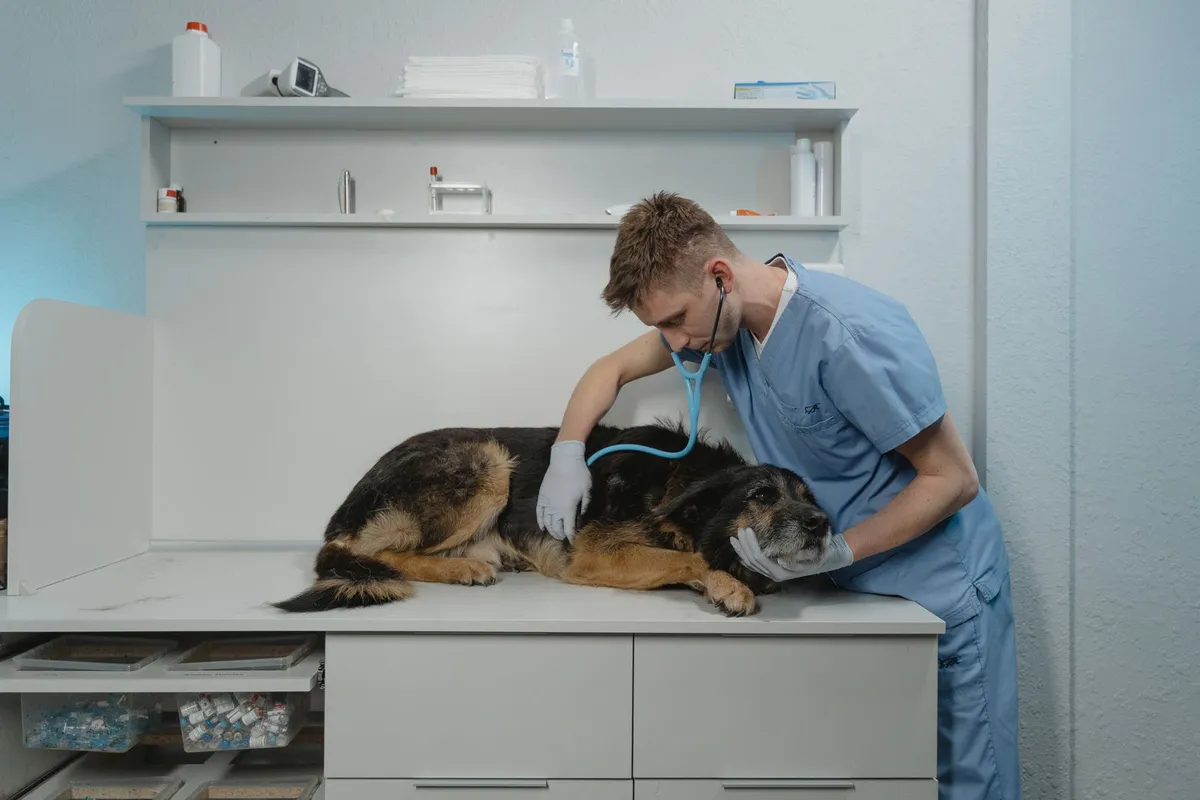
Senior Dog Wellness Exam: What's Included, How Often, and What It Costs
By Sarah Bennett · Last updated August 9, 2026 · 11 min read
The short version: Once a dog reaches her senior years, most veterinary groups recommend a wellness exam every six months, not once a year. A full senior dog wellness exam is a physical exam plus a small panel of screening tests: a complete blood count, a biochemistry profile, a urinalysis, and a thyroid check, sometimes with blood pressure and a heartworm test. The point is to catch kidney, liver, thyroid, and other diseases before she shows any signs. In 2026, expect the office visit plus basic bloodwork to run roughly $100 to $300, with a comprehensive senior panel higher, though your clinic and region set the real number. September is Senior Pet Health Month, which makes it a natural time to book the visit you have been meaning to schedule.
"She seems fine, so does she really need all of that?" It is the question almost every owner of an aging dog asks at the front desk, and it is a fair one. The honest answer is that "seems fine" is exactly the window a senior dog wellness exam is built for. Older dogs are good at hiding early illness, and the screening done at these visits is designed to find problems while they are still quiet and still manageable. I write as a researcher and owner, not a veterinarian, so treat this as a map of what to expect and what to ask, not as medical advice.
How often should a senior dog see the vet?
Twice a year. For most of adult life, an annual visit is enough, but once a dog is considered senior, the American Animal Hospital Association and other veterinary groups recommend a wellness exam roughly every six months, with fuller bloodwork at least once a year. The reasoning is simple: dogs age faster than we do, so six months in an older dog can hold the kind of change that would take years in a person. A problem that was invisible in the spring can be well established by fall, and a twice-yearly rhythm gives your vet two chances a year to catch it early instead of one.
That does not mean two rounds of shots. Much of the second visit is the exam and the conversation, not a fresh set of vaccines, since core boosters are usually given every three years, not annually for an older dog.
At what age does a dog need twice-yearly vet visits?
It depends on size more than on a single birthday. Small dogs tend to reach their senior years around age seven, while large and giant breeds age faster and are often considered senior closer to six. A ten-year-old Chihuahua and a six-year-old Great Dane can be at similar life stages. If you are not sure where your dog sits, our guide on when a dog is actually considered a senior walks through it by breed size. The practical takeaway: once your vet starts calling your dog a senior, that is usually the cue to move from yearly to twice-yearly checkups.
What is included in a senior dog wellness exam?
A senior wellness exam has two parts: the hands-on physical, and the screening tests that look for what hands cannot feel.
The physical exam covers her from nose to tail: weight and body condition, heart and lungs, teeth and gums, eyes and ears, lymph nodes, abdomen, joints, and skin. Your vet is feeling for lumps, listening for a heart murmur, and watching how she moves.
The screening tests are where a senior visit earns its keep. According to VCA Animal Hospitals, the value of testing a dog who looks healthy is straightforward: "If a disease can be detected early, before a pet shows signs of illness, then steps can often be taken to manage or correct the problem before permanent damage occurs." A typical senior panel includes the following, with each test looking for something different.
| Test | What it checks | Why it matters for a senior |
|---|---|---|
| Physical exam | Heart, lungs, teeth, eyes, joints, lumps, weight | Finds murmurs, dental disease, masses, and pain you may not notice at home |
| Complete blood count (CBC) | Red cells, white cells, platelets | Screens for anemia, infection, and clotting problems |
| Biochemistry profile | Organ and tissue function | Helps detect diabetes, kidney disease, and liver disease |
| Urinalysis | Kidney function and the urinary tract | Catches early kidney changes and infection |
| Thyroid (T4) | Thyroid hormone level | Screens for hypothyroidism, common in older dogs |
| Blood pressure | Hypertension | Often tied to kidney and heart disease |
What does a senior dog blood panel check for?
The bloodwork is the heart of the visit, so it is worth knowing what each test actually reads.
A complete blood count looks at "red blood cells, which carry oxygen to the tissues; white blood cells, which fight infection and respond to inflammation; and platelets, which help the blood to clot," in VCA's description. It is how anemia and many infections first show up.
A biochemistry profile is the organ panel. VCA describes it as "a panel of tests that provides information about the organs and tissues of the body and helps to detect diabetes, kidney disease, liver disease, and other disorders." This is often where early kidney disease or diabetes is first flagged, sometimes long before symptoms.
A urinalysis works alongside the blood chemistry. Per VCA, it "provides information about how well the kidneys are working and identifies inflammation and infection in the urinary system." Kidneys can lose a large share of function before a blood test moves, so urine adds a second, earlier read.
A thyroid test rounds out the panel. As VCA notes, "the most common thyroid disease in dogs is hypothyroidism, which occurs when the thyroid gland fails to produce enough thyroid hormone." It is easy to miss because its signs, like weight gain and low energy, look so much like plain aging. Our piece on hypothyroidism in senior dogs covers what those results mean.
If you want a deeper walk through the numbers on the printout, from BUN and creatinine to liver values, that is its own subject, and we cover it in understanding senior dog bloodwork.
What does a senior dog wellness exam cost?
The honest answer is that it varies a lot by region and clinic, so treat any figure as a starting point and call your own vet for a real quote. That said, here are the rough 2026 ranges owners tend to see, before we add them up in ways that can mislead.
| Item | Rough 2026 range |
|---|---|
| Office or exam fee | $50 to $100 |
| Basic blood panel (CBC + chemistry) | $100 to $200 |
| Comprehensive senior panel | $150 to $450+ |
| Thyroid test | $70 to $200 |
| Urinalysis | $30 to $90 |
In practice, a senior wellness visit with basic bloodwork often lands somewhere around $150 to $300 all in, while a comprehensive senior panel with the extras can push higher. Prices are higher in cities and at specialty hospitals and lower at many general practices, so the spread is real. If a surprise bill is the thing keeping you from booking, it is worth reading up on pet insurance for senior dogs and on telehealth options for the between-visit questions, though neither replaces the hands-on exam.
One reframe that helps: the screening bloodwork on a healthy-looking senior is not really a cost of being sick. It is the price of finding out early, when a diet change or a daily pill can still change the road ahead.
How to get the most out of the visit
A little preparation turns a rushed appointment into a useful one. Before you go, jot down anything you have noticed at home, even the small things: drinking more water, slowing on stairs, a new lump, a change in appetite or sleep. Those observations often point the vet toward the right test. Bring a list of every medication and supplement with doses, and if your dog eats a specific food, note the brand and amount.
Keeping a simple running record makes each visit build on the last. Our senior dog health record template gives you somewhere to track weight, medications, and questions, and our vet visit prep guide covers what to do the morning of, including whether to fast her before bloodwork. Ask that last question when you book, because many panels read more cleanly on an empty stomach.
Frequently asked questions
Is bloodwork necessary for a senior dog that seems healthy? It is the whole reason for the visit. A dog who "seems healthy" is exactly the one whose early kidney, liver, or thyroid changes will only show up on a test. Screening bloodwork is how those problems get caught while they are still manageable, rather than after symptoms arrive.
How much is a senior dog checkup? As a rough 2026 guide, a senior wellness visit with basic bloodwork often runs around $150 to $300, with comprehensive panels higher. Region and clinic type move that number a lot, so ask your own vet for a quote when you book.
Can I skip a wellness exam if my dog looks fine? You can, but you lose the early-warning value. Older dogs mask illness well, and the point of a twice-yearly senior exam is to find quiet problems before they become loud ones. Skipping it usually means catching things later and treating more.
What is the difference between a wellness exam and a sick visit? A wellness exam is proactive: your dog is not obviously ill, and you are screening to stay ahead of disease. A sick visit is reactive: something is already wrong, and you are there to diagnose and treat it. Regular wellness exams are how you end up with fewer sick visits.
How often should senior dogs have blood work specifically? Most guidelines suggest a full physical every six months for seniors, with comprehensive bloodwork at least once a year, or more often if your dog has a known condition your vet is monitoring.
If you do one thing after reading this, open your calendar and pick the week you will call. September, as Senior Pet Health Month, is as good a prompt as any. A senior dog wellness exam itself is quiet and ordinary: a few minutes of listening and feeling, a small tube of blood, a short wait for results. What it buys is the chance to hear "everything looks good for her age," or to catch the one thing that does not while it is still early enough to matter.