
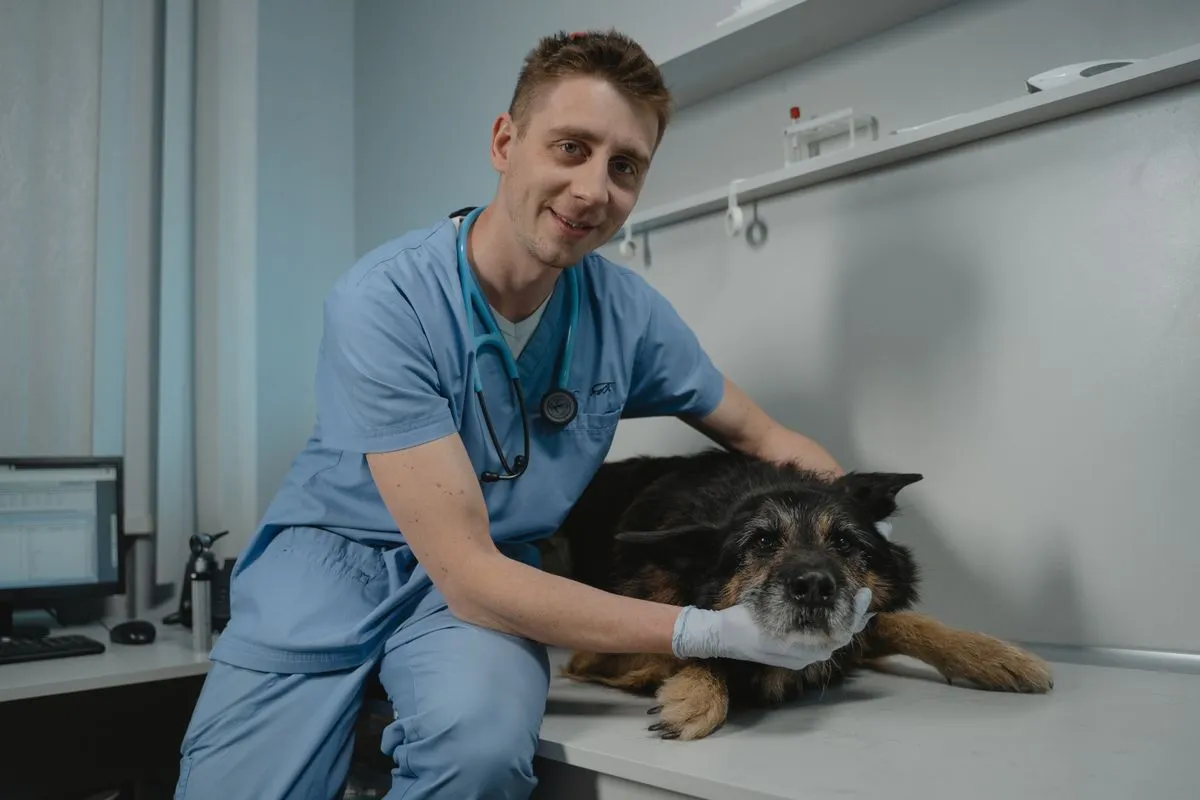
Do Senior Dogs Need Vaccines?
By Sarah Bennett · Last updated July 31, 2026 · 11 min read
The short version: Yes, senior dogs still need vaccines, but usually fewer than owners assume, and rarely every year. After the puppy series and the one-year booster, the core viral vaccines (distemper, adenovirus, parvovirus) are given about every three years, not annually, according to both AAHA and WSAVA guidelines. Rabies is required by law at any age. The yearly visit still matters, but much of it is the exam, not a fresh round of shots. For an older dog, the smart move is to individualize with your vet based on her health, her history, and her real exposure risk, and to ask whether a titer test can check her core immunity instead of a reflexive booster.
"She is twelve. Does she really still need all these shots?" It is one of the most reasonable questions an owner of an aging dog can ask, and the answer surprises people in both directions: yes, she still needs protection, and no, she almost certainly does not need a full round every year. So the real question of whether senior dogs need vaccines is less about age and more about which vaccines, how often, and what her individual life actually calls for. I write as a researcher and owner, not a veterinarian, and none of this replaces your vet's advice or your local laws.
Do Senior Dogs Need Vaccines?
Yes. Immunity is not permanent for every disease, and the ones core vaccines protect against, like distemper and parvovirus, are still dangerous to an older dog, whose defenses may be less robust than a young adult's. Rabies protection is also a legal requirement that does not lapse with age. What changes in the senior years is not whether she is protected but how that protection is maintained: longer intervals, fewer automatic boosters, and more decisions made for her as an individual rather than by a one-size calendar.
Core vs Non-Core: What an Older Dog Actually Needs
Vaccines fall into two groups, and the distinction is the key to not over-vaccinating a senior. VCA states the split plainly: "Veterinarians routinely recommend certain vaccines for all dogs (called core vaccines) while they recommend others (called non-core vaccines) more selectively, according to the dog's environment and lifestyle."
Core vaccines are recommended for essentially all dogs because the diseases are severe, widespread, or a legal matter:
- Rabies (required by law)
- Distemper (CDV)
- Adenovirus (CAV-2, infectious hepatitis)
- Parvovirus (CPV)
- Leptospirosis (moved to core in AAHA's 2024 update). VCA's own guidance matches: "The leptospirosis vaccine is recommended as a routine vaccination for all dogs."
Distemper, adenovirus, and parvovirus are usually combined in one shot often labeled DAP or DA2PP, with leptospirosis frequently added to it (DHLPP). One important distinction: those three viral vaccines are long-lasting and given every three years, while leptospirosis, being a bacterial vaccine, still needs a yearly booster even though it is now core.
Non-core vaccines are given based on a dog's lifestyle, region, and exposure risk, not by default:
| Vaccine | Given when the dog... |
|---|---|
| Bordetella and parainfluenza | Boards, is groomed, visits daycare, or goes to dog parks |
| Lyme (Borrelia) | Lives in or travels to tick-heavy regions |
| Canine influenza | Boards or gathers with many dogs |
For a senior who no longer boards, travels, or frequents dog parks, several non-core vaccines she got as a younger dog may simply not apply anymore. That is a real conversation to have, not a reason to drop everything on your own.
Why It Is No Longer Every Year
The old "annual shots" habit is largely outdated for the core vaccines. After a dog completes her initial series and gets her booster at about one year, the modern guidelines space the core distemper, adenovirus, and parvovirus vaccines out considerably. Both AAHA and WSAVA advise revaccinating for these no more often than every three years, and WSAVA's position is that once a dog has mounted a good immune response the interval can be longer still. Neither body publishes those guidelines in a form we can quote directly, so that is a transposition rather than their exact words.
What a reader can check is VCA's version, which is also the more honest one for an individual dog: "Most adult dogs that received the full booster series of vaccines as puppies should be revaccinated every one to three years based on a lifestyle risk assessment." One to three, assessed against the life your dog actually leads. A quiet fourteen-year-old who no longer boards is at a different end of that range from one who still hikes and meets other dogs.
Rabies runs on its own legal schedule: after the first dose and a one-year booster, it is then given every one to three years depending on the vaccine used and your local law. Leptospirosis, though now a core vaccine, is bacterial and runs on a shorter cycle: VCA notes that "Annual re-vaccination is needed to maintain the best immunity." The same is true of non-core vaccines like Bordetella, Lyme, and canine influenza when a dog needs them.
So a senior dog on a good schedule is often due for far less than an annual full round. The yearly (or twice-yearly) visit is still worth keeping, but its value for an older dog is mostly the physical exam and bloodwork, covered in our senior dog vet visit guide, with vaccines given only when they actually come due.
What Is a Titer Test, and Should You Ask for One?
A titer test is a blood test that measures the antibodies your dog already carries against a disease, giving a read on whether she is still protected. For the core viral vaccines, distemper and parvovirus especially, an adequate titer indicates existing immunity, and it can be used to decide whether a booster is genuinely needed rather than giving one on a schedule. For an owner who wants to avoid unnecessary revaccination in an older dog, it is a reasonable option to raise with your vet, and specialized laboratories offer it.
Two honest caveats. A titer is not free, and depending on your clinic it can cost as much as or more than the vaccine, so the appeal is about avoiding unnecessary shots, not saving money. And crucially, a rabies titer does not satisfy the legal rabies requirement: rabies is governed by law, not by antibody level, so a titer will not exempt your dog from the required rabies vaccination in almost all jurisdictions. Titers are a tool for the core viral vaccines, not a loophole around rabies law.
Is My Senior Dog Too Old for Vaccines?
Age by itself is not a reason to stop. There is no point at which a dog is automatically "too old," and we are not aware of a major guideline that sets an upper age limit ending vaccination, though we should say that is our reading rather than a line we can quote from one. What matters is the same individualized picture that governs everything else in senior care: her overall health, her vaccination history, her real exposure risk, and the law where you live.
Where age does change the conversation is at the edges. A dog with a serious illness, a fever, or a compromised immune system may have a vaccine deferred or adjusted, and that timing is a judgment your vet makes. A frail senior who never leaves a quiet home has a very different exposure profile from one who still hikes and boards. And rabies, again, stays legally required regardless of age unless your vet formally documents a medical exemption where your local law allows one. None of this is a green light to quietly skip her shots; it is a reason to make the plan with your vet rather than by guesswork.
How to Decide With Your Vet
The goal is neither over-vaccinating nor leaving her unprotected, and a short conversation gets you there. Worth asking at her next visit:
- Which vaccines is she actually due for today, and which are we giving out of habit?
- Given her age and lifestyle, do any of her non-core vaccines no longer apply?
- Can we titer for distemper and parvovirus instead of an automatic booster?
- What does our local rabies law require, and when is she next due?
- Are there any health reasons to space out or defer a vaccine for her right now?
That conversation, repeated once a year, is what keeps an older dog both protected and spared the shots she does not need.
Frequently Asked Questions
Do senior dogs need vaccines? Yes. Older dogs still need core protection against diseases like distemper, parvovirus, and rabies, and rabies is legally required at any age. What changes is frequency: after the initial series and one-year booster, core vaccines are given about every three years, not annually, so a senior on a good schedule usually needs far fewer shots than owners expect.
Do older dogs need shots every year? Usually not a full round. The core distemper, adenovirus, and parvovirus vaccines are given every three years under current AAHA and WSAVA guidelines, and rabies follows a one-to-three-year legal schedule. Leptospirosis, now a core vaccine but a bacterial one, needs yearly boosting, as do non-core vaccines like Bordetella, Lyme, and canine influenza if your dog's lifestyle calls for them.
Can I titer test my dog instead of vaccinating? For the core viral vaccines, distemper and parvovirus, an antibody titer can show whether your dog is still protected and help you and your vet decide if a booster is needed. It does not, however, replace the legally required rabies vaccine, since rabies is governed by law rather than antibody level. Titers are best seen as a way to avoid unnecessary boosters, not to skip rabies.
Does my senior dog still need the rabies shot? Yes, in almost all places. Rabies vaccination is a legal requirement that does not end because a dog is old, and a rabies titer does not substitute for it. The interval is typically every one to three years depending on the vaccine and your local law. If there is a genuine medical reason to exempt her, only your vet can document that where the law allows it.
Are vaccines safe for senior dogs? Serious reactions to vaccines are uncommon in dogs of any age, and there is no age at which vaccination automatically becomes unsafe. For a senior with a chronic illness or a weakened immune system, your vet may adjust the timing, which is exactly why the plan should be individual. The aim is to give what she genuinely needs and skip what she does not.
Sources
A note on these. As of 2026-09-09, the AAHA pages return a bot challenge rather than their content, and WSAVA publishes its 2024 canine table as an image, so neither can be quoted or checked automatically. They are named here as the bodies whose guidance this page follows, and the statements a reader can verify are anchored on VCA instead.
- American Animal Hospital Association (AAHA): 2022 Canine Vaccination Guidelines (updated 2024), core and non-core classification, the three-year interval for the viral core vaccines, and the 2024 reclassification of leptospirosis as a core vaccine. https://www.aaha.org/resources/2022-aaha-canine-vaccination-guidelines/
- AAHA update: Leptospirosis vaccine designated core for most dogs (2024). https://www.aaha.org/newstat/publications/leptospirosis-vaccination-recommended-to-be-core-for-most-dogs/
- World Small Animal Veterinary Association (WSAVA): 2024 Guidelines for the Vaccination of Dogs and Cats, on core vaccines and revaccination no more often than every three years. https://wsava.org/global-guidelines/vaccination-guidelines/
- American Veterinary Medical Association (AVMA): Rabies and its status as a legally required vaccination for dogs. https://www.avma.org/resources-tools/pet-owners/petcare/rabies
Keep Reading
- Senior Dog Vet Visit Prep, where the yearly exam does most of the work
- Senior Dog Bloodwork, the other half of a senior wellness visit
- Is Anesthesia Safe for a Senior Dog?, the same "age is not a disease" logic applied to procedures
- When Is a Dog Considered a Senior?, for when these decisions start to shift
About the authors
Senior Dog Daily is written by Sarah Bennett and Leo Bennett, a husband-and-wife team who research senior care from a home built around their Border Collie, Lucy. Neither of us is a veterinarian. We read veterinary guidance and turn it into plain, practical explanations, with the claims traceable to the sources above. The takeaway for an aging dog is a gentle one: she needs protection, not a pincushion, and the difference is a five-minute talk with the vet who knows her.