
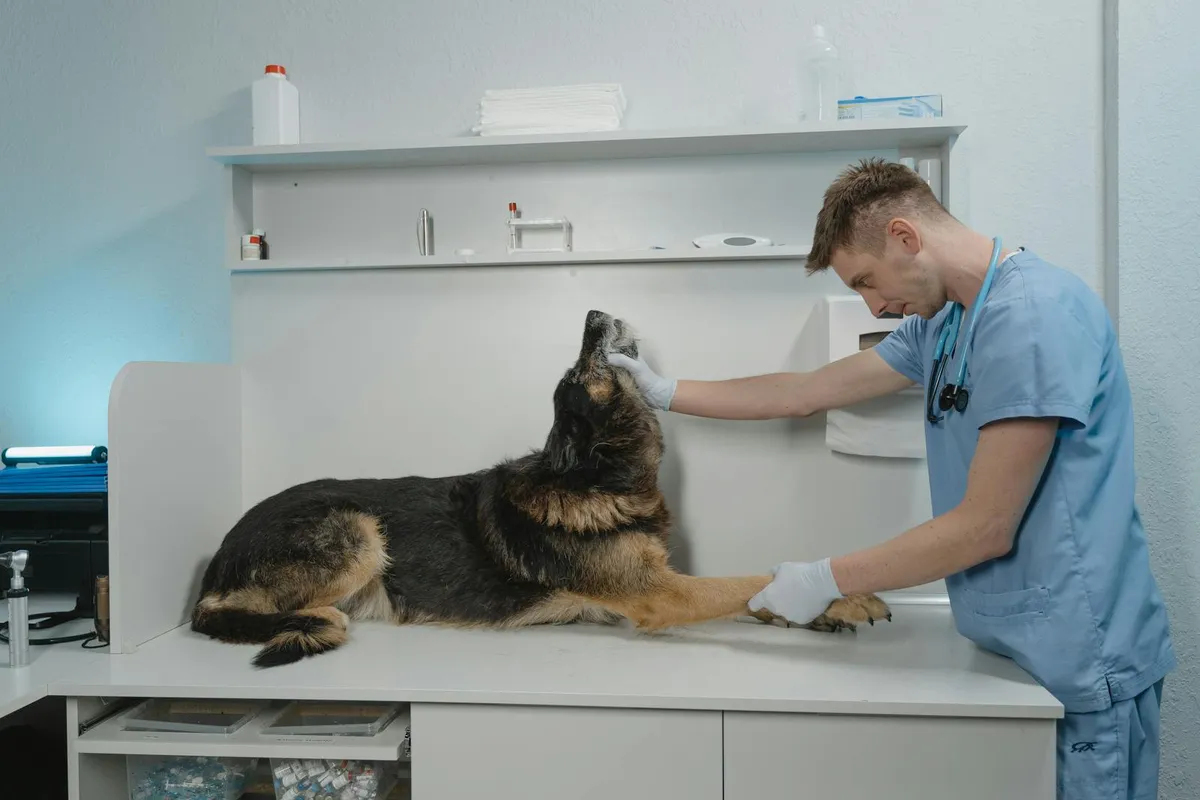
Lumps on Senior Dogs: Is It a Fatty Tumor, or Something to Worry About?
By Sarah Bennett · Last updated June 7, 2026 · 10 min read
Information, not diagnosis. We are not veterinarians. Any new or changing lump on an older dog is worth a vet's check, the kind with a needle, not just fingers.
You ran your hand down your old dog's side, felt a lump that was not there before, and your stomach dropped. That reaction is normal, and the reassurance is real: most lumps on senior dogs are benign fatty tumors called lipomas, and they are extremely common in older dogs. But here is the part that matters more than the reassurance, and that most people get wrong. You cannot tell a harmless fatty lump from a cancer by feeling it, and a few cancers feel exactly like a soft, squishy lipoma. So the one move that actually answers the question is not a guess and not a wait-and-see, it is a quick, low-cost needle test at the vet. "It's probably just a fatty lump" is the sentence that lets the dangerous ones hide.
Most Lumps on Senior Dogs Are Fatty Tumors, but Not All
Lipomas are benign tumors of fat cells, and they are a normal part of many dogs getting older. Dogs aged roughly 9 to 12 are about 17 times more likely to be diagnosed with a lipoma than dogs aged 3 to 6, according to a large UK primary-care study, and it is common for an older dog to carry several at once. A classic lipoma is soft, rounded, movable under the skin, and slow to grow.
The trouble is that "soft, round, and movable" is a description, not a diagnosis. Some lipomas grow fast, some sit in awkward places, and more importantly, other lumps that are not harmless can feel just like them. The most important impostor is the mast cell tumor, the most common skin tumor in dogs, which can show up as a soft lump that feels for all the world like a lipoma. VCA writes that "MCTs have been classically called 'the great pretenders' because they may resemble an insect bite, wart, allergic reaction, or other less serious skin tumors." That overlap is the whole reason a vet does not diagnose a lump by touch.
Why You Cannot Tell by Feel
A physical exam, even an experienced vet's, is not enough to call a lump benign. Size, softness, and how it moves do not reliably separate a lipoma from a cancer, because the categories overlap. The only way to know what a lump is made of is to look at its cells.
That means the answer to "should I worry?" is never found by watching the lump for a few months to see what it does. By the time a malignant lump declares itself by growing or changing, you have given it time you did not need to give it. Testing early is how you turn a scary unknown into either real reassurance or an early, treatable diagnosis.
What a Fine Needle Aspiration Actually Is
The test is far smaller than the worry. A fine needle aspiration (FNA) uses a regular small needle to draw a few cells from the lump, which are then put on a slide and looked at under a microscope. It is usually done right there in a normal appointment, often without sedation, costs far less than surgery or advanced imaging, and takes minutes. For most lumps, it is enough to tell a lipoma from something that needs more attention.
If the FNA cannot give a clear answer, or points to something concerning, the next step is usually a biopsy, removing a piece or all of the lump for a fuller look. But the FNA is the cheap, fast first move, and it is the one worth not skipping.
Signs a Lump Needs Prompt Attention
Any new lump deserves a check, but treat these as reasons to move sooner rather than wait for the next routine visit:
- It is growing quickly or changing shape
- It feels hard, or firmly fixed to the tissue underneath rather than sliding freely
- It is ulcerated, scabbed, bleeding, or oozing
- It seems to bother her, or she licks or chews at it
- It sits where it limits movement, near a joint, the armpit, or the groin
- It appears alongside other changes, weight loss, low energy, or poor appetite
None of these confirm cancer on their own, and their absence does not confirm a lipoma. They are reasons to get the needle test done now rather than later.
One handling note: do not keep squeezing or kneading a suspicious lump to check it. If it happens to be a mast cell tumor, repeated handling can make it release its irritant chemicals, called degranulation, which can trigger sudden redness, swelling, or a flare-up. Note it, photograph it, and let the vet's needle do the checking.
When a Fatty Tumor Itself Needs Treatment
Once an FNA confirms a simple lipoma, most need no treatment at all and can simply be monitored. Surgery comes onto the table when a lipoma grows large enough or sits in a spot that interferes with how she moves, sits, or lies down, since comfort and mobility matter more in a senior dog than the lump itself. One uncommon exception is the infiltrative lipoma, which is still benign but grows into surrounding muscle and tissue and can be harder to remove, another reason the first lump is worth characterizing properly.
Tracking Lumps on Senior Dogs at Home
Between visits, you can do something genuinely useful: keep a lump map. Note where each lump is, roughly how big (a pea, a grape, a golf ball), and the date, and add a quick phone photo. Measuring with a soft tape and writing it down beats memory, because the single most useful thing you can hand your vet is "this one was a grape in March and it is a plum now." Tracking turns a vague worry into the data that tells a vet which lumps are behaving and which one just changed.
Frequently Asked Questions
Are most lumps on senior dogs cancer? No. Most lumps on older dogs are benign fatty tumors (lipomas), which are very common with age. But you cannot tell a benign lump from a cancer by feel, and a few cancers feel just like a lipoma, so any new lump should be checked with a fine needle aspiration rather than assumed.
How can I tell if my dog's lump is a fatty tumor or something serious? You cannot tell reliably at home or even by a vet's touch, because soft, movable lumps can be either benign or malignant. The way to know is a fine needle aspiration, a quick needle sample of the lump's cells looked at under a microscope, usually done in a normal appointment.
What is a fine needle aspiration and does it hurt? It uses a small needle to draw a few cells from the lump onto a slide for the microscope. It is quick, usually done without sedation in a regular visit, and far cheaper than surgery or scans. Most dogs tolerate it about as well as a vaccination.
When should I worry about a lump on my senior dog? Move sooner if it grows quickly, feels hard or fixed to deeper tissue, is ulcerated or bleeding, bothers her, sits where it limits movement, or comes with weight loss or low energy. None of these confirm cancer, and their absence does not rule it out, which is why testing beats watching.
Does a lipoma need to be removed? Usually not. A confirmed simple lipoma can often just be monitored. Removal is considered when it grows large or sits where it interferes with comfort or movement, which matters more in a senior dog, or in the uncommon case of an infiltrative lipoma that grows into nearby tissue.
Sources
- O'Neill, D. G., Corah, C. H., Church, D. B., Brodbelt, D. C., & Rutherford, L. (2018). Lipoma in dogs under primary veterinary care in the UK: prevalence and breed associations. Canine Genetics and Epidemiology, 5. (VetCompass, Royal Veterinary College. 384,284 dogs; one-year prevalence 1.94%. Compared with dogs aged 3.0 to under 6.0 years, dogs aged 9.0 to under 12.0 had 17.52 times the odds of a lipoma diagnosis. Dogs at or above their breed and sex mean bodyweight had 1.96 times the odds.)
- VCA Animal Hospitals. Adipose (lipoma) tumors. (Benign nature; fine needle aspiration needed for diagnosis.)
- VCA Animal Hospitals. Mast cell tumors in dogs. (The "great pretenders"; diagnosed by fine-needle aspiration; the most common skin tumor in dogs at 7% to 21%.)
Keep Reading
- Senior Dog Cancer Warning Signs
- How to Prepare for a Senior Dog Vet Visit
- The Quality of Life Scale for Senior Dogs
About the authors
Senior Dog Daily is written by Sarah Bennett and Leo Bennett, a husband-and-wife team in the American Midwest, with their Border Collie Lucy as the reason it started. Neither of us is a veterinarian. We read the primary sources, including veterinary hospital and oncology references, and turn them into plain guides, with the claims traceable to the sources above. With lumps on senior dogs, the kindest and smartest thing you can do is skip the guessing and get a new lump tested early, because that is how you trade worry for an answer.