
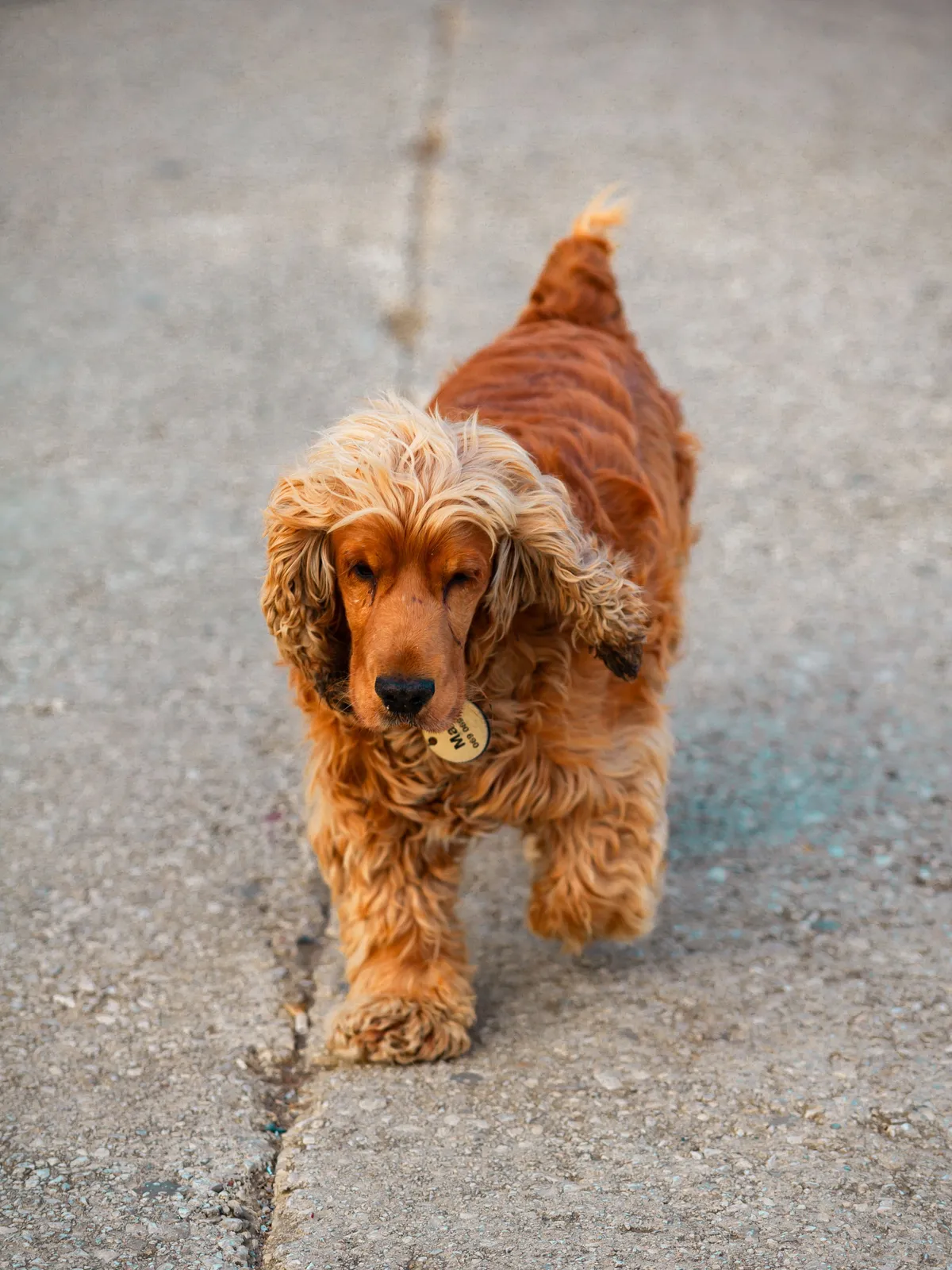
How to Protect Your Senior Dog's Paws from Hot Pavement
By Sarah and Leo Bennett · Last updated June 20, 2026 · 8 min read
The problem with relying on your dog to signal that the pavement is too hot is that by the time she limps, the burn is already there. Young dogs will often pull a paw back or hesitate after a second or two on scorching asphalt. Senior dogs, whose peripheral nerves have slowed with age, frequently walk right through that signal and show discomfort only after real damage has happened. Knowing how to protect dog paws from hot pavement means taking the test yourself, before the walk, every time in summer.
How to Tell If Pavement Is Too Hot for Dogs: The 7-Second Test
Before every summer walk, press the back of your hand flat on the pavement where she will walk, and hold it there for 7 seconds. If you cannot keep your hand down comfortably for the full count, the surface is too hot for her paws. This is the most reliable quick check available, and it is more accurate than air temperature because pavement commonly runs 40 to 60 degrees Fahrenheit hotter than the air above it.
On an 85°F afternoon, dark asphalt can reach 130°F. At 125°F, pavement can cause burns to dog pads in about 60 seconds. At 140°F, the damage can happen faster than that.
The 7 seconds matters: human skin and dog pad tissue share similar heat tolerance thresholds at short exposures, so your hand is a practical proxy for her paw.
Why Senior Dogs Face a Higher Risk from Hot Pavement
A young dog trotting on too-hot pavement will often vocalize or pull away. A senior dog may give you none of those signals, for three reasons that add up:
Reduced nerve sensitivity. Peripheral nerves change with age in dogs, much as they do in people. An older dog may simply not register the pain signal that would prompt a younger dog to lift her paw. She keeps walking. The pads keep in contact.
Slower pace, longer contact. A senior dog moving carefully because of arthritis or stiff joints stays on the hot surface longer per step than a dog moving at full trot. The slower she goes, the more time each foot spends on the heat.
Drier, more fragile pads. Older paw pads tend to be drier and more prone to cracking. A cracked or already-softened pad offers less barrier against heat transfer than a younger dog's firm, intact pad.
For dogs with diagnosed peripheral neuropathy, common in older Dobermans and German Shepherds and in dogs with poorly controlled diabetes, the sensitivity loss can be more pronounced, and a conversation with your vet about summer foot care is worthwhile.
How Hot Does Pavement Get in Summer, and Which Surfaces Are Safest
Surface type makes a meaningful difference in how much heat builds and how fast. Knowing this helps you route a walk or choose where to let her sniff.
| Surface | Peak temperature on a hot day | Notes |
|---|---|---|
| Dark asphalt | Often 130-145°F | Absorbs and holds the most heat |
| Concrete | Typically 10-20°F cooler than asphalt | Still dangerous in peak afternoon |
| Brick or pavers | Variable; similar to concrete | Darker color = hotter surface |
| Grass (sunny) | Warm but rarely in the danger zone | Safer than paved surfaces |
| Grass (shaded) | Coolest walking option | Best for mid-day outings |
| Sand | Can be very hot at the surface | Test before she lies down |
These are general patterns. Any surface in direct sun for several hours builds heat, including metal grates and wooden boardwalks. The 7-second test applies to whatever surface she will walk on.
Hot Pavement Dog Walk Times: When It's Safe to Go Out
Timing is the most effective protection and requires nothing from her. Pavement that is dangerous at 2 p.m. is typically safe by early evening after a few hours of shade and airflow, and again in the morning before it re-heats.
| Time | Pavement risk |
|---|---|
| Before 8 a.m. | Generally safe; 7-second test to confirm |
| 8-10 a.m. | Low to moderate; check exposed asphalt |
| 10 a.m. to 6 p.m. | High; avoid direct-sun pavement |
| After 7 p.m. | Usually cooled enough; test first |
If the walk is primarily for bathroom reasons rather than exercise, a grassy strip or shaded path accomplishes the same thing with far less heat exposure. In peak summer, shorter mid-day outings on grass and longer morning or evening walks are the simplest way to protect dog paws from hot pavement without changing your routine completely.
How to Protect Dog Paws from Hot Pavement Every Day
Beyond timing, here are the practical options in rough order of ease for a senior dog:
Paw balm before walking. Wax-based balms (Musher's Secret and similar products) add a light protective layer to the pad surface and help prevent older pads from drying and cracking. They do not eliminate risk on very hot surfaces, but on moderate heat days they add meaningful protection and take only a few seconds to apply.
Route choices. Grass and shaded paths run cooler than open asphalt. Crossing a parking lot in shade along the building edge instead of diagonally across the center cuts heat exposure without extra effort.
Dog booties. The best dog booties for hot pavement create a full barrier between her pads and the surface, which is the most reliable protection available. The challenge with older dogs is that a careful, arthritic gait can make booties harder to tolerate. Start with short indoor sessions before the first summer outing, and choose a flexible sole over a stiff one for a senior dog. If she flatly refuses, timing and route are reliable alternatives.
Cooling after walks. A shallow basin of cool (not ice-cold) water for her to step through when she returns brings her pad temperature down quickly.
Dog Paw Burn from Hot Pavement: How to Protect and Treat
Watch for these signs in the hours after a walk on a potentially hot surface:
- Limping or reluctance to put weight on a paw
- Licking or chewing at the pads persistently
- Pads that look red, darker than normal, blistered, or have loose or peeling skin
Minor surface redness, some licking: flush the paw with cool (not cold) water for several minutes. Pat dry gently. Apply a thin layer of pet-safe paw balm if you have one. Keep her off hot surfaces for several days while the pads recover.
Blistering, visible skin loss, or significant lameness: this needs a veterinary visit. Do not apply human antiseptic creams without guidance and do not bandage tightly at home. Keep the paw clean and protected on the way to the clinic.
How to Protect Dog Paws from Hot Pavement: Frequently Asked Questions
How do I tell if pavement is too hot for my dog?
Press the back of your hand flat on the pavement and hold it for 7 seconds. If you cannot hold it there comfortably for the full count, the surface is too hot for her paws. Air temperature alone is not a reliable guide, because pavement commonly reaches 40 to 60°F above the air temperature in direct sun.
How hot does pavement get in summer?
Dark asphalt can reach 130-145°F on an 85°F summer afternoon. Concrete runs cooler but can still exceed 120°F in peak heat. At 125°F, burns to a dog's pads can happen in about 60 seconds of contact.
What is the safest hot pavement dog walk time?
Before 8 a.m. or after 7 p.m. gives you the lowest pavement temperatures on a typical summer day. Avoid exposed asphalt between 10 a.m. and 6 p.m. when heat has had the most time to build. Always run the 7-second test before committing to a route.
Are booties the best dog booties for hot pavement worth buying?
Booties are the most reliable protection if your dog tolerates them, because they create a physical barrier. For a senior dog who resists booties, combining the right walk time with grassy routes and paw balm provides effective protection without the adjustment period. If you do try booties, choose flexible-soled ones and introduce them indoors before summer arrives.
My dog walked on hot pavement and is now licking her paws. What do I do?
Flush her paws with cool (not cold) water. Examine the pads for redness, blistering, or loose skin. If there is only mild redness and licking, keep her off hot surfaces and monitor closely. If there is blistering, peeling skin, or she is limping, call your vet.
Sources
- Four Paws International: Hot Asphalt, A Danger to Your Dog's Paws. https://www.four-paws.org/our-stories/publications-guides/hot-asphalt-a-danger-to-your-dogs-paws
- ElleVet Sciences: Hot Pavement, Preventing and Treating Pad Burn in Dogs. https://www.ellevetsciences.com/pet-care/hot-pavement-preventing-and-treating-pad-burn-in-dogs/
- The Kennel Club: The Danger of Hot Pavements. https://www.royalkennelclub.com/health-and-dog-care/health-dog-care/health/health-and-care/a-z-of-health-and-care-issues/hot-pavements/
- Vets Now: How to Avoid Your Dog Getting Paw Burns on Hot Pavements. https://www.vets-now.com/2017/06/never-walk-dogs-hot-asphalt-tarmac-pavements-artificial-grass/
Keep Reading
- Senior Dog Summer Heat Care, the full summer picture: heatstroke, hydration, and exercise limits
- Blue-Green Algae Poisoning in Dogs, the summer water danger that can kill within an hour
- Gentle Exercise for Senior Dogs, how to keep her moving safely when it's hot
- Senior Dog Home Modifications, changes that make everyday life easier year-round
- Dr. Buzby's ToeGrips Review, grip and traction for dogs who are unsteady on smooth surfaces
The Bottom Line
The step that protects your senior dog's paws from hot pavement is the one you take before the walk: the back of your hand on the asphalt for 7 seconds. She cannot reliably tell you the ground is burning her. An older dog's nerves are slower, her pace keeps her on the heat longer, and her pads are more fragile than they were. Go out before 8 a.m. or after 7 p.m., take the grassy route when it is an option, and apply paw balm before she steps outside. Done consistently, those three habits protect dog paws from hot pavement without asking anything she cannot give.
About the Authors
Sarah and Leo Bennett write Senior Dog Daily from a home built around their Border Collie, Lucy. Neither is a veterinarian; their aim is to report sourced, practical advice that helps owners make good decisions for an older dog.