
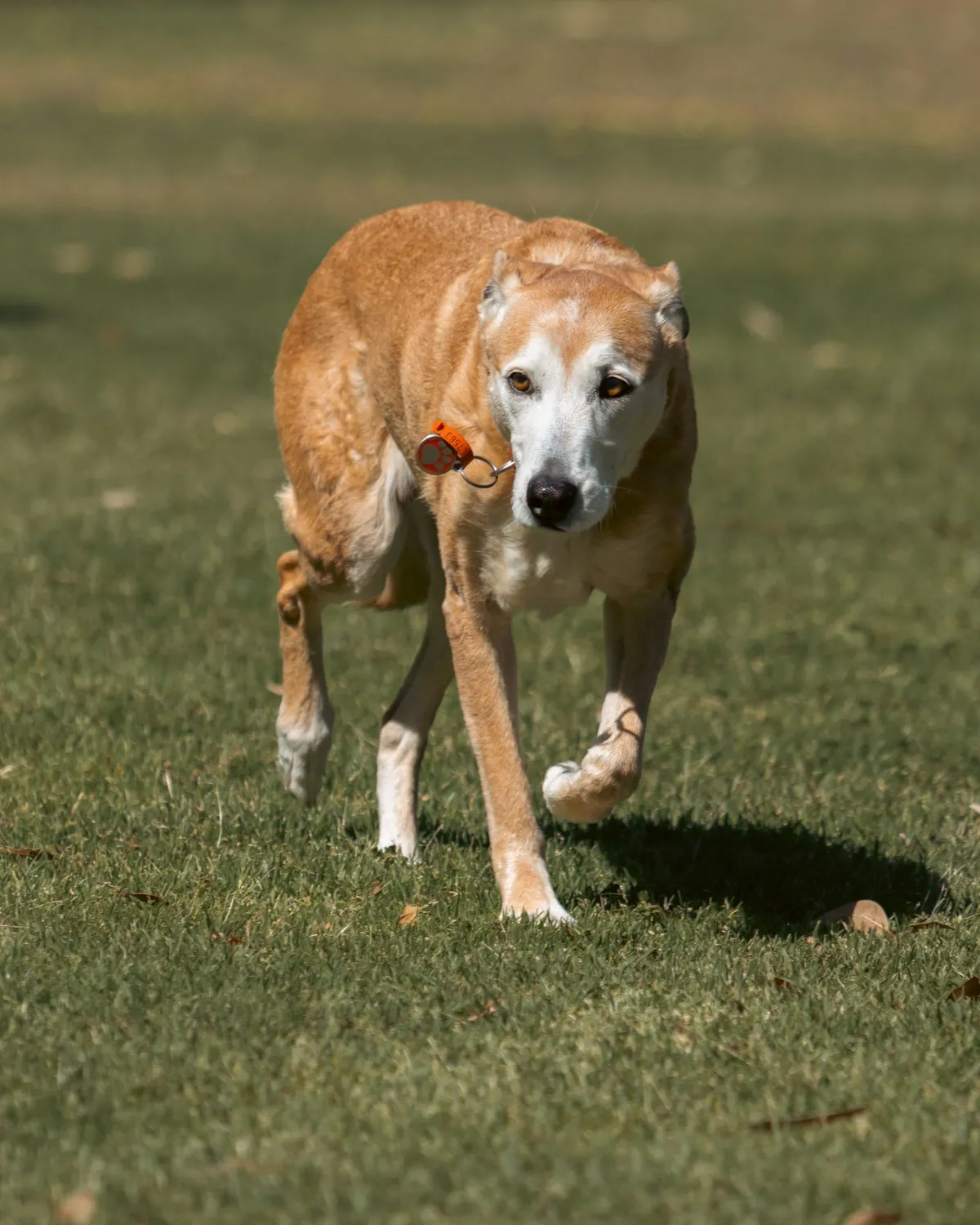
Gentle Exercise for Senior Dogs
By Sarah Bennett · Last updated June 11, 2026 · 9 min read
Lucy is seven, and she still believes she is a puppy with a field to manage and a household to herd. For now her body agrees with her. But thinking ahead to the years when it will not, I have come to see the goal differently: the point with an aging dog is not to stop the moving, it is to change its shape. Less impact, more nose. Shorter and softer and more often. Done right, gentle exercise keeps an older dog's muscles, joints, and spirits strong without leaving her stiff and sore the next morning.
This is a short, practical guide to the kinds of movement that age well: what to do, what to quietly retire, and how to tell when she has had just enough.
Why Gentle Movement Matters More as a Dog Ages
It is tempting, when a dog slows down, to let her rest. But muscle is what holds an arthritic joint together and keeps a senior steady on her feet, and muscle fades fast without use. Regular, low-impact movement preserves that strength, keeps joints lubricated and limber, helps control the weight that grinds down old hips, and does as much for an aging mind as it does for the body. The aim is consistency over intensity: a little, most days, beats a lot on the weekend.
Gentle Ways to Keep a Senior Dog Moving
The sniff walk
If you change one thing, make it this. A sniff walk is a slow, dog-led amble where the whole point is to let her stop and read every blade of grass. It barely taxes the joints, and the sniffing itself is rich mental work that tires her out in the good way. A ten-minute walk where she sets the pace and follows her nose often does more for an old dog than a brisk mile.
Swimming and warm water
Water is the kindest exercise an arthritic dog can get. Floating takes 40 to 60% of her weight off her joints at chest depth, so she can work her muscles and heart without the pounding of walking on hard ground. A calm swim in safe, shallow water, always supervised and with a canine life vest, is wonderful. Even better, if it is available, is professional hydrotherapy: a supervised underwater treadmill where a rehab vet controls the depth, speed, and effort precisely for her joints.
Short, frequent walks on soft ground
Trade one long walk for two or three short ones, and choose the surface with care. Grass, dirt trails, and rubberized paths are gentle; pavement, concrete, and gravel jar arthritic joints with every step. Keep the pace steady and easy, and let her tell you when she is ready to turn for home.
A warm-up, a cool-down, and a little massage
An old body, like ours, does better when it is eased into movement and out of it. Start a walk slow for the first few minutes rather than charging off, and finish with an easy amble rather than a sudden stop. Afterward, a few minutes of gentle massage over her shoulders and hips, slow circles with a flat hand, loosens tired muscles and is something most dogs lean right into. If she is stiff, a warm bed and a heat pad after activity helps too.
What to Skip
A few classics of younger dogdom are best gently retired:
- Jumping, in and out of the car, on and off the bed and couch. Use a ramp instead.
- Hard fetch and frisbee, the sprint-skid-twist of the chase is exactly the high-impact loading that wrecks old joints.
- Pavement, concrete, and gravel for anything but the shortest stretches.
- Steep downhill, which loads the front legs and shoulders hard. Go slow, or pick a flatter route.
- Midday heat. Older dogs cool themselves less well; walk in the cool of the morning or evening in summer.
None of this means wrapping her in cotton wool. It means spending her energy where it does good, not where it does damage.
How to Read Her Signals
The right amount of exercise is a moving target that shrinks slowly over the years, so let her body set it. Ease off, or call it a day, when you see:
- Heavy panting that does not settle, or panting out of proportion to the effort
- Limping, or lagging behind when she usually leads
- Lying down mid-walk, or a clear reluctance to go on
- Stiffness or soreness the next morning, the surest sign yesterday was a little too much
A good rule of thumb: stop while she still has something left, a little short of what she thinks she wants. An old dog will often push past her own limits to keep up with you; it is your job to be the one who knows when to turn for home.
Frequently Asked Questions
How much exercise does a senior dog need?
There is no single number; it depends on her size, breed, and health. The better guide is consistency and her own signals: aim for gentle movement most days, in shorter sessions than she had as a young dog, and ease off at signs of fatigue, limping, or next-day stiffness. A little, most days, beats a lot at once.
What is the best exercise for an old dog with arthritis?
Swimming and supervised hydrotherapy are the gentlest, because the water takes much of the weight off sore joints. Short, frequent walks on soft ground (grass or dirt rather than pavement) and slow, dog-led sniff walks are excellent everyday choices. Avoid jumping, hard fetch, and hard surfaces.
Should I still walk my senior dog every day?
For most senior dogs, yes, gentle daily movement preserves muscle, joint health, and mood far better than rest. The change is in shape, not whether: shorter, slower, softer, and more led by her nose than by your pace. On a bad day, a five-minute sniff in the yard still counts.
Is it bad to let my old dog rest all the time?
Too much rest works against an aging dog. Muscle, which supports arthritic joints and keeps her steady, fades quickly without use, and inactivity adds weight that strains those same joints. Gentle, regular movement is one of the kindest things you can give an older dog, paired with the mental work that keeps her mind engaged.
Sources
- 2023 AAHA Senior Care Guidelines for Dogs and Cats (the role of regular, appropriate exercise in senior health). aaha.org
- VCA Animal Hospitals, Arthritis in Dogs, exercise and weight management. vcahospitals.com
- PetMD, Hydrotherapy and swimming for dogs with arthritis. petmd.com
- American Kennel Club, Low-impact exercise for senior dogs. akc.org
Keep Reading
- Help an Old Dog with Arthritis at Home, where gentle exercise fits among eight at-home strategies
- Mental Stimulation for Senior Dogs, the brain games that pair with gentle movement
- Best Joint Supplements for Senior Dogs, supporting the joints you are keeping mobile
- Degenerative Myelopathy in Dogs, where structured exercise is the one thing shown to help
- 8 Senior Dog Aging Signs, knowing when to adjust her routine
About the authors
Sarah Bennett writes about senior dog care from a household centered on her Border Collie, Lucy. This piece grew out of thinking ahead with Lucy: how to keep a movement-loving dog moving for as many good years as possible, by changing the shape of her exercise rather than taking it away. She is not a veterinarian; her work is reported, sourced from veterinary literature, and reviewed against published guidance.
Leo Bennett is the co-author of Senior Dog Daily and Sarah's husband. The pair share research and writing duties on the site.