Why Is My Senior Dog Panting?
By Sarah Bennett · Last updated July 5, 2026 · 10 min read
The short version: Panting after a walk, on a warm day, or when excited is normal, and it settles with rest. The panting to pay attention to is panting at rest, in a cool room, at night, or more than she used to, because in an older dog that often signals pain, heart disease, or a hormone problem. There is a 20-second home test below, her resting breathing rate, that sorts "watch it" from "call this week," and a short list of red flags that mean call a vet now. Panting is the alarm, not the disease, and most of the causes are treatable once named.
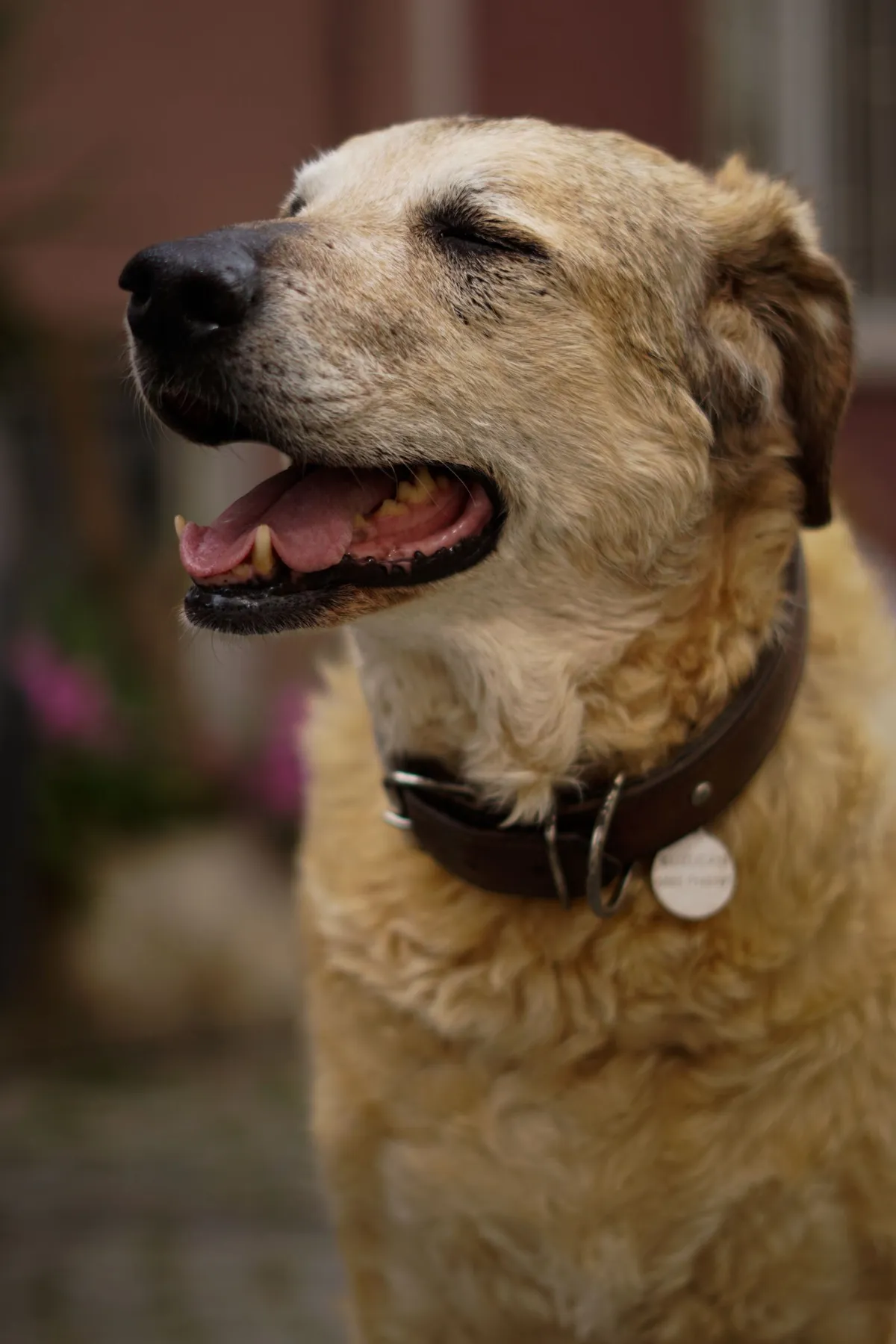
Panting is how a dog cools down and sheds stress, so a senior dog who pants after a walk, on a warm day, or when she is excited is doing something completely normal. The question that should get your attention is different: why is my senior dog panting when none of those things are happening? Panting at rest, panting in a cool room, panting through the night, or simply panting more than she used to is one of the most reliable early signals that an older dog is in pain or developing a treatable disease. It is the body raising its hand.
This guide is a map. It walks through how to tell harmless panting from the kind that matters, gives you a 20-second test you can do at home tonight, lays out the main reasons a senior dog pants too much (and where each one leads), and lists the red flags that mean stop reading and call a vet now. We are not veterinarians; this is reported from veterinary sources and is not a substitute for an exam. But knowing what panting can mean turns a vague worry into a specific question you can bring to your vet.
Normal Panting vs the Panting That Matters
Start by sorting what you are seeing into two buckets.
Normal, expected panting:
- After exercise or play, settling within 10 to 20 minutes of rest
- On a hot day, or in a warm room, to cool down
- Brief bursts when excited, greeting you, or mildly stressed (a car ride, a visitor)
Panting worth investigating:
- At rest, when she is lying calmly in a comfortable, cool room
- At night, waking or restless, panting in the dark
- Out of proportion to the temperature or activity
- New or increasing over days to weeks, when nothing else has changed
- Paired with other signs: a cough, a pot belly, increased drinking, restlessness, or a change in her bark or breathing sound
The single most useful idea here: panting at rest is the one that matters. A dog who pants hard while lying still in a cool room is telling you something, and the something is usually pain, a heart or lung problem, or a hormone disease.
| What you are seeing | What it usually is | What to do |
|---|---|---|
| Panting after a walk, on a warm day, or when excited, settling within 10 to 20 minutes of rest | Normal cooling or excitement | 🟢 Normal |
| Panting at rest in a cool room, at night, or noticeably more than she used to | Possible pain, heart, or hormone disease | 🟡 Count her resting breaths, book a vet visit |
| Pale or blue gums, labored breathing, collapse, or a hard, swollen belly | Emergency | 🔴 Call an emergency vet now |
The 20-Second Home Test: Resting Respiratory Rate
Before you go further, learn one number, because it separates "watch it" from "call today" better than almost anything else.
While your dog is asleep or resting calmly (not panting from heat or excitement), count how many breaths she takes in 30 seconds, where one breath is one rise and fall of the chest, and multiply by two.
- Under about 30 breaths per minute is normal for a resting or sleeping dog; healthy dogs usually sit well below that, often under 25.
- Consistently above 30 at rest is a meaningful flag, especially for heart disease, and worth a same-week vet call. The further above 30 it sits, the more it matters.
- What heart specialists watch most closely is a sustained rise above your dog's own normal sleeping rate. The 2019 ACVIM heart-disease guidelines found that an increase above a dog's baseline is the single best home predictor of impending heart trouble, so a rate creeping up week over week, even within the normal range, is worth a call.
This is the same at-home measure cardiologists ask owners to track, and it is covered in more depth in our heart disease in senior dogs guide. Write the number down a few evenings in a row; the trend matters more than any single count.
Remembering to do it week after week, when life is busy, is where it slips. If that is where it slips for you, a wearable like Maven Pet clips onto the collar she already wears and tracks that resting respiratory rate around the clock, flagging you when the trend starts to climb, including on the nights you are asleep. It does not diagnose anything; it just watches the number for you. The free hand-count works perfectly well on its own, but our honest Maven Pet review lays out who a monitor is worth it for and who can skip it. (Maven is an affiliate partner, so we may earn a commission if you subscribe, at no extra cost to you.)
The Main Reasons a Senior Dog Pants Too Much
Most non-heat panting in an older dog traces back to one of these. Each links to the fuller story where we have one.
Pain
Panting is one of the most common and most missed signs of pain in dogs. An older dog rarely cries out; she pants, paces, and struggles to settle, often worse at night when there are fewer distractions. The usual culprits are arthritis and dental disease, both extremely common in seniors and both very treatable once found. If your dog pants and cannot get comfortable, pain is at the top of the list.
Heart disease
A failing heart lets fluid back up into or around the lungs, which makes breathing harder and triggers panting, often with a cough and a rising resting respiratory rate. Heart disease is one of the most serious causes of panting in a senior dog and one of the reasons that resting-rate number matters so much. See heart disease in senior dogs.
Cushing's disease
Excess cortisol from Cushing's disease causes a recognizable cluster: panting, a pot belly, increased thirst and urination, and thinning hair. If the panting travels with a bigger water bowl habit and a rounder belly, Cushing's belongs on the list.
Airway and laryngeal problems
In some older dogs, especially larger breeds, the nerves that open the voice box weaken, so the airway does not open fully on each breath. This is laryngeal paralysis, and it produces noisy breathing and a changed bark that often progresses to heavy panting, worse in heat and with exercise. Other airway and lung problems, including bronchitis, pneumonia, and lung masses, can do the same, as can inhaled irritants: wildfire smoke and poor air quality push a vulnerable older dog toward faster, harder breathing.
Anxiety and cognitive decline
Stress panting is real, and in a senior dog it often shows up at night as part of sundowning, the evening restlessness of canine cognitive decline. A dog who paces and pants after dark, with no physical cause found, may be telling you her mind, not her body, is uneasy. Pain still has to be ruled out first.
Other medical causes
- Anemia (too few red blood cells) leaves the blood carrying less oxygen, so the dog pants to compensate; pale gums are the tell.
- Fever or infection anywhere in the body.
- Medications, especially steroids like prednisone, commonly cause panting as a side effect.
- Heatstroke, which is an emergency (see below).
Red Flags: When Panting Is an Emergency
Some panting cannot wait for an appointment. Call an emergency vet now if panting comes with any of these:
- Pale, white, or blue-tinged gums (healthy gums are pink)
- Labored or struggling breathing, or breathing with the elbows pushed out and neck stretched
- Collapse, weakness, or stumbling
- Confusion or unresponsiveness
- A distended, hard belly with unproductive retching (possible bloat, a true emergency)
- Panting after time in a hot car or yard (possible heatstroke)
When in doubt, a phone call to the clinic costs nothing. Breathing problems are the category where waiting until morning carries the most risk.
How Your Vet Finds the Cause
Because panting has so many possible sources, the vet works by ruling things out. Expect some combination of a physical exam (listening to the heart and lungs, checking gum color, feeling the belly and joints), the resting respiratory rate, bloodwork (which can catch Cushing's, anemia, organ disease, and inflammation), and, depending on findings, chest X-rays or a heart ultrasound. Bring your resting-rate numbers and a short note of when the panting happens; it genuinely shortens the path to an answer.
The good news threaded through this whole list: most of the common causes, pain, Cushing's, heart disease, even laryngeal paralysis, are manageable once named. Panting is the alarm, not the disease, and alarms are worth answering.
Frequently Asked Questions
Why is my senior dog panting at rest?
Panting while lying calmly in a cool room is the kind worth investigating. In an older dog it most often points to pain (commonly arthritis or dental disease), heart disease, or Cushing's disease. Count her resting breaths per minute, normal is under about 30, and if it is consistently higher, book a vet visit.
Why is my senior dog panting at night?
Night panting usually means one of two things: pain that is more noticeable when the house is quiet and there are fewer distractions, or the evening restlessness of cognitive decline known as sundowning. Pain should be ruled out first. Track whether it comes with pacing, and mention the pattern to your vet.
When should I worry about my dog's panting?
Worry when panting happens at rest or in a cool room, when it is new or increasing, or when it comes with a cough, pale gums, a pot belly, increased thirst, or labored breathing. Pale or blue gums, struggling to breathe, collapse, or a hard distended belly are emergencies, call a vet immediately.
Can pain make a dog pant?
Yes. Panting is one of the most common signs of pain in dogs, who rarely vocalize discomfort. A senior dog in pain often pants and struggles to settle, frequently worse at night. Arthritis and dental disease are the usual senior culprits, and both are treatable.
Is fast breathing in an old dog a sign of heart problems?
It can be. A failing heart causes fluid to build up around the lungs, raising the resting breathing rate and triggering panting, often with a cough. A resting respiratory rate consistently above about 30 breaths per minute is an early warning sign worth having checked.
Sources
- Lap of Love, Reasons Why Your Senior Dog Is Panting. lapoflove.com
- Keene BW, et al. (2019), ACVIM consensus guidelines for the diagnosis and treatment of myxomatous mitral valve disease in dogs. J Vet Intern Med 33(3):1127-1140 (a rise in resting respiratory rate above the dog's baseline is the best home predictor of heart decompensation). pmc.ncbi.nlm.nih.gov
- Veterinary Partner (VIN), Sleeping and Resting Respiratory Rates of Dogs and Cats with Heart Disease (normal under about 30, healthy dogs often under 25). veterinarypartner.vin.com
- VCA Animal Hospitals, Laryngeal Paralysis in Dogs. vcahospitals.com
- Merck Veterinary Manual, Introduction to Lung and Airway Disorders of Dogs. merckvetmanual.com
- CodaPet, Why Is My Elderly Dog Panting So Much. codapet.com
Keep Reading
- Heart Disease in Senior Dogs, the cough, the breathing test, and the resting-rate tool
- Cushing's Disease in Senior Dogs, when panting comes with a pot belly and a bigger thirst
- Help an Old Dog with Arthritis at Home, easing the pain that often drives night panting
- Senior Dog Dental Care, a hidden and very common source of pain
- Sundowning in Dogs, the evening restlessness behind some night panting
About the authors
Sarah Bennett writes about senior dog care from a household centered on her Border Collie, Lucy. Her aim with this guide was to give worried owners a way to sort harmless panting from the kind that matters, and a single number, the resting respiratory rate, that turns a vague fear into a fact they can act on. She is not a veterinarian; her work is reported, sourced from veterinary literature, and reviewed against published guidance.
Leo Bennett is the co-author of Senior Dog Daily and Sarah's husband. The pair share research and writing duties on the site.