Laryngeal Paralysis in Dogs (and GOLPP)
By Sarah Bennett · Last updated June 11, 2026 · 12 min read
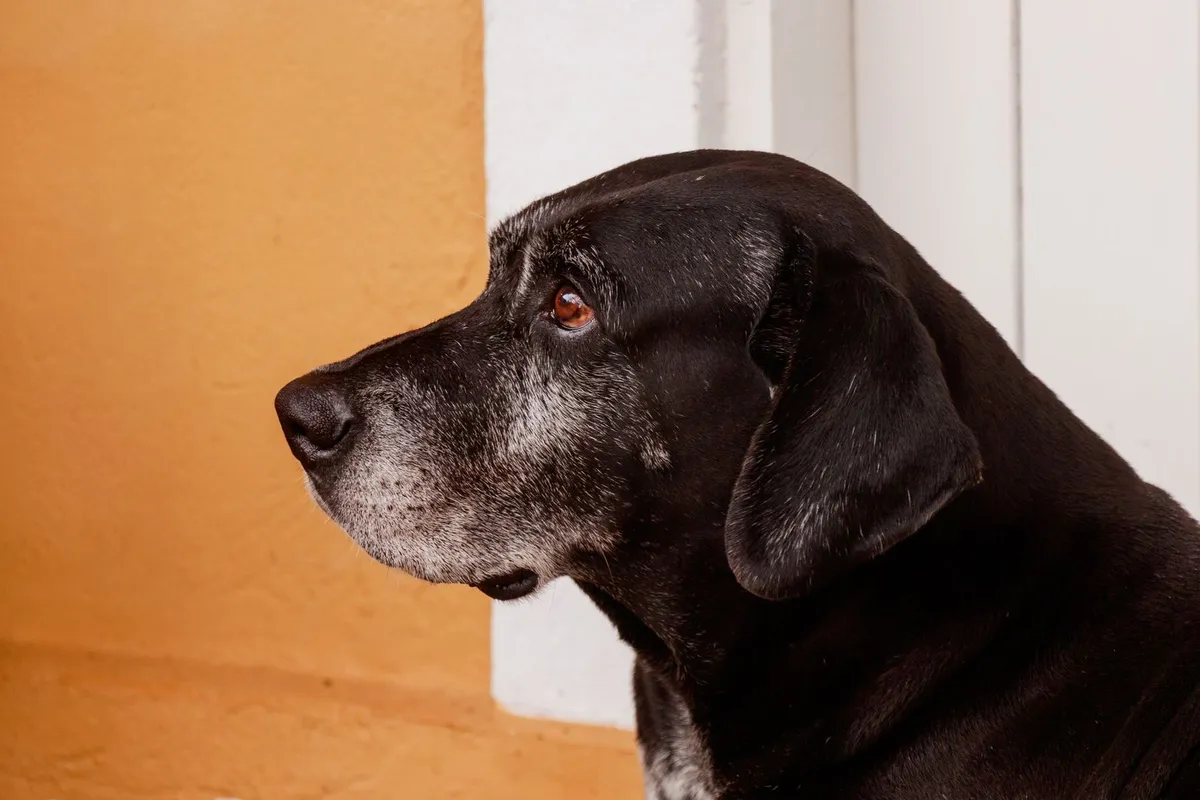
It usually starts as something small and easy to explain away. An older dog's bark goes a little hoarse. Her breathing gets a faint raspy edge on the inhale, more noticeable after a walk or on a warm day. She gags now and then when she drinks. Most owners file all of it under getting old. But that cluster, a changed bark plus noisy breathing in a senior dog, is the classic opening of laryngeal paralysis in dogs, and it is worth recognizing early, because it is partly treatable and, in hot weather, it can turn into an emergency fast.
This guide explains what laryngeal paralysis is, why in most older dogs it is really GOLPP, a whole-body nerve disease rather than just a throat problem, the signs to catch early, which dogs get it, the heat-related crisis that makes it dangerous, and how it is diagnosed and treated, including the "tie-back" surgery that can give a struggling dog her breath back. We are not veterinarians; this is reported from veterinary sources and is not a substitute for an exam.
What Laryngeal Paralysis Actually Is
The larynx (the voice box) sits at the top of the windpipe. Its cartilage flaps, the arytenoids, normally swing open every time your dog breathes in, widening the airway, and close to protect the airway when she swallows. In laryngeal paralysis, the nerves that control those flaps weaken, so one or both arytenoids fail to open on inhalation. The airway stays partly blocked, exactly when the dog is trying to pull air in.
That single mechanical fact explains every symptom. The blocked inflow makes a raspy, honking noise on the inhale (stridor). The weakened, slack vocal folds change the bark. The flaps that no longer move well also fail to fully protect the airway during swallowing, so the dog gags and coughs, especially around eating and drinking. And because she cannot move enough air, she overheats and tires quickly, since dogs cool themselves by panting, which a narrowed airway makes far less effective.
GOLPP: Why It Is a Whole-Dog Nerve Disease
Most owners are never told this, and it changes how you think about the whole thing.
In the large majority of older dogs, laryngeal paralysis is not an isolated throat problem. It is the first visible sign of GOLPP, Geriatric Onset Laryngeal Paralysis Polyneuropathy, a slow degeneration of the body's longest nerves. The nerve to the larynx happens to be one of the longest in the body, which is why the voice box shows trouble first. But the same process affects other long nerves over time.
GOLPP is described as three connected problems that tend to arrive in sequence:
- Laryngeal paralysis (the noisy breathing and bark change), usually first.
- Esophageal weakness (megaesophagus), which worsens the gagging and the risk of inhaling food.
- Hind-limb weakness (paraparesis), a gradual loss of strength and coordination in the back legs, usually appearing months to a couple of years later.
This is why an owner often describes a dog who "started with noisy breathing, and a year later her back legs went." Those are not two unrelated old-age problems; they are the same nerve disease showing up in two places. The back-leg weakness looks and is managed much like degenerative myelopathy, with physical therapy, traction aids, and support harnesses.
Understanding GOLPP reframes the goal. You are not curing one thing; you are managing a progressive nerve condition, and the most urgent, most treatable piece of it is the breathing.
The Signs in a Senior Dog
Caught early, the signs are easy to miss. Caught late, they are an emergency. Watch for:
- A changed bark. Often the very first sign, a hoarse, raspy, or weaker bark than she used to have.
- Noisy breathing on the inhale (stridor), a raspy or honking sound, worse with exercise, excitement, or heat.
- Gagging, coughing, or throat-clearing, especially when eating or drinking.
- Exercise intolerance, tiring and breathing hard sooner than she used to.
- Heat intolerance, struggling on warm days because she cannot pant effectively.
- Episodes of obvious breathing distress, which become more frequent as it progresses.
If you have noticed only the bark change and a little noise, that is the good time to see a vet, while it is mild and you have options.
Which Dogs Get It
GOLPP shows up in middle-aged to older, medium and large breeds, typically dogs over 10, developing by around 11 years of age on average. The breed skew is striking: in the research that defined GOLPP, roughly 70% of cases were Labrador Retrievers, followed by Golden Retrievers, Irish Setters, Pointers, Borzois, Greyhounds, and large mixed breeds. If you share your home with an aging Labrador or Golden Retriever, this belongs on your radar, because in those breeds a new hoarse bark is a thyroid-and-larynx conversation, not just an old-dog quirk.
The Heat and Breathing Emergency
What makes laryngeal paralysis genuinely dangerous, and it is why we are flagging it heading into warm weather.
A dog with a partly blocked airway is already working harder to breathe. Add heat, exertion, or stress, and a vicious cycle can start: she pants harder to cool down, the extra airflow irritates and swells the larynx, the swelling narrows the airway further, she panics, works harder still, and her temperature climbs because she cannot shed heat. This can spiral into a respiratory crisis with overheating that is life-threatening. Bad air stresses a narrowed airway the same way, which is why wildfire smoke is especially risky for a dog with laryngeal paralysis: keep her indoors with clean air when air quality is poor.
Call an emergency vet immediately if you see:
- Severe, labored breathing or a dog struggling to get air in
- Blue, purple, or very pale gums or tongue (a sign of low oxygen)
- Collapse, or a body temperature that feels alarmingly hot
- Loud, frantic breathing that does not settle with rest and cooling
While you get help, keep her calm and cool, move her out of heat, and do not let her overexert. Prevention matters just as much: through summer, walk in the cool of the day, avoid hot cars and midday heat, keep her lean, and never use a neck collar that presses on the airway. Our senior dog summer heat care guide covers cooling in more depth, and why is my senior dog panting helps you place this among the other causes of heavy breathing.
How It Is Diagnosed
A vet often suspects laryngeal paralysis from the combination of breed, age, the stridor, and the bark change alone. Confirming it requires a direct look at the larynx under light sedation: the vet watches whether the arytenoid cartilages open as the dog breathes in. In laryngeal paralysis, one or both stay shut. Because heavy sedation can make a normal larynx look paralyzed, this exam takes some skill and the right level of sedation.
Your vet may also take chest X-rays to check for megaesophagus and for aspiration pneumonia (lung infection from inhaled food or saliva), a common and serious complication, and bloodwork to rule out other contributors such as low thyroid function.
Treatment: Management and the Tie-Back Surgery
Treatment splits into managing the disease day to day and, for dogs with significant breathing trouble, surgery.
Everyday management slows crises and buys time:
- Keep her lean. Extra weight makes a marginal airway worse; weight control is one of the highest-impact things you can do.
- Avoid heat and overexertion, especially in summer.
- Switch from a collar to a harness so nothing presses on her throat.
- Lower stress, and ask your vet about medications (sedatives or anti-inflammatories) for flare-ups.
- For the eating-related risk, your vet may suggest feeding posture changes if megaesophagus is present.
Surgery, the "tie-back." The gold-standard fix for the breathing is a unilateral arytenoid lateralization, the "tie-back." A surgeon places sutures that hold one side of the larynx permanently open, so the dog can move air again. In experienced hands it dramatically improves breathing and comfort, and by relieving a life-threatening airway obstruction it often extends life as well; it can transform a dog who was struggling.
The trade-off to understand: because one side of the airway is now held open all the time, the protective closing during swallowing is reduced, which raises the risk of aspiration pneumonia for the rest of the dog's life. That risk is real but generally manageable, and for a dog in respiratory distress the breathing benefit usually far outweighs it. It is a conversation to have with a surgeon, weighing how much the breathing is affecting her now.
Living With It: The Honest Prognosis
The breathing piece of GOLPP is one of the more fixable problems an older large-breed dog can have; a successful tie-back can return years of good, comfortable life. The catch is the rest of the nerve disease. The hind-limb weakness progresses over months to years, and that part has no cure, only good supportive care: physical therapy, traction on slippery floors, support harnesses, and patience. Many families find the trade worth it, a dog who can breathe and enjoy her days, even as her back end slowly needs more help.
The takeaway is the same as with so much of senior dog care: the noisy breathing you were tempted to call old age is a specific, named, partly treatable condition. Naming it early gives you the most choices.
Frequently Asked Questions
What is the first sign of laryngeal paralysis in dogs?
Usually a change in the bark, a hoarse, raspy, or weaker sound, often with a faint noisy or raspy quality to the breathing on the inhale, especially after exercise or in warmth. These mild early signs are easy to mistake for normal aging, which is exactly why catching them early matters.
Is laryngeal paralysis in dogs an emergency?
It can become one. A dog with a narrowed airway can spiral into a breathing crisis with overheating, especially in hot weather or with exertion. Blue, purple, or pale gums, severe labored breathing, collapse, or alarming overheating are emergencies, call a vet immediately and keep her cool and calm.
What is GOLPP, and how is it different from laryngeal paralysis?
GOLPP (Geriatric Onset Laryngeal Paralysis Polyneuropathy) is the underlying disease in most older dogs with laryngeal paralysis. It is a slow degeneration of the body's longest nerves, and laryngeal paralysis is its first sign. Over time it also affects swallowing (megaesophagus) and the back legs (hind-limb weakness), so it is a whole-dog nerve condition, not just a throat problem.
What breeds get laryngeal paralysis?
It is most common in middle-aged to older medium and large breeds, with Labrador Retrievers making up roughly 70% of cases, followed by Golden Retrievers, Irish Setters, Pointers, Borzois, Greyhounds, and large mixed breeds. Onset is usually after age 10, averaging around 11.
Does tie-back surgery cure laryngeal paralysis?
Tie-back surgery (unilateral arytenoid lateralization) fixes the breathing by holding one side of the larynx open, and it often dramatically improves comfort and lifespan. It does not cure the underlying GOLPP nerve disease, and it raises the lifelong risk of aspiration pneumonia, but for a dog struggling to breathe, the benefit usually outweighs the risk.
Sources
- Stanley BJ, et al. (2010), Esophageal Dysfunction in Dogs with Idiopathic Laryngeal Paralysis: A Controlled Cohort Study (the Michigan State research behind the term GOLPP; roughly 70% of cases are Labradors, onset by about 11 years). Veterinary Surgery 39:139-149. onlinelibrary.wiley.com
- VCA Animal Hospitals, Laryngeal Paralysis in Dogs. vcahospitals.com
- Cornell University Riney Canine Health Center, Laryngeal Paralysis. vet.cornell.edu
- dvm360, Surgery STAT: Canine Laryngeal Paralysis, epidemiology, diagnosis, and management. dvm360.com
- All About GOLPP (Michigan State University research program), What Is GOLPP. allaboutgolpp.com
- Lap of Love, GOLPP in Senior Dogs. lapoflove.com
Keep Reading
- Why Is My Senior Dog Panting, placing noisy breathing among the other causes
- Senior Labrador Health Problems, the breed most affected by GOLPP
- Senior Golden Retriever Health Problems, another high-risk breed
- Senior Dog Summer Heat Care, why heat is dangerous for a dog with a narrowed airway
- Best Harness for Senior Dogs, keeping pressure off a compromised throat
About the authors
Sarah Bennett writes about senior dog care from a household centered on her Border Collie, Lucy. Her aim with this piece was to connect the dots most owners are never shown: that the hoarse bark and noisy breathing of laryngeal paralysis in dogs, and, later, the weak back legs, are often one nerve disease, and that the breathing is at once the most dangerous element and the most treatable. She is not a veterinarian; her work is reported, sourced from veterinary literature, and reviewed against published guidance.
Leo Bennett is the co-author of Senior Dog Daily and Sarah's husband. The pair share research and writing duties on the site.