
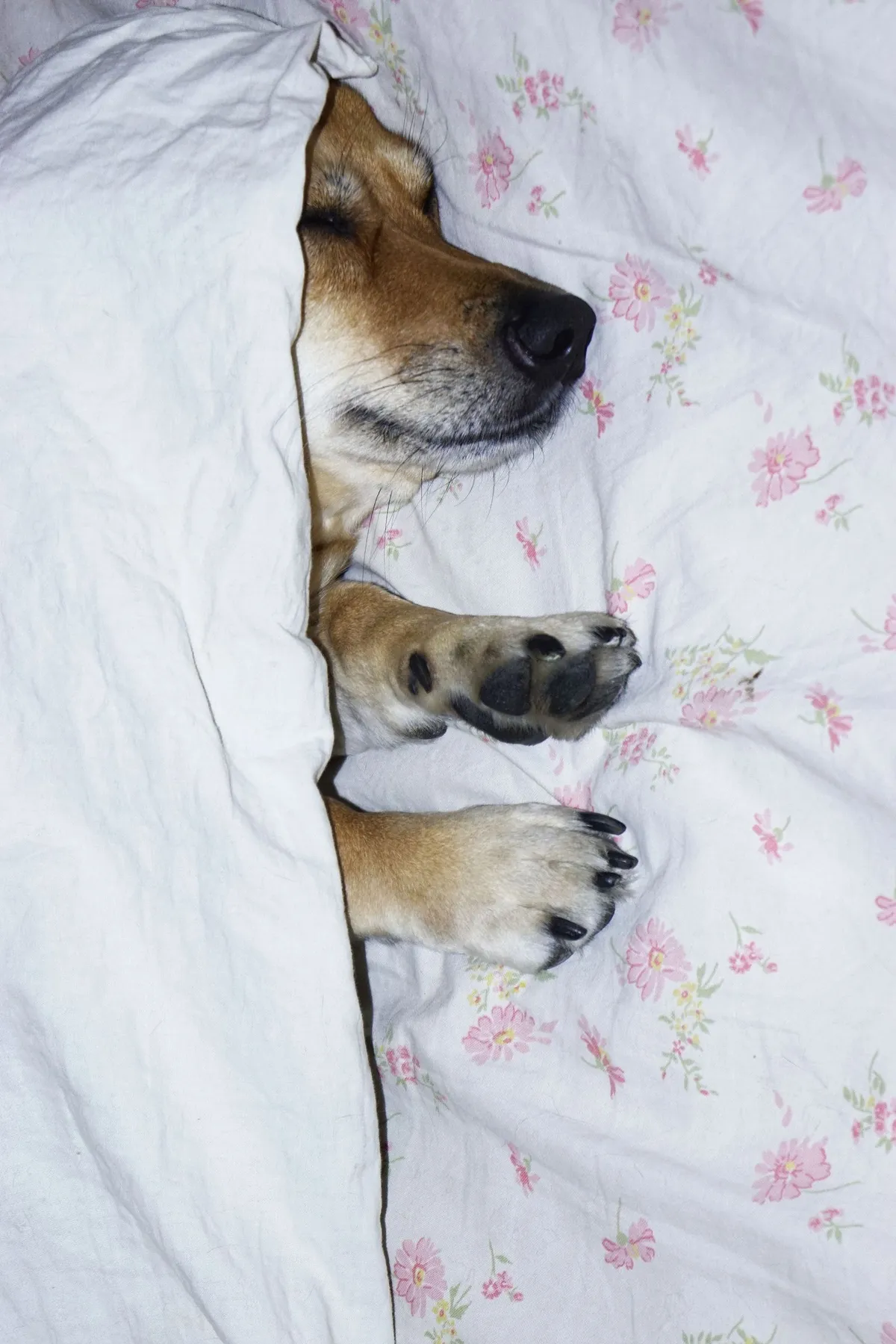
Senior Dog Arthritis in Cold Weather: Why It Flares, and How to Help
By Sarah Bennett · Last updated July 23, 2026 · 9 min read
I write as a researcher and owner, not a veterinarian. If your dog's stiffness is new, or clearly worse this season, that is worth a vet visit, both to confirm arthritis and to adjust her pain plan. Nothing here replaces that.
The short version: Many owners notice their senior dog moves more stiffly as the weather turns cold, slower to rise, careful on the first walk, tender after a long rest. The likely reasons are a mix of colder, thicker joint fluid, muscles and ligaments tightening in the cold, dropping barometric pressure, and simply moving less when it is cold out. Most seasonal guides skip the caveat: the science on weather and joint pain is limited, and not every expert agrees it truly worsens. What is not in doubt is that a warm, active, well-cushioned senior dog is more comfortable than a cold, stiff, sedentary one, so the practical steps below help regardless of the exact mechanism. Keep her warm, keep her gently moving, cushion her joints, and talk to your vet if the flare is real.
Does Cold Weather Really Make a Senior Dog's Arthritis Worse?
This is worth answering honestly, because most seasonal articles state it as fact and move on. The truth is more nuanced: the scientific evidence on weather and joint pain is limited, and experts do not fully agree that cold reliably worsens arthritis. What is well established is that a great many owners, and human arthritis sufferers, consistently report more stiffness and pain when the weather turns, which is hard to dismiss even if the studies are thin.
So the honest framing is this: cold weather very plausibly aggravates arthritis stiffness in an older dog, through several proposed mechanisms below, and enough owners see it that it is worth taking seriously. But it is a well-supported pattern, not a proven law, and anyone who tells you the science is settled is overstating it. The good news is that it barely matters for what you do next, because the steps that help are the same either way.
Why Cold Weather Likely Stiffens an Arthritic Dog
Several mechanisms have been proposed, and they probably act together rather than one being the single cause.
- Thicker joint fluid. The synovial fluid that lubricates joints becomes more viscous in the cold, so a stiff joint moves less smoothly, which is part of why the first movements after a cold night are the hardest.
- Tighter muscles and ligaments. Cold makes muscles tense and ligaments tighten, adding stress to joints that are already inflamed. This shows up as that stiff, careful gait after a long rest.
- Barometric pressure changes. Pressure tends to drop with cold, wet weather, and lower pressure may let tissues around a joint expand slightly, which in an arthritic joint could add to discomfort. This is one of the leading theories for the weather-pain link.
- Less movement. When it is cold and dark, dogs (and people) move less. Reduced activity is itself a cause of joint stiffness, so a quiet winter can worsen the very thing the cold gets blamed for.
For a senior dog, all of this lands harder. Older dogs already have less muscle to keep joints stable, regulate their body temperature less well, and tend to be less active, so a cold snap stacks on top of a body with less reserve.
Signs the Cold Is Bothering Her Joints
Watch for a seasonal shift in these:
- Slower to get up, especially after sleeping or a long rest
- Stiff or careful on the first walk of the day, loosening up as she moves
- Reluctance with stairs, jumps, or the car that was easier in warm months
- More time curled up tight, seeking warm spots
- Irritability or being touchy about being handled on the hips, back, or legs
- Licking at a joint, a quiet sign of pain owners often miss
A flare that comes on suddenly, or a dog who is newly limping or clearly painful, is a reason to call the vet rather than wait for spring. If you are not yet sure the underlying issue is arthritis, our guide to easing a senior dog's arthritis at home covers the fuller picture.
How to Help a Senior Dog With Arthritis in Cold Weather
The aim is simple: keep her warm, keep her moving gently, and cushion the joints. These help whether or not the cold is technically to blame.
Keep her warm. Warmth is the most direct lever. Give her a warm, draft-free spot to sleep away from cold floors, add a supportive orthopedic bed that insulates her from a chilly floor, and consider a dog coat or sweater for a thin-coated or small senior on cold walks. Some owners use a safely warmed bed or a vet-approved heat source, keep any heat gentle and never hot enough to burn.
Keep her gently moving, do not stop. The instinct to let a stiff dog rest all winter backfires, because inactivity stiffens joints further. Shorter, more frequent walks beat one long cold outing, and keeping her muscles working supports the joints. A quick warm-up of easy movement indoors before a cold walk helps her loosen up.
Cushion and de-slip the home. Cold weather makes a stiff dog more prone to slipping, and slick floors are hard on sore joints year-round. Runners on her main routes, and nail grips like ToeGrips for traction, reduce the scrambling that braces through painful joints.
Warm compress for a sore spot. A warm (not hot) compress on a stiff area for a few minutes can ease tension, especially before activity. Check the temperature on your own skin first.
Keep her lean. Every extra pound is extra load on arthritic joints. Winter weight gain from less activity makes the whole picture worse, so hold her weight steady through the cold months. Our senior dog weight-loss food guide covers the diet side.
Support the joints from the inside. Vet-recommended joint supplements with glucosamine, chondroitin, and omega-3 are a reasonable year-round support, and cold season is a sensible time to make sure she is on something that helps. Some owners also ask about CBD for arthritis, which has real but limited evidence and needs vet oversight.
When Winter Stiffness Means It Is Time to Talk to Your Vet
Home comfort measures are for mild, manageable seasonal stiffness. Loop in your vet when:
- The stiffness is new, or clearly worse than last winter
- She is limping, crying out, or reluctant to move at all
- Comfort measures are not enough and she seems to be in real pain
- She is not already on a pain-management plan and the arthritis is affecting her daily life
Modern arthritis care has genuinely effective options beyond home measures, from daily pain medication to the monthly injection Librela, and cold season is a common time to start or adjust them. If Librela is the one on the table, it is worth reading the side effect picture first, because a dose cannot be withdrawn once given. There is no reason for a senior dog to tough out a painful winter when treatment can change her comfort meaningfully.
One important safety warning: never give your dog human painkillers to get her through a cold-weather flare. Ibuprofen (Advil, Motrin) and acetaminophen (Tylenol) are toxic to dogs, even in small doses, and can cause stomach ulcers, kidney failure, or worse. It is tempting to reach for the medicine cabinet when she is stiff and sore, but canine pain relief has to come from your vet, who has safe, dog-specific options.
Frequently Asked Questions
Does cold weather affect dog arthritis? Many owners report that their arthritic dogs are stiffer and slower in cold weather, and there are plausible reasons: thicker joint fluid, tighter muscles, dropping barometric pressure, and reduced activity. Honestly, though, the scientific evidence is limited and not every expert agrees cold reliably worsens arthritis. Either way, keeping a senior dog warm, active, and well-cushioned helps her comfort.
Why is my senior dog stiff in the morning in winter? Overnight, a cold, rested joint has thicker lubricating fluid and tighter surrounding muscles, so the first movements of the day are the hardest before she loosens up. A warm sleeping spot off cold floors, an orthopedic bed, and a gentle indoor warm-up before the first walk all help ease that morning stiffness.
How can I keep my arthritic dog warm in cold weather? Give her a warm, draft-free bed away from cold floors, add an orthopedic bed that insulates from the ground, use a coat or sweater for thin-coated or small dogs on cold walks, and keep the home free of slippery floors that make a stiff dog scramble. Any warmed bedding or heat source should be gentle and never hot enough to burn.
Should I stop walking my senior dog in winter if she is stiff? No. Stopping activity tends to stiffen arthritic joints further. The better approach is shorter, more frequent walks, a warm-up indoors first, and keeping her generally moving, which supports the muscles that stabilize her joints. If she is genuinely too painful to walk comfortably, that is a reason to see the vet, not to rest the winter out.
Do joint supplements help with cold-weather arthritis? Vet-recommended joint supplements with glucosamine, chondroitin, and omega-3 are a reasonable year-round support for an arthritic senior, and cold season is a sensible time to make sure she is on one. They are a supporting measure, not a substitute for warmth, gentle activity, weight control, and, when needed, veterinary pain treatment.
Sources
- PetMD, Helping Your Dog's Arthritis in Cold Weather (proposed mechanisms including barometric pressure, thicker joint fluid, and reduced activity; notes that scientific evidence on weather and joint pain is limited). https://www.petmd.com/dog/general-health/helping-dog-arthritis-in-cold-weather
- American Animal Hospital Association (AAHA), senior dog pain and mobility management guidance.
- Colorado State University / veterinary rehabilitation guidance on keeping arthritic dogs warm, active, and lean.
Keep Reading
- Easing Your Senior Dog's Arthritis at Home, the year-round framework this season builds on
- Best Joint Supplements for Senior Dogs, what the evidence supports
- Librela for Dogs, the monthly injection for arthritis pain
- Senior Dog Winter Care, the full cold-weather picture
About the Author
Sarah Bennett researches senior dog care from a home centered on her Border Collie, Lucy. I am not a veterinarian; I write from a researcher and owner's perspective and check what I can against published veterinary sources. The reason I keep the evidence honest on cold-weather arthritis, that the pattern is widely reported but not firmly proven, is that a clear-eyed reader deserves to know what is established and what is not, and either way the steps that keep a stiff old dog comfortable through winter are the same.
Leo Bennett co-writes Senior Dog Daily with Sarah, sharing the research and the writing.