
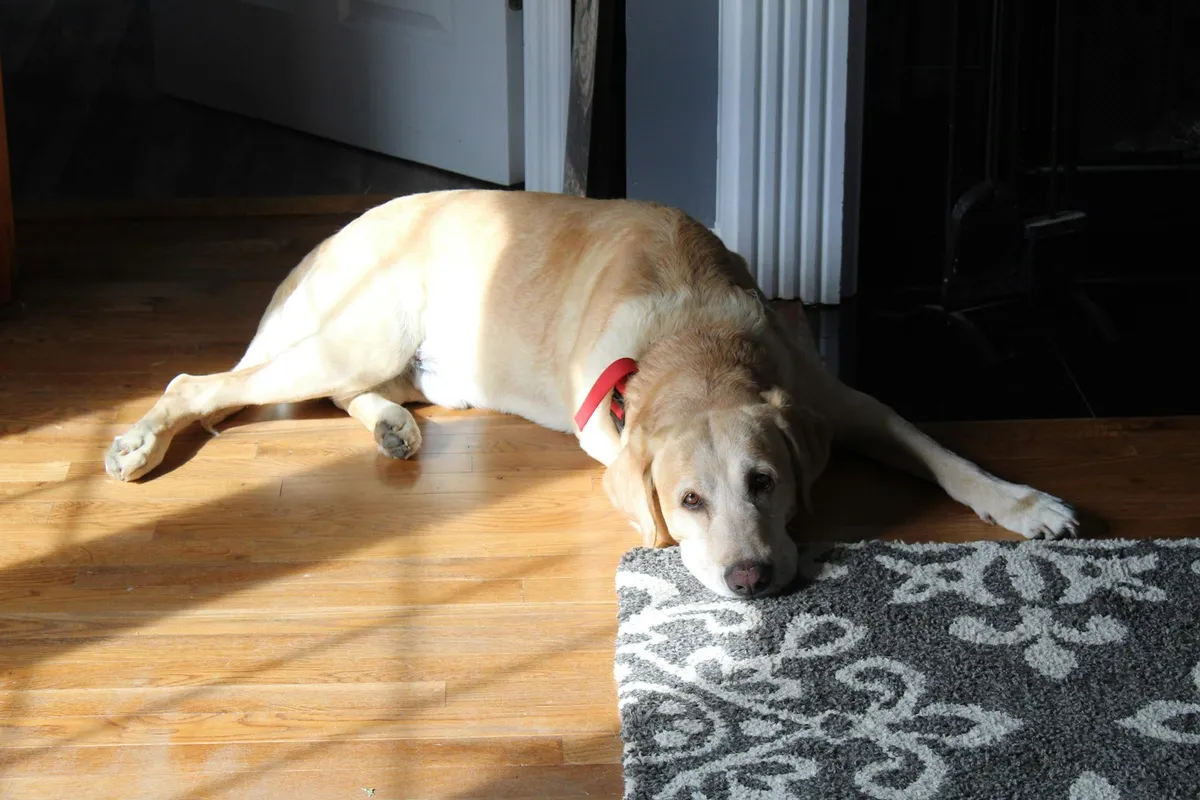
Librela Alternatives for Dogs: What Can Replace It, and What Cannot
By Sarah Bennett · Last updated August 25, 2026 · 11 min read
The short version: Most people searching for Librela alternatives for dogs are hoping a joint supplement or CBD can take its place. Those things have real uses, but replacing Librela is not one of them, because they are not doing the same job. What can actually stand in for it is another prescription pain medication, and that is a conversation with your vet rather than a shopping decision. The question worth asking is not what to use instead, but what treats her pain if this stops.
The search usually starts after the worrying part. A vet suggests the monthly injection, the owner reads about the side effect reports, and then goes looking for something gentler. That is a reasonable instinct and this guide is not going to talk anyone out of it.
But the framing has a trap in it. Owners tend to line these options up as a menu and pick one. Vets do not use them that way. In veterinary pain management they sit on different layers of the same plan, and swapping a layer for one underneath it does not keep the plan standing.
Why "Alternative" Is the Wrong Word Here
A joint supplement and a prescription pain drug are not competing products. One is trying to support the joint over months. The other is trying to reduce what the dog feels this week.
The 2022 AAHA pain management guidelines describe osteoarthritis care as multimodal by design: weight control, an adapted exercise and home setup, rehabilitation, nutrition, and medication working together rather than in sequence. Within that structure the guidelines treat omega-3 based supplements as the most efficacious of the nutraceuticals, and put the rest in an adjunct role with less demonstrated benefit. Medication is not one option among those. It is the layer the others are built around.
VCA's overview of multimodal pain management makes the same point from the other direction: "a single approach is often not enough to effectively manage pain." Adding layers is the strategy. Removing the load-bearing one and hoping the others compensate is not the same move in reverse.
This matters more for an old dog than the abstraction suggests. A dog whose pain treatment is downgraded does not tell you. She gets quieter, takes the stairs less, sleeps in the easier spot. Owners read that as aging. Months can pass.
What Librela Actually Does
Understanding the swap requires knowing what is being swapped.
Nerve growth factor rises in arthritic joints and amplifies chronic pain. Bedinvetmab, the antibody in Librela, binds NGF and removes it from circulation, so fewer pain signals reach the brain. It is not an anti-inflammatory and it does not repair the joint. It interrupts the signal.
Timing matters when you are comparing it to anything else. Some dogs improve within 7 days of the first injection; others need up to 6 weeks, which is two weeks after the second monthly dose. A supplement trial run over three weeks and judged against that is not a fair comparison in either direction.
Our full Librela for dogs guide covers how well it works and who should avoid it, and the FDA side effect data is worth reading before deciding anything, because the numbers in it are more specific than the headlines.
Librela vs Glucosamine and Joint Supplements: Different Jobs
This is the substitution people ask about most, and it is the one with the widest gap between what is hoped for and what is shown.
Joint supplements supply cartilage building blocks and, by VCA's description, contribute indirectly to comfort rather than acting as analgesics. Among them the evidence is uneven: omega-3 fatty acids have stronger published anti-inflammatory support than glucosamine alone (Bauer, J.E., 2016, JAVMA 249(11)), which is why AAHA singles them out and treats the others as adjuncts.
"Adjunct" is the whole answer to the substitution question. An adjunct is something added to a treatment. It is defined by what it accompanies.
None of this makes supplements pointless. For a dog in the early stages, for a dog who cannot take other medications, or as a long-term layer under something else, they earn their place, and our comparison of joint supplements for senior dogs sorts out which ones have data behind them. What they do not do is take over for a drug that was prescribed because a dog is in pain now.
Librela vs CBD: What the Cornell Trial Shows, and Where It Stops
CBD is the other candidate owners raise, and it has better evidence than most people expect, which makes being precise about it more important rather than less.
The key study is a 2018 randomized, placebo-controlled, blinded, crossover trial from Cornell University's College of Veterinary Medicine, published in Frontiers in Veterinary Science (Gamble et al., 2018). Dogs with osteoarthritis received CBD oil at 2 mg/kg or a placebo every 12 hours for four weeks, and on CBD they showed a significant decrease in pain and an increase in activity.
That is a real result from a real trial, and it is specifically about arthritis pain, which is where the canine CBD evidence is strongest. Our full look at CBD for dogs with arthritis goes through the dosing and the safety caveats.
Two limits keep it from being a replacement. A single trial of a modest number of dogs is a strong signal that larger studies are still catching up on, which puts CBD at evidence-supported rather than the clinically-proven bar a licensed drug clears. And the product you buy is not the product in the study: CBD for pets is largely unregulated, so dose and content vary between bottles in a way a prescription does not.
A dog whose pain needs a prescription is not well served by trading a licensed drug for an unregulated one, however promising the trial.
What Actually Replaces Librela
Something can. It is just not on a shelf.
VCA's pain management overview states the default plainly: "NSAIDs are the cornerstone of pain management in OA patients who can take them safely." The qualifier at the end is the whole reason Librela exists as an option, because the dogs who cannot take NSAIDs safely are often the ones a vet reaches for an antibody to help.
AAHA's guidelines put NSAIDs and anti-NGF antibodies in the same tier as the most effective medications for canine osteoarthritis, with a further set of prescription adjuncts available when needed. Which of those fits a particular dog depends on her kidney and liver values, what else she takes, and what has already been tried. That is a decision made with bloodwork in front of you, and it is not one this article can make.
One prescription option deserves naming here because owners often meet it in exactly this conversation. Adequan is an injectable given into the muscle twice a week for four weeks, approved since 1997 for the control of arthritis signs. It is worth understanding on its own terms rather than as a swap: it is a finite course rather than an ongoing treatment, its trial measured range of motion and orthopedic scores rather than pain signaling, and the widely repeated claim that it rebuilds cartilage traces to laboratory work on cultured cells rather than to any trial in living dogs.
What you can bring to the conversation is the real question, which is not whether something gentler exists, but what takes over if this stops, and how the two of you will know it is working.
If You Are Thinking About Stopping Because You Are Worried
Reading adverse event reports is unsettling, and worrying after reading them is a reasonable response, not an overreaction.
Two things are worth separating. Deciding whether to start is a different question from deciding whether to stop something already working, and stopping has its own consequences: the pain that was being managed is still there, and it returns on its own schedule.
If side effects are the concern, the conversation to have covers what you are seeing specifically, when it started relative to the injection, whether it fits the reported patterns, and what the plan is for her pain if you do stop. Our guide to the FDA data behind the side effect reports lays out what those numbers can and cannot tell you, including why they cannot be turned into a risk percentage.
Do not stop, restart, or substitute anything on your own. That is not a formality here: the reason is that pain left untreated in an arthritic senior does not stay still, it costs mobility, and mobility in an old dog is difficult to win back.
The Four Options Side by Side
| What it does | Prescription? | Evidence | Where it sits | |
|---|---|---|---|---|
| Librela (bedinvetmab) | Binds NGF so fewer pain signals reach the brain | Yes | Licensed; FDA-reviewed data, with reported safety signals | Primary pain treatment |
| NSAIDs | Reduce inflammation and pain | Yes | The cornerstone for dogs who tolerate them | Primary pain treatment |
| Adequan | Acts on enzyme activity in the joint | Yes | One blinded 51-dog trial; cartilage claims are in vitro | Finite 4-week course, often alongside |
| Omega-3 | Anti-inflammatory support | No | Strongest published support among supplements (Bauer 2016) | Long-term layer |
| Glucosamine and similar | Cartilage building blocks | No | Adjunct role; less demonstrated benefit | Long-term layer |
| CBD | Reduced pain and increased activity in one controlled trial | No | Evidence-supported for arthritis pain; product quality unregulated | Discuss as an addition |
The rows do not swap. The bottom three support the top two.
Frequently Asked Questions
Can joint supplements replace Librela? No. Supplements support the joint and contribute indirectly to comfort over months; Librela reduces pain signaling now. They can run alongside it, and for a dog in early arthritis a supplement may be all that is needed yet, but they do not stand in for a prescribed pain treatment in a dog who is already hurting.
What can I give my dog instead of Librela? That depends on why Librela was chosen. For many dogs the answer is an NSAID, which is the usual first-line option for dogs who can take it safely. There are other prescription options as well. All of them require bloodwork and a vet's judgment about your dog specifically.
Is CBD as good as Librela for arthritis? They are not measured on the same scale. CBD has one good controlled trial behind it for arthritis pain, which is more than most supplements can claim, and less than a licensed drug has to demonstrate. CBD products for pets are also unregulated, so what is in the bottle varies. Discuss it as an addition to a plan rather than as a substitute.
Will my dog recover if I stop Librela? The drug clears on its own schedule and the effect wears off between doses, so what typically returns is the pain it was managing. If you are stopping because of something you are seeing in your dog, that observation belongs in front of a vet who can tell whether it fits a known pattern, and who can put something else in place for her pain.
How long does Librela take to work? Some dogs improve within 7 days of the first injection. Others take up to 6 weeks, which is two weeks after the second monthly dose. This matters when comparing it against anything else, because a three-week trial of an alternative is not a fair test.
Is there a natural alternative to Librela? Nothing sold as natural has been shown to do what Librela does. Weight management, adapted exercise, and a home set up for easier movement are genuinely effective parts of arthritis care and cost nothing, and our guide to easing arthritis at home covers them. They belong in every plan. They are not a swap for pain medication in a dog who needs it.
Sources
- VCA Animal Hospitals, Multi-Modal Pain Management (role of NSAIDs and of joint supplements in an osteoarthritis plan)
- 2022 AAHA Pain Management Guidelines for Dogs and Cats (multimodal framework; omega-3 nutraceuticals as most efficacious, others as adjuncts; NSAIDs and anti-NGF antibodies as the most effective medications). aaha.org
- Gamble LJ, Boesch JM, Frye CW, Schwark WS, Mann S, Wolfe L, Brown H, Berthelsen ES, Wakshlag JJ. Pharmacokinetics, Safety, and Clinical Efficacy of Cannabidiol Treatment in Osteoarthritic Dogs. Frontiers in Veterinary Science 2018;5:165. frontiersin.org
- Bauer, J.E., 2016. The essential nature of dietary omega-3 fatty acids in dogs. JAVMA 249(11).
Keep Reading
- Librela for Dogs: Does It Work, Side Effects, and the FDA Safety Signals, the full picture on the drug itself
- Librela Side Effects in Dogs: What the FDA Data Actually Says, for what those reports do and do not prove
- 5 At-Home Ways to Ease Your Senior Dog's Arthritis, the free layer that belongs in every plan
About the Author
Sarah Bennett writes about senior dog care from a household centered on her Border Collie, Lucy. Her editorial concern with Librela alternatives for dogs was the word alternative itself, because owners arrive at it hoping for a gentler swap and the honest answer is that the gentler options were never doing the same job. She is not a veterinarian; her work is reported, sourced from veterinary literature and published guidelines, and no part of it is a substitute for the vet who has your dog's bloodwork in front of her.