
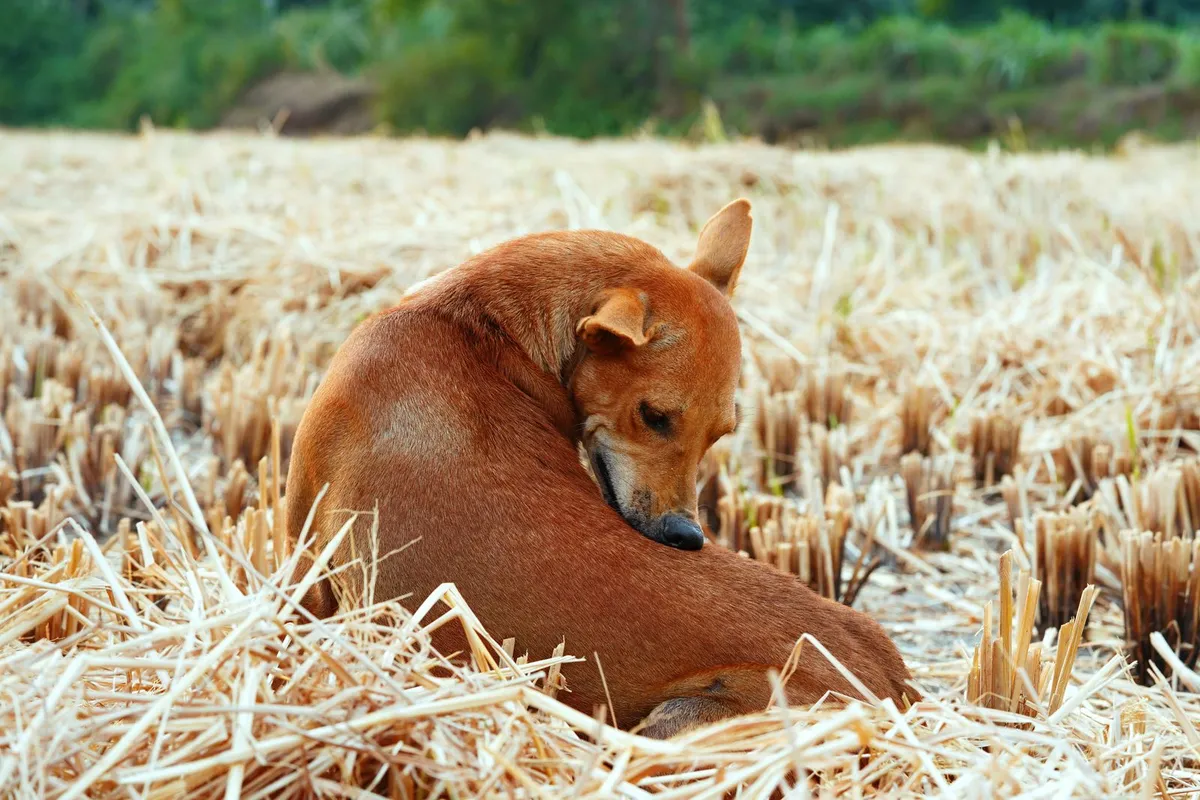
Senior Dog Itching: Is It Fall Allergies, or Something Else?
By Sarah Bennett · Last updated August 13, 2026 · 10 min read
The short version: Late summer into fall is peak itch season, because ragweed starts releasing pollen in late August and peaks in September. If your senior dog has flared up at this time of year before, seasonal allergies are the likely culprit, and they are manageable. The twist for an older dog is this: true environmental allergies usually begin between ages two and six, not in old age. So if the itching is genuinely new in a senior who never had it, it is worth being more suspicious of an age-related cause, like a thyroid problem, Cushing's disease, or a skin infection, before you settle on "just allergies." This guide helps you tell the difference, covers what actually calms the itch, and flags the treatment cautions that matter more in an older dog.
There is a particular sound every dog owner knows: the thump-thump-thump of a back leg going at an ear at 2am, or the wet, relentless licking of a paw across the room. In late summer and early fall it gets louder in a lot of households at once. If you are asking why your old dog is scratching so much right now, there is a seasonal reason for the timing. For an older dog, though, the itch is worth reading a little more carefully than you would for a young one.
Why is my senior dog so itchy right now?
Blame the season, and specifically ragweed. A ragweed allergy in dogs is the classic late-summer itch: per the American College of Allergy, Asthma and Immunology, ragweed pollen begins releasing pollen in late August, climbs through the month, and peaks in September, often lingering until the first hard frost. Dogs pick it up on their fur and paws every time they go outside, and unlike people, who mostly get watery eyes, dogs react in the skin.
The mechanism is an allergy in the classic sense. In dogs prone to it, the immune system overreacts to an environmental allergen, and the result is atopic dermatitis, the itchy, inflamed skin condition behind most seasonal itching. Common triggers are exactly the ones peaking now: grass and weed pollen, plus molds and dust. The tell-tale pattern is itching focused on the paws, belly, groin, ears, and face, a lot of paw licking, and skin that turns red or develops a reddish-brown saliva stain where she works at it. If you are seeing that, and no fleas, fall allergies in dogs are the strong candidate.
Is it fall allergies, or something age-related?
For a senior dog, this is the reason not to stop at "allergies." Environmental allergies typically start young: most dogs who have them show the first signs between two and six years of age. A dog who has itched every August for years is almost certainly dealing with the same seasonal allergy again. But a dog who is suddenly, newly itchy at eleven or twelve, with no history of it, is a different story, because brand-new atopy at that age is less common than the things that also cause itchy skin in older dogs.
The usual senior suspects behind new or worsening itch:
| What it looks like | Likely cause | What points to it |
|---|---|---|
| Seasonal itch, paws and belly, flares each fall | Environmental allergy (atopy) | A history of the same timing; itching eases in winter |
| Thinning coat, weight gain, low energy, recurring skin or ear infections | Hypothyroidism | Skin and coat changes alongside the itch, year-round |
| More drinking, a pot belly, hair loss, thin skin | Cushing's disease | Drinking and appetite changes with the skin signs |
| Greasy, smelly, red skin or ears that keep coming back | Secondary skin or yeast infection | Odor and recurring ear infections, often on top of allergy |
| A single itchy lump or a spot she won't leave alone | A skin mass worth checking | One focused spot rather than all-over itch; see lumps on senior dogs |
The point is not to diagnose her from a table. It is to notice whether the itch travels with other changes, which pushes it away from "simple seasonal allergy" and toward something your vet should look at. Itching that is new, year-round, or paired with coat, weight, thirst, or energy changes deserves a workup, not just an antihistamine.
What actually helps a senior dog's itching
For genuine seasonal allergies, a few things do real work, and they layer together.
- Rinse the pollen off. The simplest, cheapest step is physical: wipe her down with a damp cloth or do a quick rinse of her paws and belly after walks during ragweed season. You are removing the allergen before it has all day to irritate the skin.
- Omega-3 fatty acids. Fish-oil omega-3s have a real anti-inflammatory effect on allergic skin and are a low-risk addition for most seniors. Ask your vet about the right dose for her weight.
- The modern prescription options. When the itch is more than a nuisance, veterinary medicine has moved well beyond steroids. Apoquel (oclacitinib) controls itch quickly without the side effects that come with long-term corticosteroids, and Cytopoint (lokivetmab) is an injection that calms allergic itch for one to two months at a time. Both are widely used and generally well tolerated.
- Medicated shampoos can soothe inflamed skin and wash off allergens at the same time.
A caution that matters more in a senior: steroids. Corticosteroids stop itch fast, but they carry more risk in an older dog, especially one with diabetes, heart disease, Cushing's, or one already on other medications. That is a big part of why the newer options exist. If your vet reaches for a steroid, it is usually short-term and for a reason, and it is a conversation worth having about her whole health picture, not just her skin.
When to see the vet
Book a visit rather than riding it out if the itch is new in an older dog with no history of it, if it is year-round rather than seasonal, if the skin is broken, oozing, smelly, or has developed hot spots, if she is losing hair or the itching comes with weight, thirst, or energy changes, or if she is miserable enough to be breaking her own skin. Allergies are managed, not cured, so the goal is a plan that keeps her comfortable through the season, and ruling out the age-related causes that can hide behind a scratch.
Frequently asked questions
My senior dog has itchy skin but no fleas. What else could it be? Plenty. Seasonal environmental allergies are the most common answer in late summer and fall, but in an older dog, itchy skin with no fleas can also come from a thyroid problem, Cushing's disease, a secondary skin or yeast infection, or mites. If it is new or paired with other changes, have your vet check rather than assuming allergies.
Can a senior dog suddenly develop allergies? It is possible but less likely than people assume. Most true environmental allergies begin between ages two and six. A dog who becomes newly, intensely itchy in her senior years more often has something else going on, which is why a brand-new itch late in life is worth a vet's look rather than a guess.
Is Apoquel safe for senior dogs? Apoquel is widely used in older dogs and generally well tolerated, and it avoids the bigger risks of long-term steroids. As with any medication in a senior, your vet will weigh it against her other conditions and medications, so it is a decision to make together rather than a product to grab on your own.
What can I give my senior dog for itching at home? The safest home steps are washing the allergen off after walks and adding vet-dosed omega-3s. Do not reach for human allergy medications or steroid creams without your vet's guidance, because doses and safety differ for dogs, and some human products are harmful.
A senior dog itching through a September evening is one of those small miseries that is easy to wave off as the season. For a young dog, that instinct is usually right. For an old one, it is worth one extra look: a hand run over her coat, a note of whether she is drinking more or slowing down, a glance at whether this is the same August itch as always or something new. Most of the time it really is the ragweed, and a rinse and a plan will carry her through. And on the chance it is not, you will have caught it early, which for a senior dog itching through allergy season is the whole game.