
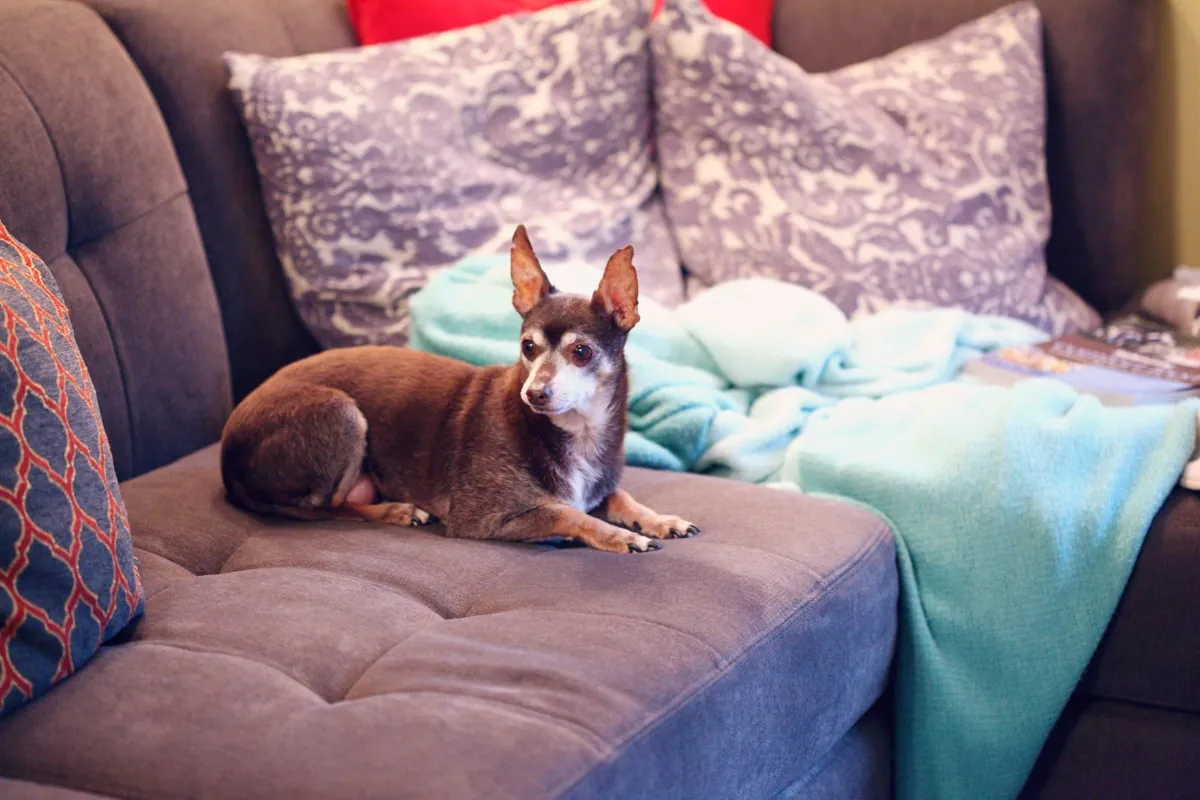
Senior Chihuahua Health Problems
By Sarah Bennett · Last updated June 16, 2026 · 12 min read
The Chihuahua is the smallest dog there is and one of the longest-lived, often reaching 14 to 16 years and sometimes well beyond. That combination is the key to senior Chihuahua health problems: a body of two to six pounds that has to last nearly two decades, and a senior phase that can run six to eight years. More time is a gift, but it is also more time for one particular chain of trouble to play out, the chain that defines the breed's later years and drives most of its senior deaths: the heart, and the tiny crowded mouth that can quietly damage it.
Almost everything that matters in an old Chihuahua connects back to that pair, or to the simple fact of being very small: a leaky heart valve (the Chihuahua heart disease known as MMVD), gum disease severe enough to seed infection, blood sugar that can crash, and a body with almost no insulation against cold. This guide covers the cluster worth watching from about age 10, the early signs, and the daily habits that help. We are not veterinarians; this is reported from PetMD, the Merck Veterinary Manual, and peer-reviewed veterinary cardiology research, and it is not a substitute for an exam.
Why Chihuahuas Have a Distinct Senior Health Profile
A Chihuahua ages differently from other small dogs for two reasons. The first is sheer size: at two to six pounds, she is fragile to handle, quick to lose heat, and metabolically sensitive in ways a ten-pound Pomeranian is not. The second is longevity, the breed commonly outlives larger dogs by years, which means the slow, age-driven diseases have the runway to develop fully.
A Chihuahua is generally considered senior at age 10, a little later than most breeds because the whole timeline is stretched. The senior care that pays off most is built around the breed's real risks: yearly heart listening that becomes twice-yearly past 10, aggressive dental care, steady small meals, and warmth. A baseline of bloodwork plus a cardiac check around age 9 to 10 sets the reference point, and remember that a one-pound gain on a four-pound dog is a 25% jump that lands on her heart and joints.
The Most Common Senior Chihuahua Health Problems
Heart: mitral valve disease, the leading cause of death
When people talk about Chihuahua heart disease, they almost always mean MMVD: degenerative mitral valve disease is the leading cause of death in the breed, and its prevalence climbs steeply in the senior years. The valve slowly thickens and leaks, which your vet usually hears as a murmur long before you see a symptom. That early detection is the whole game, because starting the drug pimobendan once the heart begins to enlarge but before failure (the EPIC study's finding) measurably delays heart failure. We walk through the full B1-to-D staging in our guide to heart disease in senior dogs. The home number to know is her resting breathing rate: more than about 30 breaths a minute while she sleeps is worth a same-day call.
The mouth that can reach the heart
The chain that makes Chihuahua dental disease more than a dental problem runs like this. A Chihuahua carries a full adult set of teeth in a jaw roughly a tenth the size of a big dog's, so they crowd, trap plaque, and drive severe gum disease in most senior Chis. The bacteria from inflamed gums then enter the bloodstream, and that ongoing load adds to the strain on an aging heart and is linked to faster progression of the breed's common valve disease. Infective endocarditis, where bacteria settle directly on a valve, is uncommon but possible, which is part of why the mouth and the heart are best managed together here. So in a Chihuahua, brushing the teeth is partly cardiac care. Brush daily if she allows it, use VOHC-accepted products when she will not, and plan professional cleanings with X-rays every 9 to 12 months. Dogs with a known murmur may need antibiotics around dental procedures, ask your vet. Our senior dog dental care guide has the routine.
Slipping kneecaps
Patellar luxation, the toy-breed kneecap that pops out of its groove, is one of the most common orthopedic issues in the breed and often shows up early. It looks like a sudden skip or hop, the leg carried for a stride, then normal. Most senior cases are mild (grade 1 to 2) and managed with weight control, joint support, and protected exercise; higher grades may need surgery. A Chi who has been skipping on a back leg for months usually has an un-examined grade 1 to 2 luxation, and the exam itself is quick. See best joint supplements for senior dogs.
Noisy breathing: tracheal collapse and reverse sneezing
Two airway events sound alike and mean different things. Tracheal collapse in Chihuahuas produces a dry goose-honk cough on the way out, worse with excitement, heat, or a collar; the management is the same as for the Pomeranian, starting with a switch to a chest harness, and we cover it in the senior Pomeranian guide. Reverse sneezing is the opposite: sudden snorting pulls of air inward that sound alarming but are usually harmless and pass in under a minute, often eased by briefly covering the nostrils. If reverse sneezing becomes frequent or long, a vet rules out a nasal cause.
The small-body metabolism: low blood sugar and thyroid
Hypoglycemia in senior toy dogs stays a real risk in Chihuahuas, especially the very small ones and any dog eating less because of dental pain or illness. It shows as weakness, trembling, a glassy stare, and in bad cases collapse, and the stopgap on the way to the vet is a little corn syrup on the gums, with frequent small meals as the everyday prevention. The slower-burning issue is hypothyroidism, which brings weight gain on normal food, lethargy, and worsening cold sensitivity; it is confirmed on a thyroid panel and treated with a daily pill.
The molera, and what it does and does not mean
This is the most misunderstood part of the breed. A Chihuahua molera, the open fontanelle or soft spot where the skull bones have not fully closed, and it is a normal breed trait: most Chihuahuas are born with one and many keep a small molera for life with no problem at all. The old belief that it signals hydrocephalus (fluid pressure in the brain) has been overstated; a University of Minnesota study found no significant link between a molera and hydrocephalus. The sensible line: protect the soft spot from head knocks, but do not treat it as a diagnosis. True hydrocephalus almost always shows before nine months of age, so brand-new neurological signs in a senior Chihuahua, head tilt, circling, vision change, seizures, point to other causes and need their own workup.
Cold intolerance
Chihuahua cold intolerance is a genuine medical concern, not fussiness. With almost no body fat, minimal coat, and a tiny body that sheds heat fast, a senior Chi chills quickly, and cold also worsens both arthritis pain and tracheal narrowing. Keep the home warm, use a sweater outdoors below about 50°F, consider a heated bed, and keep cold-weather potty trips short. If she is still shivering 10 to 20 minutes after coming inside, she was out too long.
Early Signs Worth Catching
A Chihuahua is small enough that decline hides easily. Watch for:
- A new sleeping breathing rate above ~30, a cough, or fainting (heart)
- Bad breath or chewing on one side (the dental disease feeding the heart risk)
- A skip or hop in a back leg (patellar luxation)
- Trembling, wobbliness, or a glazed look, especially when overdue to eat (low blood sugar, an emergency in a tiny dog)
- New neurological signs, head tilt, circling, seizures (a senior workup, not "just the molera")
- Shivering that will not settle indoors (cold, pain, or illness)
For a senior Chi, "if you are wondering whether to call, call" carries extra weight. Smallest body plus a serious cardiac risk profile means problems escalate fast.
Daily Habits That Ease Senior Chihuahua Health Problems
- Get the teeth seen, and brush. In this breed dental care is heart care.
- Have the heart listened to at every visit, twice a year past 10, and act on a new murmur.
- Feed small and often to hold blood sugar steady.
- Keep her warm indoors and out; cold worsens joints and airway alike.
- Harness, never collar, to spare a Chihuahua windpipe that is prone to tracheal collapse.
- Keep her lean and her jumps few, with a ramp for the couch and a supportive bed.
- Stay on schedule with medication; a medication schedule template helps.
The Right Gear for a Senior Chihuahua Household
- A chest harness that never loads the throat.
- A sweater and a heated bed for a dog with no insulation of her own.
- A ramp or steps to retire the jumps that wreck toy-breed knees.
- A soft toothbrush and enzymatic paste, the cheapest cardiac tool you own.
Frequently Asked Questions
How long do Chihuahuas live?
Chihuahua lifespan typically runs 14 to 16 years, with some reaching 18 to 20, among the longest of any breed. The senior phase begins around age 10, so a Chihuahua often has six to eight years of senior life, which is why steady senior care pays off so well in this breed.
What is the most common cause of death in senior Chihuahuas?
Heart disease, specifically mitral valve disease (MMVD), is the leading cause of death in Chihuahuas, and its prevalence rises sharply after age 10. Pimobendan started once the heart enlarges but before failure delays progression, which is why regular listening to the heart matters. Chronic dental disease also adds to the cardiac burden and is linked to faster valve-disease progression, with bacterial endocarditis an uncommon but possible complication, which is what ties the mouth and the heart together in this breed.
Is the molera (soft spot) on a Chihuahua dangerous?
Usually not. A Chihuahua molera (open fontanelle) is a normal breed trait; most are born with one and many keep a small one for life. The old link to hydrocephalus has been overstated, with a University of Minnesota study finding no significant relationship. Protect the soft spot from head trauma, but treat new neurological signs in a senior as their own problem rather than assuming the molera is the cause.
Why is dental disease so serious in Chihuahuas?
Because Chihuahua dental disease is heart disease in slow motion. The breed packs a full set of teeth into a jaw a fraction of normal size, which crowds them and drives severe gum disease, and the bacteria from infected gums add to the strain on an aging heart and are linked to faster MMVD progression, with valve infection (endocarditis) an uncommon but possible complication. Daily brushing and cleanings every 9 to 12 months are the standard, not a luxury.
Why are Chihuahuas so prone to low blood sugar?
A tiny body cannot store much glucose, so hypoglycemia in senior toy dogs remains a risk in Chihuahuas, especially under four pounds or when illness or dental pain cuts appetite. Signs are weakness, trembling, a glassy stare, and in severe cases collapse. Rub a little corn syrup on the gums on the way to the vet, and prevent it with frequent small meals.
Does my senior Chihuahua need a sweater?
For outdoor time below about 50°F, yes. Chihuahua cold intolerance is medical, not vanity: minimal fat and coat plus a small body mean rapid heat loss, and cold also worsens arthritis pain and tracheal narrowing. Many senior Chis also do better with a heated bed in a cold-weather home.
Sources
- PetMD, Chihuahua Dog Breed Health and Care. petmd.com/dog/breeds/chihuahua
- Boswood A, et al. EPIC Study: Effect of Pimobendan in Preclinical Myxomatous Mitral Valve Disease. Journal of Veterinary Internal Medicine, 2016.
- ACVIM Consensus Guidelines for the Diagnosis and Treatment of Myxomatous Mitral Valve Disease in Dogs.
- University of Minnesota College of Veterinary Medicine, research finding no significant link between molera and hydrocephalus.
- AAHA 2023 Senior Care Guidelines for Dogs and Cats. aaha.org/resources/2023-aaha-senior-care-guidelines-for-dogs-and-cats
- Merck Veterinary Manual, Tracheal Collapse in Small Breed Dogs. merckvetmanual.com
- VCA Animal Hospitals, Patellar Luxation in Dogs. vcahospitals.com/know-your-pet
Keep Reading
- Heart Disease in Senior Dogs, the murmur, the breathing test, and the B1-to-D staging
- Senior Pomeranian Health Problems, the other toy-breed senior profile, with a different signature issue
- Senior Dog Dental Care, the routine that matters most for toy breeds
- Best Joint Supplements for Senior Dogs, for slipping kneecaps and aging joints
- 8 Senior Dog Aging Signs, the cross-breed pattern beyond breed specifics
About the authors
Sarah Bennett writes about senior dog care from a household centered on her Border Collie, Lucy. Researching the Chihuahua, the thing that stuck with her was how one chain, the crowded mouth feeding infection to an already-vulnerable heart, runs through so much of the breed's senior care, and how much of the rest comes down to keeping a two-pound dog warm and fed. She is not a veterinarian; her work is reported, sourced from veterinary literature and breed-health guidance, and reviewed against published guidelines.
Leo Bennett is the co-author of Senior Dog Daily and Sarah's husband. The pair share research and writing duties on the site.
Senior Chihuahua health problems are a tight, connected set in the smallest and longest-lived of dogs: the heart, the mouth that threatens it, the blood sugar, and the cold. An owner who tends the teeth, listens to the heart, and keeps her warm gives a Chihuahua the long, comfortable old age the breed is genuinely built for.