
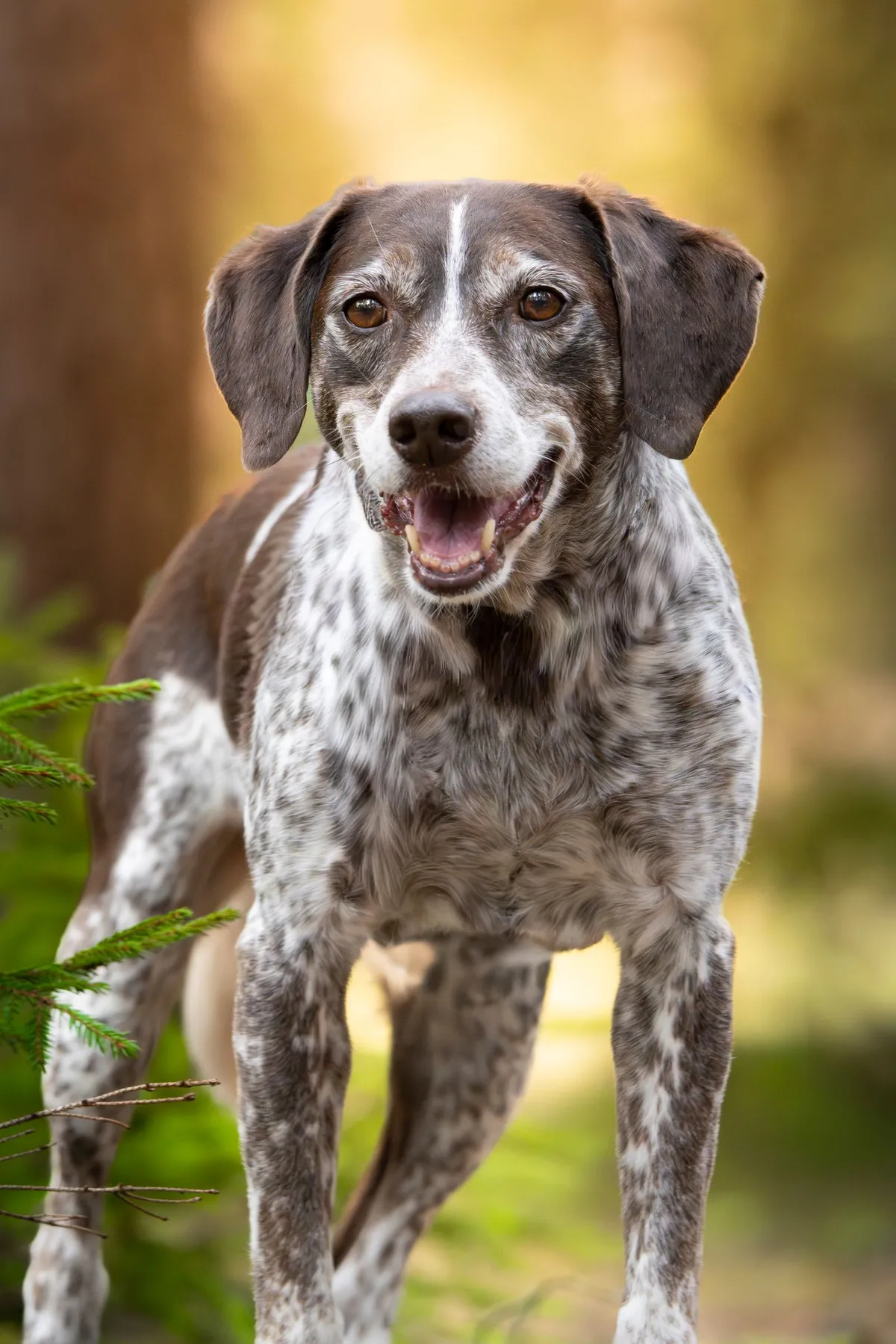
The Loyal Dog Longevity Drug
By Sarah Bennett · Last updated June 11, 2026 · 11 min read
Every few months a wave of headlines promises a pill that will make your dog live longer, and every time, a senior dog owner who has been watching a gray muzzle creep in wants to know one thing: is this real, and can I get it? The honest answer about the Loyal dog longevity drug is yes and not yet. Loyal is a real, FDA-engaged company; its senior-dog drug, LOY-002, has cleared two of the three major hurdles the FDA requires; and it is genuinely aiming to add about a year of healthy life. But as of mid-2026 it is not approved and not on sale, and the version most owners read about is sometimes the wrong one for their dog.
This guide cuts through the headlines. It explains what the Loyal longevity drugs actually are, how the two of them differ, how they are supposed to work, exactly where they stand with the FDA, what they may cost, and, most importantly, what genuinely extends a senior dog's healthy years that you can do today, without waiting for a prescription that does not exist yet. We are not veterinarians; this is reported from Loyal's own announcements, FDA filings, and veterinary coverage.
What Is the Loyal Dog Longevity Drug?
Loyal (the trade name of the company Cellular Longevity) is a clinical-stage animal health company developing drugs whose stated purpose is not to treat one disease but to extend the healthy lifespan of dogs. That framing matters. The goal is not just more years; it is more good years, what researchers call healthspan, by slowing some of the biological processes that drive age-related decline.
There is not one Loyal drug. There are two in development, aimed at different dogs and working in different ways, and the headlines often blur them together. If you take one thing from this article, take this: find out which drug a story is talking about before you get your hopes up or write it off.
LOY-001 vs LOY-002: Two Different Drugs
| LOY-001 | LOY-002 | |
|---|---|---|
| For | Large and giant breeds | Senior dogs, 10+ years, 14 lb and up |
| Form | Long-acting injection at the vet, every 3 to 6 months | Daily flavored tablet at home |
| How it works | Lowers IGF-1, a growth hormone large dogs overproduce | Targets age-related metabolic decline |
| FDA stage | Earlier; realistic approval later | Further along; two of three sections cleared |
| Likely availability | 2027 to 2028 range | Possibly late 2026 or 2027 |
LOY-001 is built around a specific insight: through generations of breeding for size, large dogs produce more of a growth hormone called IGF-1 than they need once they are grown, and high IGF-1 is linked to their famously shorter lifespans. LOY-001 aims to lower IGF-1 toward the levels seen in smaller, longer-lived dogs. It is given as an injection by a veterinarian every few months.
LOY-002 is the one most senior dog owners actually want to know about, because it is for any senior dog of at least 14 pounds, age 10 and up, regardless of breed. It is a daily flavored tablet you would give at home, and rather than targeting one hormone, it aims to improve the metabolic health that declines with age, the same underlying deterioration that feeds arthritis, cognitive decline, heart disease, and cancer.
Where It Stands With the FDA
This is where the headlines tend to outrun reality, so here is the careful version.
To reach the market, an FDA conditional approval requires three technical sections: effectiveness, safety, and manufacturing (CMC). Loyal's own status page puts it plainly: "As of December 2025, LOY-002 has completed two of the three major requirements needed for FDA conditional approval: safety and efficacy." The pathway has a precise name that is worth using, because it is narrower than "FDA approved" sounds: Loyal states its drugs "are all being developed under the FDA Center for Veterinary Medicine's expanded conditional approval (XCA) pathway", and its own roadmap carries the line "FDA approval not guaranteed".
The three sections stand like this:
- Effectiveness (RXE): the FDA agreed Loyal's data shows a reasonable expectation that the drug works. Loyal announced it in February 2025: "LOY-002, our program bringing longevity to dogs of almost all sizes, has also earned its formal FDA acceptance for reasonable expectation of efficacy (RXE)."
- Safety (TAS): the FDA accepted the safety package, announced January 2026. That announcement went out through Businesswire, whose pages we can no longer retrieve to quote, so the date here is transposed from the release rather than quoted; Loyal's own status page above confirms safety as complete.
- Manufacturing (CMC): still under review.
If the manufacturing review goes smoothly, conditional approval for LOY-002 could come as early as late 2026 or 2027. LOY-001, for large breeds, is earlier in the process, with a realistic timeline closer to 2027 or 2028. Because this is moving quickly, check Loyal's site for the latest status if you are reading this well after our update date.
One term worth understanding: conditional approval is not the same as full approval. It is an FDA pathway that would let Loyal sell the drug, under veterinary prescription and continued monitoring, while it keeps gathering full effectiveness data over several more years. It is a real, regulated step, not a loophole, but it means the long-term proof is still being collected even after the drug becomes available.
Behind all of this is the STAY study, which Loyal describes as the largest veterinary clinical trial in history: "1,300 dogs, across 70+ clinics nationwide", with enrollment completed in mid-2025, in the first FDA-concurred trial designed specifically to measure canine longevity. Loyal adds a detail that says something about the selection: the study "has screened over 1,500 dogs in order to enroll 1,300 eligible participants." That is a serious undertaking, and it is a big part of why this drug is treated as credible science rather than a supplement-aisle promise.
What the Loyal Dog Longevity Drug May Cost and Who Qualifies
There is no official price, because there is no approved drug to price. What exists is reporting: as of May 2026, Entrepreneur described Loyal as "on track to launch as soon as next year for around $100 a month", and the company has said publicly it wants to keep the figure at or below that rather than price it as a luxury. Treat $100 a month as the number to plan around, not a quote, and expect it to move.
On who qualifies, Loyal is specific: "We are pursuing FDA approval for use in dogs 10 years and older and weighing at least 14 lb." Very small dogs are not in the current senior program, partly because tiny breeds already tend to live long lives, and partly because the trial population was defined that way.
When it does arrive, it would be a prescription dispensed through your veterinarian, not an over-the-counter purchase, and your vet would decide whether your individual dog is a sensible candidate.
What It Can and Cannot Do
Manage your expectations the way a good vet would.
What it is aiming for: roughly one additional year of healthy life for a senior dog, on average, by slowing age-related decline. That is the trial's ambition, not a guaranteed outcome for any individual dog, and "healthy" is the operative word. The point is more good time, not simply a longer slow decline.
What it is not: it is not a cure for any specific disease, not a fountain of youth, and not a reason to delay treating the problems your dog has now. A dog with untreated arthritis, dental disease, or a heart murmur needs those addressed today, with or without a longevity drug on the horizon.
It is reasonable to be both excited and patient. The science is real and the FDA engagement is real. It is also still, as of this writing, a drug you cannot buy.
What Actually Extends Your Senior Dog's Healthy Years, Right Now
No one putting "anti-aging pill" in a headline wants to lead with this: the things proven to add healthy years to a dog's life are already available, free or cheap, and within your control. The Dog Aging Project and decades of veterinary research point to the same unglamorous levers.
- Keep her lean. Staying at a healthy weight is the single best-documented way to extend a dog's life and delay arthritis, diabetes, and heart strain. In the landmark Purina Life Span Study, lean-fed Labradors lived a median of about 1.8 years longer than their overweight littermates (13.0 versus 11.2 years).
- Stay on top of dental disease. Oral infection is not just a mouth problem; it stresses the whole body. See senior dog dental care.
- Keep her moving, gently. Regular, low-impact exercise preserves muscle, joints, and brain, and pairs well with the mental stimulation an aging mind needs.
- Go to the vet twice a year. Senior dogs benefit from twice-yearly exams and baseline bloodwork, which catch the treatable diseases that hide behind aging early. Our vet visit prep checklist makes those visits count.
- Support the joints and the diet. Evidence-supported joint supplements and a quality, appropriately portioned diet do real work over years.
None of that is as exciting as a pill. All of it is available today, and a longevity drug, when it arrives, would be an addition to this foundation, not a replacement for it.
Frequently Asked Questions
Is the Loyal dog longevity drug available yet?
No. As of mid-2026, neither LOY-002 (for senior dogs) nor LOY-001 (for large breeds) is FDA approved or on sale. LOY-002 has cleared two of the three required FDA sections, with manufacturing review remaining, and conditional approval could come as early as late 2026 or 2027 if that review goes well.
How much will the Loyal dog drug cost?
There is no official price yet, because the drug is not approved. Reporting in May 2026 described Loyal as "on track to launch as soon as next year for around $100 a month", and the company has said it wants to hold the figure at or below that. Plan around $100 a month rather than treating it as a quote. It would be a prescription dispensed through your veterinarian.
What is the difference between LOY-001 and LOY-002?
LOY-001 is for large and giant breeds and is a long-acting injection given at the vet every few months; it works by lowering IGF-1, a growth hormone large dogs overproduce. LOY-002 is for senior dogs aged 10 and older weighing at least 14 pounds, is a daily tablet given at home, and targets age-related metabolic decline.
How much longer could the drug make my dog live?
Loyal's stated goal for LOY-002 is roughly one additional year of healthy life on average. That is the aim of the clinical program, not a guarantee for any individual dog, and the emphasis is on healthy years rather than simply extending old age.
Is the Loyal longevity drug safe?
The FDA accepted Loyal's safety package for LOY-002 in early 2026, which is a meaningful step, but long-term safety data continues to be gathered through the STAY study and would continue after any conditional approval. As with any new medication, your veterinarian would weigh it against your specific dog's health.
What can I do for my dog's longevity while I wait?
The proven steps are available now: keep her lean, manage dental disease, maintain gentle regular exercise, see the vet twice a year with baseline bloodwork, and support joints and diet. These do more for healthy lifespan today than any product you can currently buy.
Sources
- Loyal (Cellular Longevity), official announcements and product pipeline. loyal.com
- Loyal, FDA acceptance of safety package for LOY-002, January 2026, via Businesswire. As of 2026-09-10 Businesswire does not return its pages to automated requests, so this is cited rather than quoted; Loyal's own status page above carries the same fact.
- Loyal, FDA acceptance of reasonable expectation of effectiveness for senior dog lifespan extension (2025). businesswire.com
- dvm360, FDA reasonable expectation of effectiveness for large dog lifespan extension. dvm360.com
- GoodRx Pet Health, Upcoming anti-aging drugs for dogs. goodrx.com
- Kealy RD, Lawler DF, Ballam JM, Mantz SL, Biery DN, Greeley EH, Lust G, Segre M, Smith GK, Stowe HD. Effects of diet restriction on life span and age-related changes in dogs (Purina Life Span Study). JAVMA 2002;220:1315-1320. Authors, journal, volume and pages re-checked against the published record on 2026-09-10. PMID 11991408 (PubMed renders with JavaScript and cannot be quoted from).
- Entrepreneur, This $100-a-Month Pill Can Extend the Life of Your Dog, May 2026. Source of the price expectation quoted above. entrepreneur.com
- Loyal, STAY study finishes enrollment at 1,300 dogs (2025). loyal.com
- Dog Aging Project, ongoing research on canine aging and healthspan. dogagingproject.org
Keep Reading
- 8 Senior Dog Aging Signs, telling normal aging from a treatable problem
- Senior Dog Vet Visit Prep, making twice-yearly senior exams count
- Best Joint Supplements for Senior Dogs, evidence-supported support for aging joints
- Mental Stimulation for Senior Dogs, gentle brain games that keep an aging mind sharp
- Senior Dog Dental Care, why the mouth matters for the whole body
About the authors
Sarah Bennett writes about senior dog care from a household centered on her Border Collie, Lucy. Her concern with the Loyal dog longevity drug coverage was the gap between the headlines and the reality: the science is genuinely promising, but the most useful thing an owner can do with that excitement today is double down on the lifestyle steps that already work. She is not a veterinarian; her work is reported, sourced from company filings, FDA announcements, and veterinary coverage.
Leo Bennett is the co-author of Senior Dog Daily and Sarah's husband. The pair share research and writing duties on the site.